-
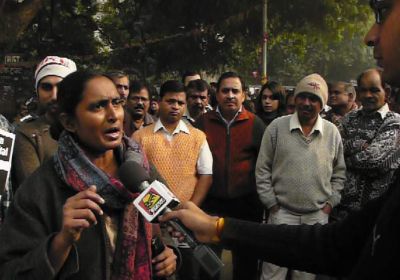
Thousands of people marched to the offices of Ireland's prime minister on November 17 to support a woman's right to choose. The protest was sparked by the death of Savita Halappanavar in hospital, after staff refused to terminate her pregnancy even though her life was in danger. The article below first appeared on the Irish site Sráid Marx. * * * -
Pro-choice activist will be rallying outside the East Melbourne fertility control clinic on November 24, under the slogan “Our Clinic, Our Bodies, Our Choice”. The rally is organised by Melbourne Feminist Action (MFA), an exciting new women’s rights collective. MFA was initiated by Jacinda Woodhead and Stephanie Convery who work for literary journal Overland. They were motivated by what seems to be a growing and renewed public interest in women’s rights in Melbourne. -
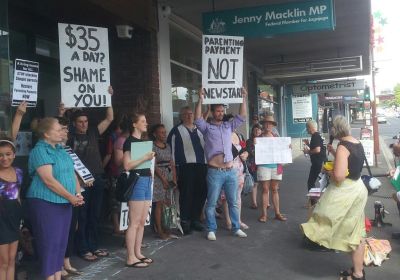
Prime Minister Julia Gillard announced a federal royal commission into child abuse in Australian institutions on November 12. The announcement came after growing scandals about paedophilia within the Catholic Church had reached the point where it was politically untenable for the government to continue with inaction. -
Features interviews with Sue Bolton, the newly elected Socialist Alliance councillor for Moreland in Melbourne and Lindsay Hawkins, one of the Progressive PSA team that have won control of the union representing NSW public servants.
-
This episode focuses on feminism's resurgence and Venezuela's unfolding revolution. It includes activist news on Stop CSG protests, Global Noise protests, plus Carlo Sands on the European Union's Nobel Peace prize win, and a performance by 1000 eyes at Occupy.
-
Feminists from various organisations and groups gathered outside NSW Parliament House on October 23 to protest the severe cuts the Barry O’Farrell government has proposed for several community organisations. Some of the centres and services that face an uncertain future include the Liverpool Women’s Resource Centre, which provides information and support to disadvantaged and abused women, and the Margaret Jurd Learning Centre, a non-government school that caters for children with disabilities. -
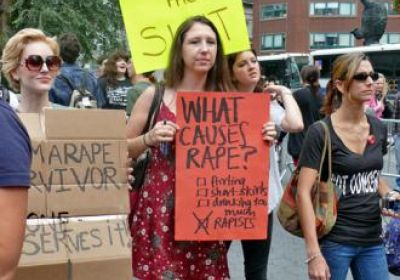
About 350 women took to the streets of Adelaide on October 26 as part of a Reclaim the Night protest. No march was held last year, so it was inspiring to see women of all ages marching through the central business and nightclub districts of Adelaide chanting, “whatever we wear, wherever we go — yes means yes, no means no”, and “women united will never be defeated”. The event was a women’s only space. Male supporters were encouraged to show support from the footpath along the march route. -
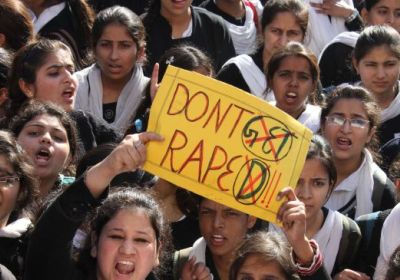
About 500 people protested at the Fremantle Reclaim the Night rally, which took place on October 26. The rally demands were: end violence against women, stop victim blaming and consent education in schools.
-
Socialist Alliance activist and feminist Liah Lazarou gave the speech below to Adelaide’s Reclaim the Night rally on October 26. * * * -
Women and girls are among the hardest hit by the anti-working-class policies of Britain’s Conservative-Liberal Democrat coalition government. A report published in The Guardian earlier this year showed that rising taxes and cuts to social spending have hit women three times as hard as men. Women aged 50-64 have been hit hardest by rising unemployment since the coalition came to power. It is up 31% compared to an overall rise of 4.2% in the country (to 2.6 million people).
-
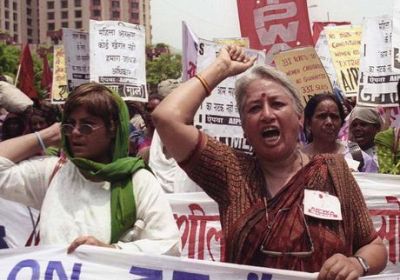
In what one longstanding Perth feminist activist described as the biggest Reclaim the Night march in Perth in 20 years, over 300 people — women, children and men — rallied and marched in Fremantle on October 26, for an end to violence against women.
-
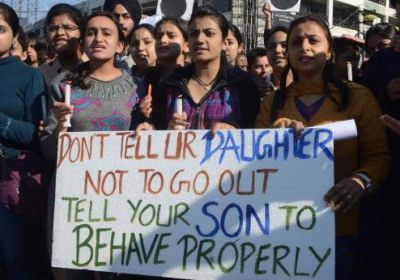
Globally, millions of women experience violence — whether in the form of intimate partner violence, rape and sexual coercion, stalking, trafficking, forced prostitution, exploitation of labour, or other violations of women's bodies and psyches. The high prevalence of violence against women both reflects and reinforces women's lower status in society. To end the violence against women, we need to confront both the violence directly and the structural causes of women's lower standing that makes women vulnerable to the violence.