

French president Emmanuel Macron’s government narrowly survived a no-confidence motion over his decree enforcing the attack on pensions, reports John Mullen.
French president Emmanuel Macron’s government narrowly survived a no-confidence motion over his decree enforcing the attack on pensions, reports John Mullen.

French President Emmanuel Macron has decided at the last moment to impose his pension bill by decree, reports John Mullen.

Ben Radford and Isaac Nellist take you through the latest news from Australia and around the world.
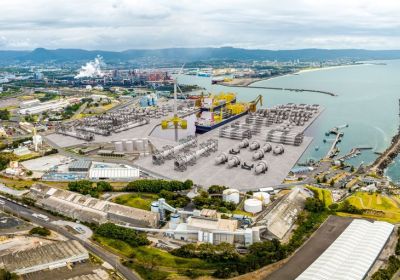
Three weeks before the AUKUS nuclear submarine deal was announced, a new plan to build a large renewable energy hub at Port Kembla was unveiled. Melanie Barnes reports.

World Pride showcased how accepted the LGBTIQ community really is. However, rights still need to be legislated, argues Rachel Evans.
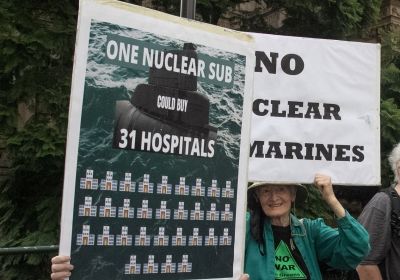
The Antipoverty Centre has criticised Anthony Albanese’s decision to spend a staggering $368 billion on nuclear submarines. Isaac Nellist reports.
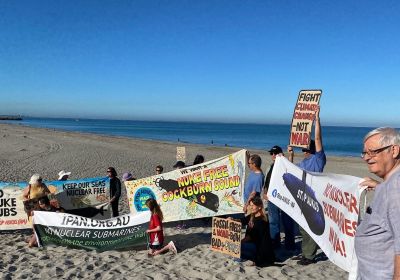
Stop AUKUS WA launched its Nuke Free Cockburn Sound campaign the day after the PM announced the AUKUS nuclear submarine deal. Leonie Lundy reports.
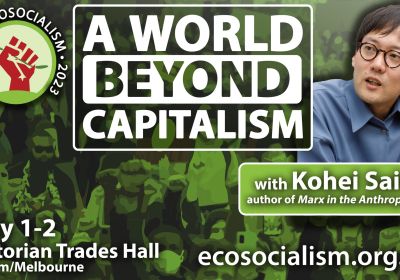
Japanese Marxist academic Kohei Saito, author of Capital in the Anthropocene, will be a keynote speaker at Ecosocialism 2023, organised by Green Left. Peter Boyle reports.
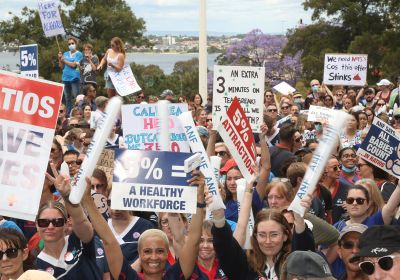
Given how many are being crunched by the cost-of-living crisis, public sentiment would be on the unions’ side if they took united action for wage rises, argues Mary Merkenich.
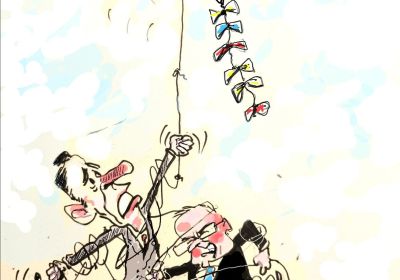
Superannuation tax concessions now cost as much as the age pension and more than the National Disability Insurance Scheme, writes Peter Boyle.
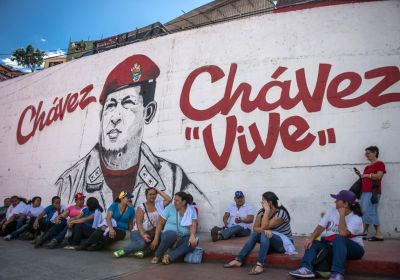
Venezuelan President Hugo Chavez was a leader for Venezuela, Latin America and the whole world, a meeting to mark 10 years since his death, was told. Chris Slee reports.

The closure of the traditional opportunity shop means the losers are people who can least afford it, argues Darren Saffin.