
The Barack Obama administration has proposed new regulations for hydraulic fracturing on 756 million acres of public and tribal lands.
The rules were written by the drilling industry and will be streamlined into effect by a new intergovernmental task force, established by the president, to promote fracking ― a practice that has been linked to water poisoning, air pollution, methane emissions and, most recently, earthquakes.
-
-
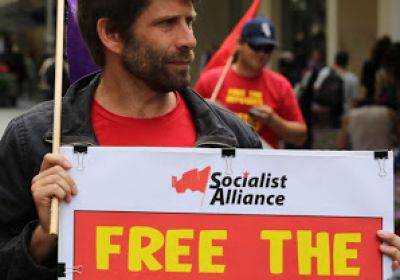
Sam Wainwright gave this speech at a refugee rights rally in Perth on July 20. *** A statement by famous British Labour MP and socialist Tony Benn said: “The way a government treats refugees is very instructive because it shows you how they would treat the rest of us if they thought they could get away with it.”
-
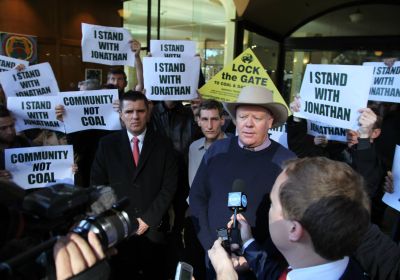 About 100 people rallied outside the Downing Centre Court in Sydney on July 23 to support Jonathan Moylan, the environmental activist who is facing charges under the Corporations Act for his alleged "hoax" that exposed ANZ bank's funding of mining activities by Whitehaven Coal, which threaten community health and agricultural land at Maules Creek, as well as the survival of koala populations in Leard State Forest in northern NSW.
 -
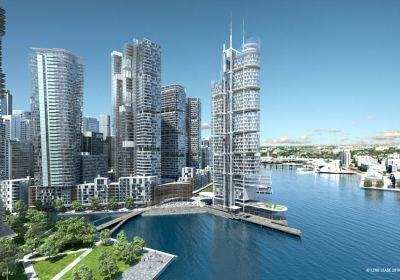 James Packer’s $1.4 billion Crown Casino development at Barangaroo on Sydney Harbour was approved by the NSW government on July 5. The high-rollers’ casino will reach 70 storeys, with 350 six-star rooms and 80 luxury apartments. It will be designed to attract the so-called whales of the gambling world.
 -
The suffocating heat wave that struck the north-east United States in recent days brought new attention to the harsh conditions that thousands of low-wage workers endure every day of the year. While millions of New York City residents pondered how to escape from stifling temperatures, workers at a McDonald's in Manhattan's Washington Heights were being forced to work in a real-life “Hell's Kitchen”.
-
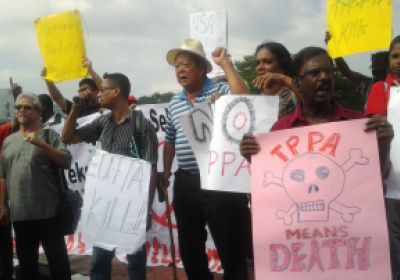
About 200 members of the Gabungan Bantah FTA (Anti-FTA Coalition) braved the morning heat to rally against the Trans-Pacific Partnership Agreement (TPPA) deal on July 16, claiming the controversial deal would lead to the colonisation of Malaysia.
-
Big Oil is fracking California, and it does not want anyone to interfere with the damage it does to the environment. But as part of a nationwide “Summer Heat” campaign of environmental activists pledging to take action against the fossil fuel industry, groups are organising a festival, march and nonviolent direct action at Chevron's oil refinery in Richmond, California, on August 3 to demand environmental justice. Those taking part include 350.org, Richmond community groups, the NoKXL Actions Council and other allies.
-
In the small hours of July 6, just after midnight, a train hauling 73 cars of petroleum products derailed and exploded in the centre of the town of Lac Megantic, Quebec. A large number of the rail cars caught fire and exploded in huge fireballs. The centre of the town was razed and the rail cars were still burning 36 hours later.
-
Roger Burbach, the co-author of Latin America's Turbulent Transitions: The Future of 21st Century Socialism, wrote this open letter to NSA whistleblower Edward Snowden on July 15. It first appeared at www.futuresocialism.com -- where you can also order the book. * * *
-
 When Ecuador granted asylum to Assange in mid-2012, Sydney Morning Herald’s Peter Hartcher accused Assange of “hypocrisy” for accepting asylum from President Rafael Correa, “one of the world’s leading oppressors of free speech”. Annabel Crabb joined in, writing in the SMH: “A gazillion Assange Twitter fans [hailed] Ecuador and its president, Rafael Correa, as a hero of international free speech and human rights.
 -
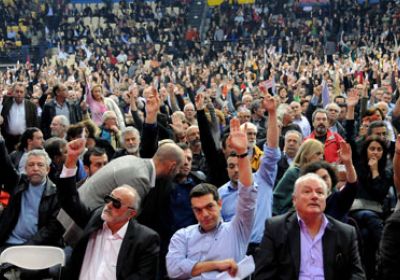 Pedro Filipe Soares is a Left Bloc MP in the Portuguese parliament. Soares attend the first congress of the Coalition of the Radical Left (Syriza) from July 10-14. Syriza, a coalition of left groups, decided to become a new political party after it came close to winning elections on an anti-austerity platform last year. The article was translated by Dick Nichols. * * *
 -
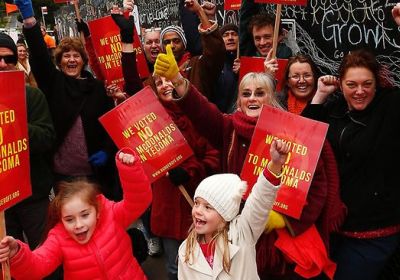 Protesters are facing legal threats over their fight to protect the Dandenong Ranges from the yellow fluorescent arches of McDonald's franchises. In a proposal first rejected by the local council last year, McDonald’s was later given approval by the Victorian Civil and Administrative Tribunal (VCAT) to build a restaurant opposite the local primary school in the small town of Tecoma. VCAT made the decision despite strong opposition from local residents, including a petition with 2000 signatures.