
Members of the European Parliament show support for Greece against its creditors. "This debate is not exclusively about one country," said the Greece's left-wing Prime Minister Alexis Tsipras in a speech to the European Parliament on July 8. "It is about the future of our common construction."
-
-
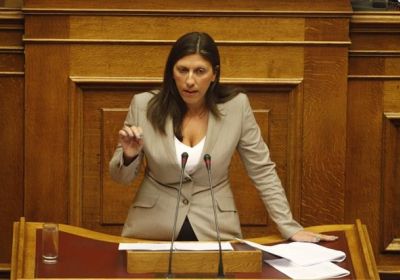 The debt imposed on Greece and its people by creditors directly infringes the human rights of Greeks and is “illegal, illegitimate and odious”, a preliminary report issued by the Audit Committee on Public Debt declared on June 17. The finding came as talks between Greece and its creditors finished without a deal on June 18. The International Monetary Fund is threatening the near-bankrupt country with default unless it pays the US$1.7 billion it owes by the June 30 deadline.
 -
 “Greece avoided another financial crisis by paying about €500 million in wages to public sector workers, but suffered another downgrade of its credit rating,” The Guardian on May 16. The payment came with Greece's SYRIZA-led government, that is seeking to break with austerity, locked in difficult talks with its creditors. Greece is seeking to release €7.2 billion in bailout funds to avoid a default and exit from the eurozone.
 -
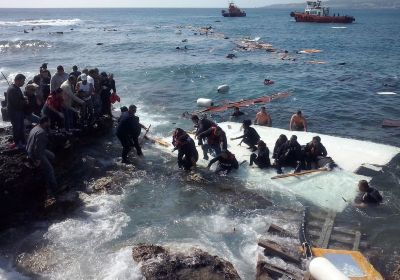
About 800 refugees were drowned in the Mediterranean on April 18 when a boat carrying them from Libya, and trying to reach the south of Italy, capsized. Just three days earlier, more than 400 people drowned when another boat on the same route sank. Refugee deaths in the Mediterranean are rising sharply. “According to the UN and the International Organisation for Migration, 1,776 people are dead or missing so far this year, compared with 56 for the same period last year,” the April 24 Guardian reported.
-
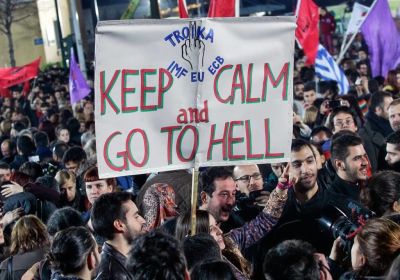 What does the victory of radical left party SYRIZA in Greece's January 25 elections mean for politics in Europe, at Europe-wide and national levels? Both levels are closely intertwined, and since SYRIZA’s win have been having rapid feedback effects on each another. Across Europe, the reverberations of SYRIZA’s win are being felt with rising force, both in “peripheral” Europe, but also in the German-led European Union “core”.
 -
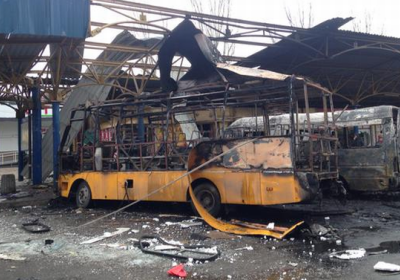 Leaders of Ukraine, Russia, Germany and France emerged from negotiations in Minsk, Belarus on the morning of February 12, after 16 hours of talks, and announced that agreement had been reached for a ceasefire in Ukraine's civil war. The conflict has divided Ukraine since the overthrow of the unpopular, but democratically elected, president Viktor Yanukovich in February last year.
 -
 Venezuela's left-wing government has congratulated Alexis Tsipras, leader of Greece's radical left SYRIZA party, who won a huge victory in Greece's parliamentary elections on January 25, TeleSUR English reported. A Venezuelan government statement said: “Venezuela warmly congratulates the Syriza coalition party and Alexis Tsipras for their historic victory, wishing them success and complete solidarity and support.”
 -
 Resistance is building in Europe against government attempts to force ordinary people to bailout the failed financial system of “casino” capitalism. After four general strikes in Greece this year, and two more planned, strike action is beginning in Spain against planned attacks on public services and welfare.
 -
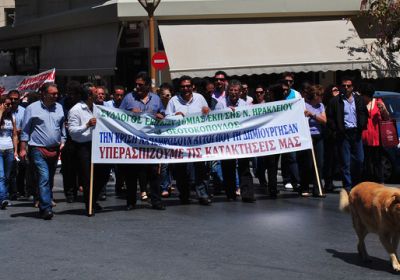 As Britain’s political class pretends that its arranged marriage of Tweedledee to Tweedledum is democracy, the inspiration for the rest of us is Greece. It is hardly surprising that Greece is presented not as a beacon but as a “junk country” getting its comeuppance for its “bloated public sector” and “culture of cutting corners” (as the British Observer said). The heresy of Greece is that the uprising of its ordinary people provides an authentic hope unlike that lavished upon the warlord in the White House.