
Venezuelan President Nicolas Maduro criticised US “intervention” in the internal affairs of Latin American countries, and in the Honduran elections, on November 25.
Xiomara Castro, candidate for the LIBRE party formed by the resistance movement that opposed the 2009 US-backed coup, declared victory after the vote. However, so did her conservative opponent, National Party's Juan Hernandez , with the Electoral Supreme Court (TSE) declaring Hernandez clearly ahead. LIBRE rejected the TSE's count, alleging serious fraud.
-
-
Lurid articles about Venezuela have peppered the Western press in recent days and weeks. The latest event that has been widely reported is the use of the military to occupy stores, including the national electronics chain Daka, with a mandate to sell products at “just prices”. This is viewed by most media outlets as further evidence of the chaotic mismanagement of the economy by the government. However, while there are serious economic problems in Venezuela, this one-sided portrayal prevents an informed debate.
-
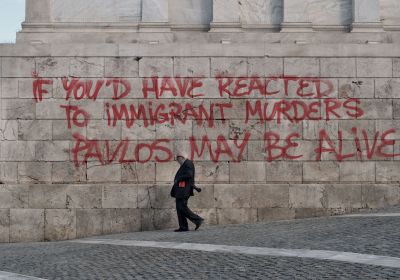 The 40th anniversary of the polytechnic uprising that helped end the Western-backed military junta in Greece was marked on November 17. The date is a national day of remembrance and marks a defining moment in modern Greek history. The image of a tank battering down the gates to the student-occupied polytechnic school 40 years ago remains strong in the public consciousness. To this day, it is illegal for the police and army to enter the university grounds.
 -
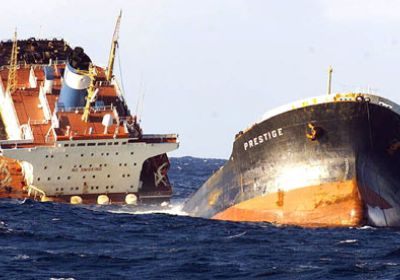 Eleven years to the day after the crew of the 80,000 tonne oil tanker Prestige heard the huge bang that marked the start of its break-up and of Europe’s most devastating oil spill, a high court panel in the Galician city of A Coruna delivered its verdict in the case on November 13. Who was guilty of an environmental catastrophe when the tanker broke in two and spilled 63,000 tonnes of sticky, sulphurous fuel oil along 2900 kilometres of Spain’s and France’s Atlantic coast?
 -
Venezuela’s National Assembly granted President Nicolas Maduro the power to pass laws by decree on economic and anti-corruption issues for a period of 12 months on November 19. The National Assembly held a second and final vote on a proposal from Maduro to enact the so-called enabling law, which allows him to legislate by decree on specific issues for the period set by the assembly. Maduro has been empowered to pass laws to “fight corruption, usury, money laundering and the economic war unleashed in recent times against the country by the national oligarchy”.
-
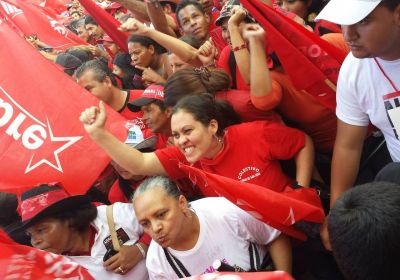
Both leading candidates are claiming victory in Honduras’s disputed presidential election, Democracy Now! The race has pitted Xiomara Castro, wife of ousted President Manuel Zelaya, against right-wing candidate Juan Orlando Hernandez.
-
“A new union report alleges rampant lawlessness in the lucrative and growing reality TV industry,” Josh Eidelson wrote in a November 19 Salon.com article. “The Writers Guild of America, East [WGAE], which authored the report based on a survey of current and former non-union workers, contends that it reveals an ugly reality behind top shows like 'Pawn Stars' and 'Fatal Encounters,' which have been supplanting unionized, scripted sitcoms and dramas.”
-
 Three of the main political parties contesting the November 24 election in Honduras are accusing the oligarchy-controlled Supreme Elections Tribunal of vote manipulation and fraud following a massive voter turnout on election day.
 -
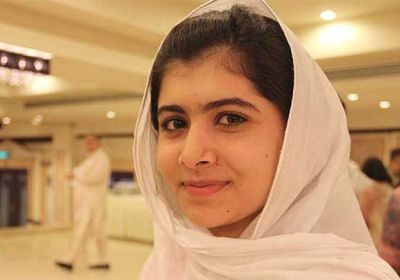 At just 16 years old, Malala Yusufzai is the youngest person to be nominated for the Nobel Peace Prize. When the Pakistani teenager was shot in her head by Taliban gunmen because she spoke out about her right to education, it sent shock waves around the world. The Western media took notice. Her attack was used as an excuse by Western media and governments to justify the invasion of Afghanistan. Malala is a courageous young woman, whose brave example in the face of barbaric violence is being used to justify the barbaric military violence associated with the occupation of Afghanistan.
 -
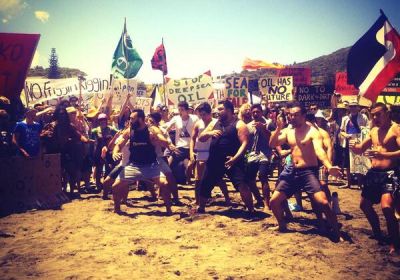 Continuing New Zealand’s proud history of protests at sea, attempts by Texan oil giant Andarko to start deep-sea oil drilling are being blocked by a tiny sailing boat. Thousands came out to NZ's west coast beaches on November 23 to support the Oil Free Flotilla in its stand against Anadarko. More than 1000 gathered for the main event at West Auckland's iconic Piha beach, carrying colourful home-made banners with messages such as "We love our beaches", "No drill, no spill" and "Anadarko go home".
 -
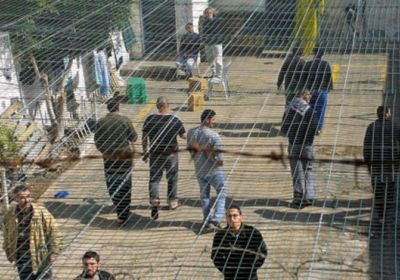 Young Palestinian prisoner Hassan Abdul-Halim Turabi, who suffered from leukemia, died at the Afula Israeli Hospital aged 22 on the November 5. Turabi was killed by deliberate Israeli medical neglect, after being denied essential treatment. The number of Palestinian prisoners who have died in Israeli jails since 1967 now sits at 205. Turabi was taken prisoner more than 10 months ago. Due to his ill health, Israel said it would release him but did not. When he first started experiencing pain, he asked for medical treatment in the prison clinic and was given painkillers.
 -
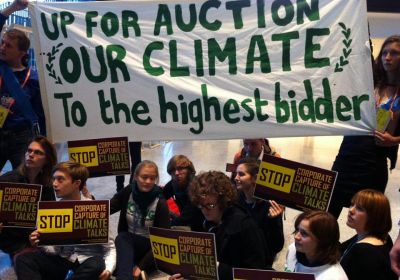 More than 135 groups internationally have condemned Poland and European Union for facilitating a corporate takeover of United Nations climate talks (COP19) that started October 11 in Warsaw. The EU aims to expand carbon markets that would benefit big polluters at the UN climate talks, says a statement signed by more than 135 groups, movements and networks from all over the world.