
Newly leaked United States government documents have provided an unprecedented window into the secret US drone assassination program across the globe.
In “The Drone Papers”, online publication The Intercept reveals drone strikes have resulted from unreliable intelligence, stemming in large part from electronic communications data, or “signals intelligence” (for example, using mobile phone signals to identify people) that officials acknowledge is insufficient.
-
-
 Russia’s current military action in Syria, its first such action outside former Soviet territory, has shocked the world.
Turkish President Tayyip Erdoğan exclaimed, miserably: “Russia has no border with Syria, so why are they so interested in Syria?”
Russia’s current military action in Syria, its first such action outside former Soviet territory, has shocked the world.
Turkish President Tayyip Erdoğan exclaimed, miserably: “Russia has no border with Syria, so why are they so interested in Syria?”
-
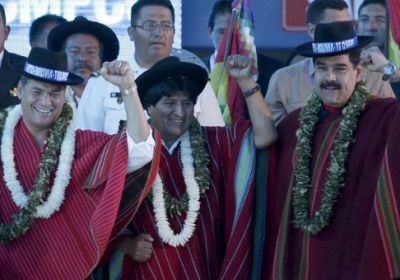 “For now, we are discussing a problem left to us by capitalism - climate change.” This was the conclusion of Bolivian President Evo Morales in his closing remarks to the October 10-12 World People's Conference on Climate Change and the Defence of Life in Cochabamba. More than 5000 people from more than 40 countries took part in the summit, established to give a voice to the poor and marginalised victims of climate change. Proposals and demands agreed on at the summit will be taken directly to the United Nations climate talks in Paris starting on November 30.
 -
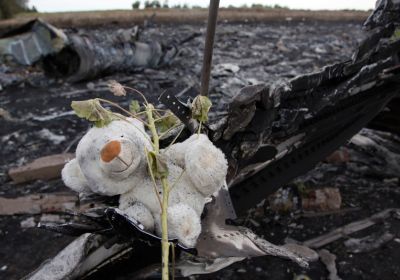 The Dutch Safety Board released its long-awaited report on October 13 into the downing of flight MH17 at the Gilze-Rijen military airbase. It came 15 months after the disaster that killed 298 people, Morning Star said the next day. Board chairperson Tjibbe Joustra criticised the Kiev government for allowing civilian aircraft to fly through a dangerous war zone.
 -
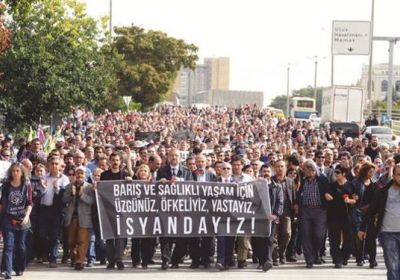 There was massive participation in the general strike declared by four main trade unions on October 12 and 13 in protest at the October 10 massacre in Ankara. The strike brought life to a halt. While there was large participation across Turkey, thousands of workers took to streets in Ankara where the October 10 blasts claimed the lives of at least 128 people and left as many wounded.
 -
 The moment the bomb detonated. Ankara, October 10, 10:04am.
The following statement was released by Selahattin Demirtaş and Figen Yüksekdağ, co-chairs of the Peoples Democratic Party (HDP), on October 12 in response to the October 10 bombing of a peace rally in Ankara organised by the HDP, trade unions and civil society organisations. Following the attack, police blocked ambulances and attacked survivors.
The moment the bomb detonated. Ankara, October 10, 10:04am.
The following statement was released by Selahattin Demirtaş and Figen Yüksekdağ, co-chairs of the Peoples Democratic Party (HDP), on October 12 in response to the October 10 bombing of a peace rally in Ankara organised by the HDP, trade unions and civil society organisations. Following the attack, police blocked ambulances and attacked survivors.
-
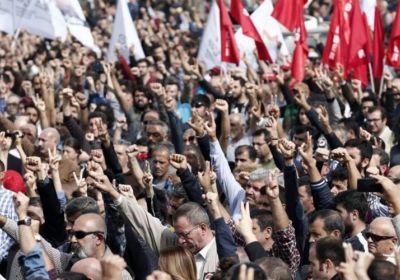
Turkish trade unions began a two-day general strike on October 12 in protest at the bombings two days earlier at a peace march in Ankara peace march that killed more than 125 people, Morning Star online reported.
-
 Every year, the International Monetary Fund (IMF) sends a group of economists to Australia to survey the domestic economy, comment on the effects of government policy and make some suggestions as to what might best be done in the coming year. It is known as an “article IV consultation”. The IMF executive board’s latest report was publicly released in early October. After commending Australia’s economic performance during the past two decades, the report noted some challenges ahead. Chief among them is the prospect of “slow growth” in the coming year.
 -
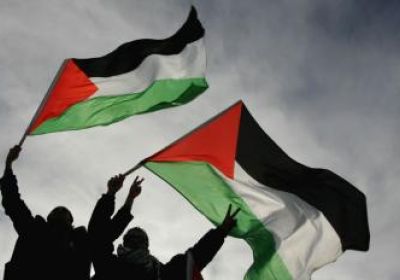 The statement below was released by Resistance: Young Socialist Alliance, the youth group of Australia's Socialist Alliance, on October 8. *** Resistance: Young Socialist Alliance condemns the killing of three Palestinian youth by Israeli security forces and settlers in the past 24 hours. They have joined the nearly 500 Palestinians who have been injured by the Israeli occupation forces since clashes began several days ago.
 -
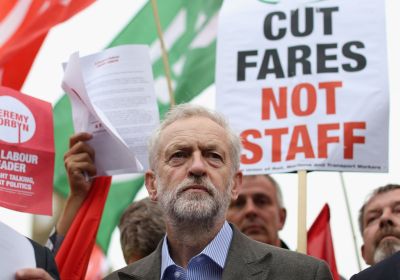
Jeremy Corbyn's successful leadership campaign team launched a new group of the left on October 7 to transform Labour into a “mass movement.”
-
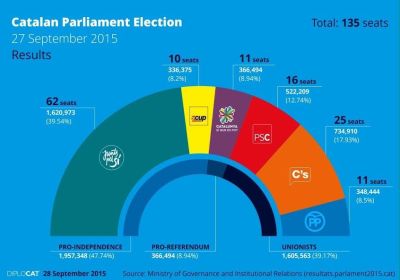 Who won the September 27 elections for the Catalan parliament, called as a substitute for the Scottish-style independence referendum that the Spanish People's Party (PP) government refuses to allow? It depends who you ask. On the night, most commentators on Madrid-based TV and radio called the result a defeat for the pro-independence camp: its two tickets — the mainstream nationalist Together for Yes and the anti-capitalist People's Unity Candidacies (CUP) - won only 47.74% of the vote against 52.26% for “the rest”.
 -
 Indonesian police shot two senior high school students in Gorong Gorong, Timika, West Papua on September 28, the Institute for Papuan Advocacy and Human Rights (IPAHR) said the next day. The IPAHR said 17-year-old Kaleb Bogau was shot in the chest and died on the scene. Efrando Sabarofek, also 17, was shot in the chest and leg and is in a critical condition in the Timika hospital.