
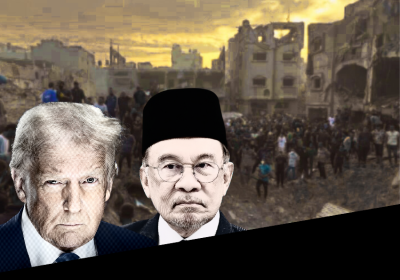
The Socialist Party of Malaysia is protesting the invitation issued to United States President Donald Trump to attend the Association of Southeast Asian Nations-US summit in Malaysia, reports Susan Price.
The Socialist Party of Malaysia is protesting the invitation issued to United States President Donald Trump to attend the Association of Southeast Asian Nations-US summit in Malaysia, reports Susan Price.
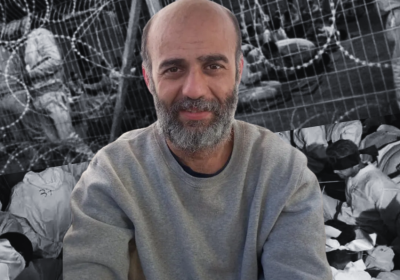
In her second interview, Australian citizen journalist Jude Alexander spoke via text message with nutritionist Dr Mohammed Hamad, about his arrest and 47-day detention by Israeli authorities. Dr Hamad is living in a tent in Gaza with his wife and five children.
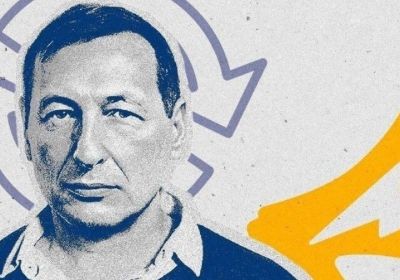
Anti-war socialist Boris Kagarlitsky delivered this recorded message to the Socialism 2025 conference in Chicago, United States.
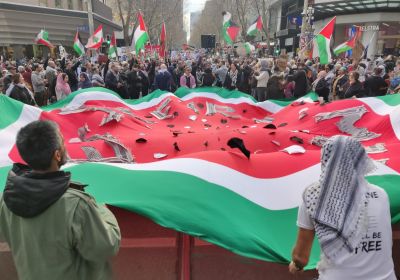
Just over a month ago, Australian Caroline Smith flew out of Perth for Egypt’s capital, Cairo, to join a global contingent of people seeking to challenge the siege on Gaza and demonstrate solidarity with the Palestinian people, who are living under conditions of genocide. This is her story.
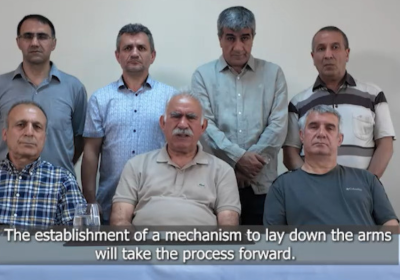
Twenty to thirty Kurdistan Workers’ Party guerillas will come down from the mountains and destroy their weapons in front of witnesses from around the world, in a symbolic act of the PKK’s commitment to its disarmament and dissolution, reports Sarah Glynn.

Serhii Shlyapnikov speaks to political scientist and author Manfred Elfstrom, whose research focuses on labour protests in China.

Isaac Nellist speaks to Democratic Socialist of America member Winnie Marion about Zohran Mamdani's important win in the New York City Democratic mayoral primary.

Russian leftist and anti-war political prisoners are calling on politicians and the media around the world to work towards the release of political prisoners in Russia, reports Federico Fuentes.
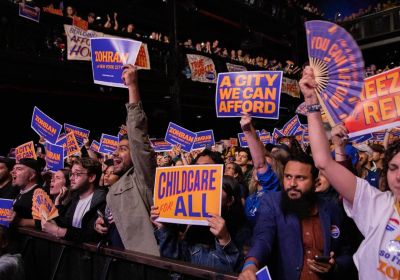
Zohran Mamdani’s win in the New York City Democratic mayoral primary has been celebrated by the left around the world as a spark of hope since the election of Donald Trump last year. Isaac Nellist speaks to Winnie Marion — a Democratic Socialists of America member — about the campaign and its broader implications for politics in the US and internationally.
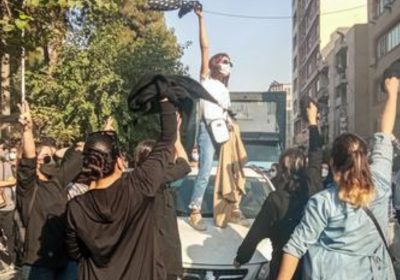
Iran’s monarchist opposition’s support for “liberation” by invasion proved to be a nightmare for ordinary people, says Iranian American socialist feminist Frieda Afary in an interview with Alternative Viewpoint’s Farooq Sulehria.
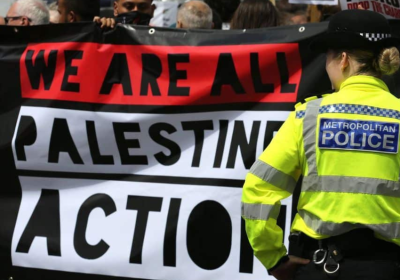
The British Labour government has proscribed protest group Palestine Action as a terrorist organisation in a frightening overreach of power, reports Simon Hannah.
Sarah Glynn looks at the brutal crackdown on Kurds and other minorities and activists since the Israeli-United States bombings of Iran.