-
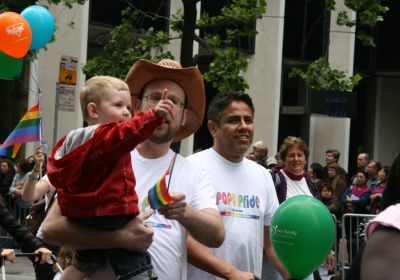
A bill legalising same-sex adoption passed the lower house of NSW parliament on September 2. Western Australia and the Australian Capital Territory already have laws supporting same-sex adoption. Put to a conscience vote, the bill passed with 46 votes in favour and 44 against. Labor Premier Kristina Keneally supported the bill, as did Liberal leader Barry O’Farrell. Nationals leader Andrew Stoner voted against. On August 31, Christian Democratic Party leader Fred Nile organised a rally against the bill. According to his press release, 300 people attended. -
The 2010 federal election campaign was notable as being one of the most tedious in the history of modern elections — at least the campaigns the two major parties dished up were. The field of youth affairs was among the direst, with both the Coalition and ALP using young people as a political football to appeal to older and more conservative sections of the population. Coalition leader Tony Abbott reconfirmed his status as an out-of-touch, patronising, old white man, encouraging young people to conform to conservative values.
-
A 21-year-old Tamil refugee has allegedly been the victim of an assault while in detention. Leela Krishna was recognised as a refugee by the Department of Immigration and Citizenship in April this year, but is still held in Villawood detention centre. He was waiting for security clearance from ASIO before release. But, on August 21, he was allegedly assaulted in an isolation unit by a former professional kick boxer. The police are investigating the attack, and Serco — the private contractors who manage the centre — have placed Krishna in the “housing” component of Villawood.
-
Two of the central figures in a major media and government scandal that erupted in the lead-up to the launch of the Northern Territory intervention will speak in Sydney on September 3, in their first public engagement together. Tjanara Goreng Goreng, a former Howard Coalition government official-turned-whistleblower, and Chris Graham, the founding editor of the National Indigenous Times, will speak address a public forum, at the University of Technology, Sydney, hosted by the Stop the Intervention Collective Sydney (STICS).
-
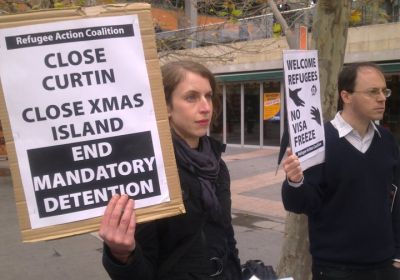
On August 23, the Department of Immigration and Citizenship (DIAC) reported that a 30-year-old man found unconscious in the Curtin Immigration Detention Centre in Western Australia had died. After his collapse on August 21, the man was taken to Derby hospital, 40 kilometres away. That night, he was transferred to Sir Charles Gairdner Hospital in Perth, more than 2000km south of Derby. He died the next day. DIAC would not tell Green Left Weekly the man’s name, but said it didn’t believe there were suspicious circumstances surrounding his death. A Coronial inquiry -
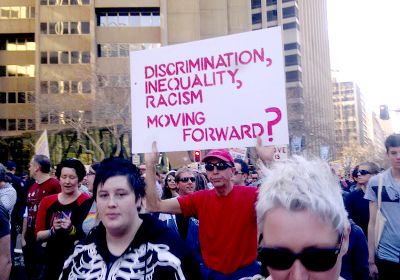
For most queer rights activists, the most pressing issue is queer marriage rights. Denying this basic right to a large number of Australians is abhorrent. In a democracy, the elected officials are supposed to represent the views of the people who elect them. The majority of Australians are in favor of giving same-sex couples the right to marry, but both major parties have shown their contempt for the opinions of the majority. -
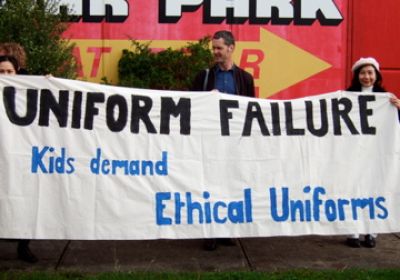
Thirty students, parents, teachers and FairWear activists met at Brunswick South West Primary School on August 16 to celebrate and highlight that school’s commitment to ethical uniforms. Students at Brunswick South West Primary School joined with FairWear supporters to praise their school community for ensuring that the uniforms they wear are made fairly and ethically. -
The fight is on at Bluescope Steel, in Western Port Hastings, where 86 maintenance workers from the Australian Manufacturing Workers’ Union (AMWU) are holding their picket lines in the face of scab labour. The workers are under attack from their employer Silcar and Bluescope Steel, which contracts its plant maintenance to Silcar. The steel manufacturing plant employs around 1400 people full-time and produces more than a million tonnes of steel products a year.
-
Green Victory I The most striking thing about the Greens victory in the seat of Melbourne is not that it is their first lower house seat at a federal election. More significant is that more than 11% of the vote for the Greens results in less than 1% of the seats. In theory, a party could receive 20% or 30% of the vote and get no seats whatsoever. It is time that Australia moved to a more democratic proportional representation system where parties are represented in proportion to their level of support among the people. Alex Bainbridge Perth
-
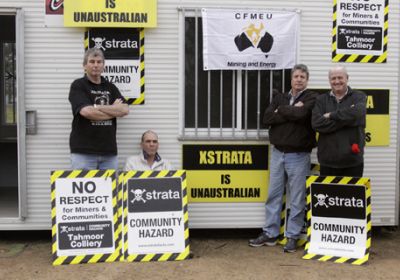
Coalminers in Tahmoor have been locked out of their workplace again. They've been fighting with their employer, the coal giant Xstrata, for more than 22 months for a fair, new Enterprise Agreement. Attempts to negotiate have collapsed repeatedly because the company has refused to budge, even during mediated talks. During a workplace dispute over job security and safety conditions, the workers held a six-hour strike on February 7, followed by a 24-hour stoppage on February 8. -
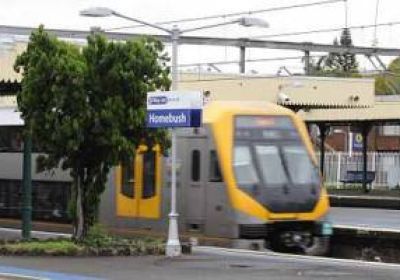
On August 11, the NSW Combined Unions Campaign Committee (CUCC) — which consists of 80 rank-and-file delegates of the combined rail unions, called off a planned strike on election eve, August 20. Delegates were divided over the decision. The CUCC was discussing how to respond to Railcorp’s latest offer, which, the August 25 rail union bulletin reported, had three elements: “• A four year agreement ,to protect our jobs and entitlements should we be faced with a new State Government following next year’s State election, with guarantees for no forced redundancies; -
The federal election result was a breakthrough for all who dream of being liberated from the Tweedle Dum and Tweedle Dee politics that has been foisted on Australia for many years. By denying the major parties a majority mandate, and by swinging strongly to the Greens, the possibility for a very political future has been opened up. Of course, there are many challenges ahead.