-
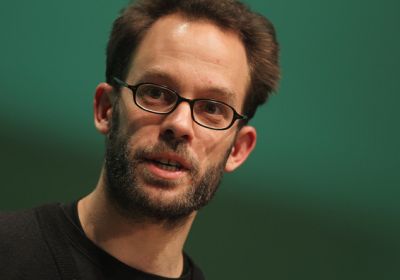
WikiLeaks has announced it will pursue legal action against disgruntled former employee Daniel Domscheit-Berg, whose recently released book, Inside WikiLeaks, slams Julian Assange's leadership and character in a series of allegations. Some of the allegations appear serious. Others are hopelessly trivial. -
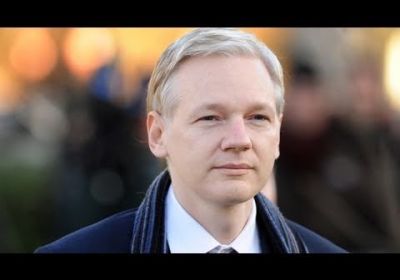
Leaked emails have revealed a plot by private internet security firms to bring down WikiLeaks. The plot was allegedly created on behalf of the Bank of America — the largest bank in the US. WikiLeaks editor-in-chief Julian Assange has said Bank of America will be the subject of future leaks. Computer-hacker group Anonymous revealed the plot after stealing 50,000 internal emails from internet security company HBGary Federal. -
Following revelations that The New York Times liaised with the White House before publishing information supplied to it by WikiLeaks, the website’s editor-in-chief, Julian Assange, has revealed the British Guardian edited out “all sorts” of information before publishing US diplomatic cables.
-
WikiLeaks founder Julian Assange delivered a pre-recorded video address to a public meeting at Melbourne’s Federation Square on February 4. Below is the transcript of Assange’s speech. ***** Thank you so much for coming to this rally. Your presence here and your support, in homes, workplaces, online and elsewhere is exactly what is needed to keep us strong. -
WikiLeaks has launched the WikiLeaks roundtable series, in which founder and editor Julian Assange addresses, in a short video, questions that people put to the organisation. This forum aims to cut out “intermediaries” such as the mainstream corporate media, and instead allow the whistleblowing site to speak directly with people. The first video was published on February 6. “We are going to put everyone on a level playing field,” Assange said. “All members of the press and all members of the public. -
US investigators have admitted their efforts to find grounds on which to prosecute WikiLeaks editor-in-chief Julian Assange over the whistleblowing website’s release of hundreds of thousands of classified US documents were in trouble.
-
The Sydney Peace Foundation awarded its “gold medal for peace with justice” to WikiLeaks editor-in-chief Julian Assange on February 2 in recognition of his “exceptional courage and initiative in pursuit of human rights”. This award is different from the foundation’s annual Sydney Peace Prize. The foundation has awarded the gold medal on only three previous occasions: the Dalai Lama in 1998; Nelson Mandela in 2000 and Japanese lay Buddhist leader Daisaku Ikeda in 2009. -
As momentous events in Egypt demonstrate, much of the world is calling to account an “old order”. These are exciting times for the possibilities of real change in the way our societies are run. One of the catalysts of the “people power” we see on our TV screens is the extraordinary disclosure of secret information that tells us how wars begin and governments manipulate and deceive in our name.
-
The trials of the creator of WikiLeaks, Julian Assange, and of international terrorist Luis Posada Carriles began with less than a 24-hour difference on January 10 and 11. One took place in London and the other in El Paso, Texas. While the champion of freedom of information, Assange, was being accused by US officials of the very serious crime of terrorism, the confessed terrorist, Posada, was simply tried for immigration law violations. -
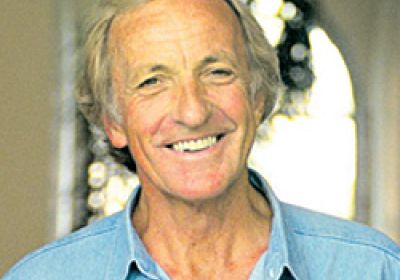
Renowned investigative journalist and film maker John Pilger interviewed Wikileaks' editor-in-chief about the “war on WikiLeaks” in response to the website “speaking truth to power”.
-
“WikiLeaks has had more scoops in three years than the Washington Post has had in 30.” — Clay Shirky It is for this reason that Wikileaks has become an incredibly important news source, with its commitment to provide the public with information that is deliberately withheld by governments and corporations, and to expose corruption. Its recent release of classified diplomatic cables revealing what our governments are really talking about behind closed doors has created a great divide in public opinion about just how much we, the people, really have a right to know. -
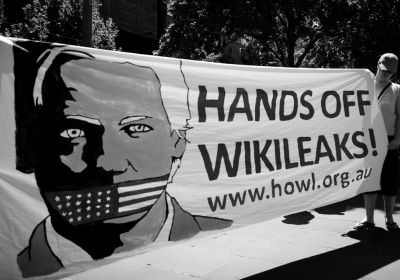
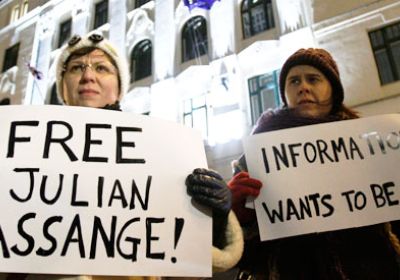
Hundreds of protesters rallied in support of the whistleblowing website Wikileaks and its editor in chief, Julian Assange, in Sydney on January 15. Other rallies also took place in major cities around the world. The rally, which began at Sydney’s Town Hall, was addressed by several key speakers. The protesters later took to the streets for a loud and lively march, which went past the US consulate and ended at Hyde Park.