
Bolivian President Evo Morales plans to file a lawsuit against the US government for crimes against humanity, RT.com reported on September 20. Morales criticised the US for its intimidation tactics and fear-mongering after a plane carrying Venezuelan President Nicolas Maduro was blocked from entering US airspace.
-
-
Venezuelan President Nicolas Maduro announced on September 10 that a Venezuelan Armed Forces plane would carry humanitarian aid to Syrian refugees in Beirut, Lebanon. The initiative came out of a resolution from the political council of the anti-imperialist bloc Bolivarian Alliance for the Peoples of Our America (ALBA) meeting in Caracas. The plane will bring blankets, medicine, and food. Established by Venezuela and Cuba in 2004 as an alternative to US domination, ALBA now involves eight nations from the region
-
 Venezuelans rallied to condemn fascism on September 11, marking the 40th anniversary of the United States-backed coup d’etat in Chile that ousted left-wing president Salvador Allende. The rally began at Plaza Salvador Allende at the Central University of Venezuela (UCV) and marched through the city centre to Llaguno Bridge. On the bridge is a memorial to those killed during the 2002 US-backed coup that temporarily removed former Venezuelan president Hugo Chavez from office. Chavez was restored by an uprising by loyal soldiers and the poor.
 -
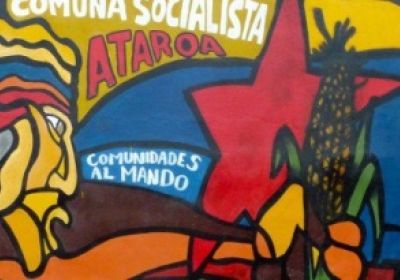 In a national census held over September 7 and 8, 1150 communes registered in a national census, exceeding expectations. The communes are forms of “popular power” in Venezuela that unite representatives of local communal councils across a regional area. Community councils in Venezuela are grassroots bodies where local residents manage public funds and undertake projects promoting community development. Communes, meanwhile, are formed by groups of community councils, and can take on larger scale projects and public works.
 -
Venezuela has agreed to sell oil to the Palestinian Authority (PA) at a “fair price” as part of new energy agreements with the Middle Eastern government. The deals, made during a meeting between Venezuelan foreign minister Elias Jaua and his PA counterpart Riyah al-Malki in Caracas on August 24, include the training of Palestinians in the handling and distribution of oil. Jaua referred to the deal as “an agreement of cooperation and solidarity … the sale of fuel at a fair price”.
-
 Venezuelan President Nicolas Maduro called on August 15 for his government to give greater support to the construction of communes in the country. He proposed several initiatives by which this could be done. Communes have their origin in Venezuela's communal councils, which are grassroots bodies made up of members of the local community. These self-managed bodies receive public funds to undertake community projects and small-scale public works.
 -
 Workers at Diana Industries have welcomed the appointment of a new company manager, claiming victory in their fight to prevent the “imposition” of businessperson David Mendoza as head of the worker-run company. Nationalised in 2008, production at Diana Industries is organised by workers through assemblies and a Socialist Workers’ Council. The company produces cooking oil, margarine, soap and other products, 80% of which are destined for state-run distribution networks.
 -
Venezuelan President Nicolas Maduro announced on August 16 that he would withdraw the country's ambassador from Egypt because of the conflict there and confrontations between supporters of the Muslim Brotherhood and the defacto government, which has seen over 700 people killed. "We have witnessed a blood bath in Egypt." Maduro said. "We warned that the coup against Morsi was unconstitutional ... the responsible party for what is occuring in Egypt is the empire." He said: "The United States doesn't have friends, it has interests, and what it wants is to control the planet".
-
Cuban Vice-President Jose Ramon Machado Ventura praised Ecuadorian President Rafael Correa and Venezuelan President Nicolas Maduro on July 31 for their fight against US imperialism. Machado said greater Latin American integration was aiding development across the region during the closing session of the 12th summit of the Bolivarian Alliance for the Peoples of Our America (ALBA) in Ecuador. But he stressed that social movements should lead the charge.
-
Nicolas Maduro completed his first 100 days since being sworn in as president on July 29 — a period marked by his new street government initiative, Latin American solidarity, and debate over spiked inflation and moderate economic growth. Maduro’s presidency began amid protest and claims of electoral fraud from Venezuela’s right-wing opposition. They continue to reject the results of the April 14 presidential election in which Maduro won 50.6% of the vote, a 1.6% margin over Henrique Capriles. Since then, polls have pegged his approval rating around 56%.
-
 The conversations started in June between Venezuela and the United States have definitively ended, Venezuelan President Nicolas Maduro announced on July 20 at an event of the Strategic Regions of Integral Defense (REDI) in Cojedes state. “My policy is zero tolerance to gringo aggression against Venezuela,” Maduro said. “I'm not going to accept any aggression, whether it be verbal, political, or diplomatic. “Enough is enough. Stay over there with your empire, don't involve yourselves anymore in Venezuela.”
 -
Roger Burbach, the co-author of Latin America's Turbulent Transitions: The Future of 21st Century Socialism, wrote this open letter to NSA whistleblower Edward Snowden on July 15. It first appeared at www.futuresocialism.com -- where you can also order the book. * * *