-
“Oil didn’t wreck Venezuela’s economy, socialism did.” That’s what Pascal-Emmanuel Gobry, of the Washington-based conservative think tank Ethics and Public Policy Center, wrote earlier this year in his reflection on Venezuela’s deepening economic crisis. Gobry, a prolific writer for Forbes and the Wall Street Journal, criticised Venezuelan analysts who scapegoat oil, even though he recognised that declining oil prices have aggravated the nation’s difficulties. “The culprit is clear and obvious,” Golbry contends. “The problem is Venezuela's authoritarian socialism.” -
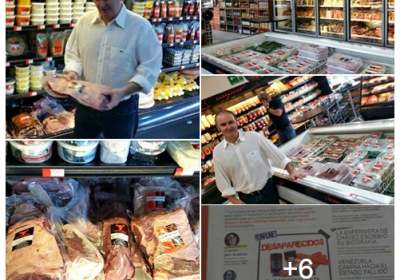
Agustin Otxotorena, a Basque executive living in Caracas, grew tired of constant calls from friends and relatives in Spain telling him that there was no food in Venezuela. So on May 20, he began publishing photos on Facebook of supermarkets in upscale sectors of Caracas filled with goods. -
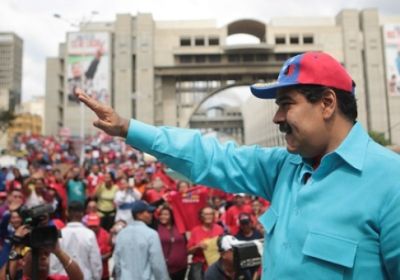
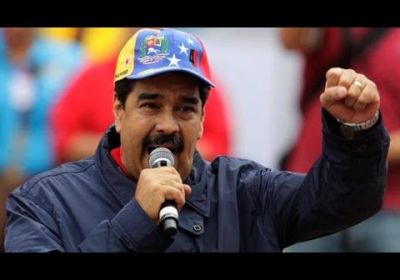
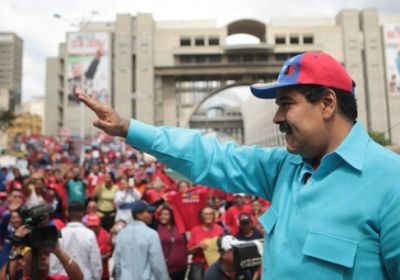
Venezuelan President Nicolas Maduro at a demonstration in support of the government's emergency economic measures emergency measures, Caracas, May 14. Photo via AVN.
-
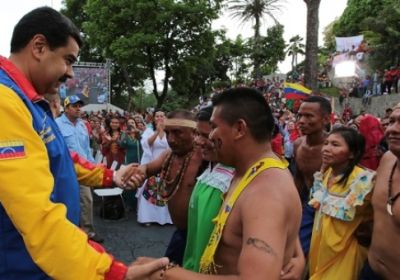
Indigenous communities representing various nationalities marched through the streets of Caracas on June 2 to show their support for the government of Nicolas Maduro and Venezuela’s Bolivarian Revolution. The groups taking part in the demonstration were responding to a call made by the government to develop grassroots solutions to the economic crisis the country is facing. -
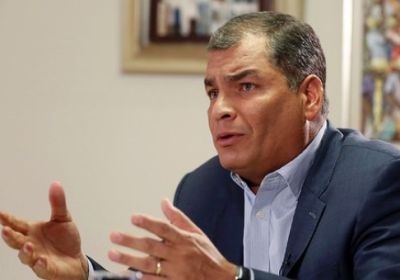
Ecuadorean President Rafael Correa spoke out on June 1 about efforts by right-wing political forces in Latin America to oust democratically-elected governments, saying that it would set a dangerous precedent for democracy in the region. “Right-wing politicians don't just want to return to power, they want to return with a thirst for vengeance,” said Correa during an interview with Ecuador Public Television. -
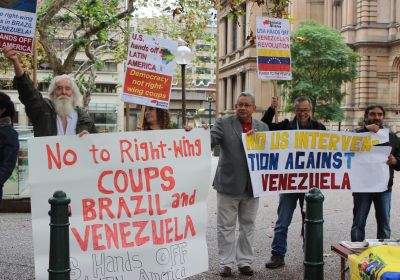
About 20 people gathered at Sydney Town Hall on May 28 to demand, "No to right-wing coups in Brazil, Venezuela" and "US hands off Latin America" The rally was organised by the Latin America Social Forum (LASF), with the support of other solidarity groups. -
The Organization of American States has announced it will hold an emergency meeting to discuss whether to suspend Venezuela for violating the OAS Charter. OAS Secretary General Luis Almagro said on May 31 that Venezuela had suffered "grave alterations of democratic order."
-
A community assembly as part of a communal council in Caracas. Photo by Rachael Boothroyd Rojas/Venezuela Analysis.
Leading Marxist author Michael Lebowitz spent six years (2004-2010) in Venezuela working as a director of the program for Transformative Practice and Human Development at the Miranda International Centre (CIM) in Caracas. There, he had the chance to take part in the building of socialism for the 21st century.
-
More than half a million soldiers and civilian militia members took to the streets of Venezuela over May 20 and 21 to defend their national sovereignty amid rumours of international intervention and a potential coup, Venezuela Analysis said on May 23. The drills featured troops, military boats and planes deployed to seven coastal states in Venezuela. They came after President Nicolas Maduro called on the military to rally around the defence of the country’s constitution in the face of foreign aggression. -
Venezuelan President Nicolas Maduro has hit out at “mounting aggressions” against his government after it was confirmed that a US plane had twice violated Venezuelan airspace. The US Boeing 707 E-3 Sentry is reported to have illegally entered Venezuela’s national airspace on May 11 and 13. Both incursions were detected by Venezuela’s Bolivarian air force and have sparked rumours that the US might be conducting covert spying operations over Venezuela. “This plane has all the mechanisms to carry out electronic espionage,” said Maduro on his television program on May 17. -
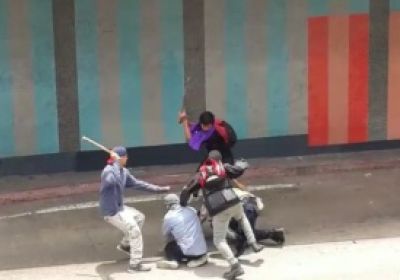
Right-wing protests hit the streets of Caracas and other cities across Venezuela — and in some cases turned violent, attacking police and other targets. The protests were part of a May 18 national day of action to demand that electoral authorities speed up the process of scheduling a recall referendum against left-wing President Nicolas Maduro. The national mobilisation came after right-wing leader Henrique Capriles gave a press conference on May 17 in which he invoked violence and called for the country's armed forces to “pick a side”. -
Venezuela's socialist president Nicolas Maduro told a crowd of supporters on May 15 that to increase productivity and help alleviate scarcity of basic products facing the South American nation, all businesses and factories closed down by their owners would be seized and handed over to their workers so production could be restarted. “A stopped factory [is] a factory turned over to the people,” Maduro said. “The moment to do it has come, I'm ready to do it to radicalise the Revolution.”