Unless the Indonesian government carries out a comprehensive recovery, hundreds of thousands of Merapi volcano eruption victims are certain to face economic and social destruction.
“One of the worst impacts of the eruption is the destruction of people’s livelihood; the land cannot be used to grow plants and economic activity virtually stops,” said Agus Priyono after visiting disaster relief centres set up by the Poor People’s Union (SRMI) in Magelang municipality.
Indonesia
Prime Minister Julia Gillard used a series of meetings with Asian leaders at the UN Regional Summit on October 30 to lobby for her government’s proposal to build a “regional” detention centre for refugees in East Timor.
She met with Vietnamese President Nguyen Minh Triet, Indian Prime Minister Manmohan Singh, Prime Minister Bouasone Bouphavanh of Laos and President Benigno Aquino of the Philippines, the October 30 Australian reported. She also met with United Nations secretary general Ban Ki-Moon, who “noted” her proposal — the only outcome reported.
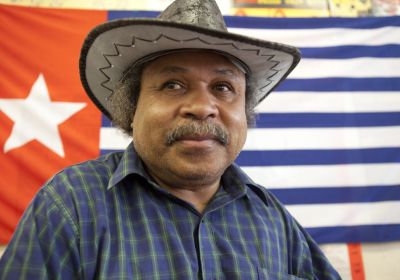
Videos showing the torture of West Papuans by occupying Indonesian soldiers have embarrassed the Indonesian government ahead of a scheduled visit in November by US President Barack Obama.
Obama is due to discuss a security deal that would involve the US training Indonesian military units accused of human rights violations.
A video posted at FreeWestPapua.wordpress.com shows two Papuans from Gurage village being tied down and interrogated by Indonesian soldiers about the alleged location of weapons belonging to the Free Papua Movement (OPM).
One hundred people gathered in Brisbane’s King George Square on October 22 to commemorate the tragedy of the SIEV X, an Indonesian fishing boat bound for Australia, which sank on October 19, 2001, drowning 353 asylum seekers — 146 of them children.
The rally and the march through the city was organised by the Refugee Action Collective (RAC).
A RAC statement said: “The Australian government knew of this disaster and allowed these refugees, fleeing war and persecution, to die.
Moluccan refugees will protest against Australia’s support for the Indonesian military outside South Australian Parliament house on October 26.
The protesters say that the Indonesian military, particularly Detachment 88, which receives financial and logistical support from Australian army, has been involved in heavy repression of Moluccan independence activists.
Fresh claims have emerged that an Indonesian “counter-terrorism” unit that receives Australian funding and training has perpetrated human rights abuses against independence campaigners in Maluku and West Papua.
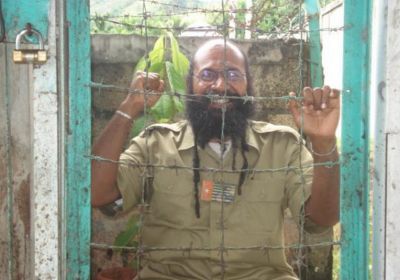
Indonesian military forces have stepped up their campaign of repression in West Papua in recent months. But leaders of the Free Papua Movement (OPM) continue to defy Indonesian demands to surrender.
The campaign for West Papuan independence has been amplified by the continuing repression and lack of improvement of living standards under the current “special autonomy” system.
An eyewitness report from West Papua Media Announcements (WPMA) posted on Pacific.scoop.co.nz on June 16 described a large military mobilisation in the mountainous Puncak Jaya region in central West Papua.
On May 25, 70 people protested outside the Thai embassy in Jakarta in solidarity with the pro-democracy Red Shirts in Thailand. The protest was jointly called by the Working Peoples Association (PRP), the People’s Democratic Party (PRD), the Confederation Congress of Indonesia Union Alliance (Konfederasi KASBI); the Indonesian Nasional Front for Labour Struggle (FNPBI); the National Student League for Democracy (LMND)
The following joint statement of solidarity has been signed by a number of left and progressive organisations, in the Asia-Pacific region and beyond. If your organisation would like to sign on, please email international@socialist-alliance.org
* * *
Support the struggle for democracy and social justice in Nepal
May 6, 2010
Over April 19-20, Indonesian police and naval officers forced almost 150 Tamils onto buses at Port Merak and took them to the Tanjung Pinang detention centre. For seven months, more than 250 Tamils had withstood appalling conditions aboard a squalid boat at the West Java port.
Their hope was for refugee status in Australia. Their fear was of being locked up in Indonesian detention centres or deported back to Sri Lanka.