
A number of left groups in Venezuela and solidarity groups internationally have expressed concern over the April 23 decision by Venezuelan authorities to arrest well-known Colombian journalist and supporter of the Venezuelan revolution, Joaquin Perez Becerra.
Perez Becerra was arrested when he tried to enter the country through Caracas Airport. He was deported two days later to neighbouring Colombia to face trial for supposed “terrorism” charges in Colombia.
-
-
US coal giant Drummond paid right-wing paramilitaries accused of murder and human rights abuses for protection of its Colombian operations, Colombiareports.com said on March 16. The article said the information was revealed in secret diplomatic cables sent between 2006-2010 released by WikiLeaks to the Colombian paper El Espectador,
-
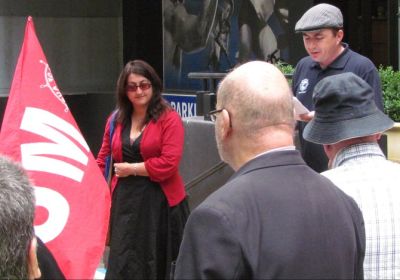 Unionists and solidarity activists rallied outside the Colombian consulate in Sydney on December 13 to denounce the fact that Colombia remains the most dangerous place in the world for trade unionists. The protest, called to coincide with International Human Rights week, was organised by the Sydney branch of the Maritime Union of Australia (MUA) and supported by Peace and Justice for Colombia (PJFC). The initiative for the protest came in the wake of the recent visit by Colombian trade unionist Parmenio Poveda.
 -
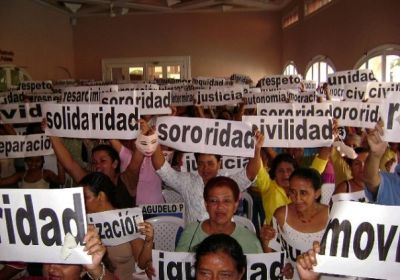 Carly Dawson is a volunteer with Peace Brigades International (PBI), a non-government organisation that “protects human rights and promotes nonviolent transformation of conflicts”. The organisation was formed during the 1980s and its first mission was to help counter the war in Nicaragua that was waged by US-backed Contras against the left-wing Sandinista government Dawson recently returned to Australia after 12 months volunteer work with PBI in Colombia. She spoke to Green Left Weekly’s Aaron Roden. * * *
 -
 A November 4 World Bank and International Finance Corporation report, Doing Business 2011: Making a Difference for Entrepreneurs, ranked Colombia as the 39th most “business friendly environment” in the world. Colombia’s “Doing Business” score, which measures how much the country has improved for business, showed Colombia as the best improving economy in the region. Missing from the report were the more than 500 unionists killed in Colombia over the past eight years, making up 60% of all unionists killed globally.
 -
Colombian trade unionist, Parmenio Poveda Salazar, is touring Australia to denounce human rights violations in his country. His visit is being organised by Peace and Justice For Colombia (PJFC). Poveda is a representative of the Federation of United National Agricultural workers unions, FENSUAGRO, the largest peasant and farm workers’ union federation in Colombia.
-
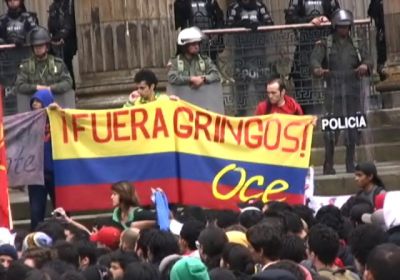 Venezuela’s decision to re-establish diplomatic, political and economic relations with Colombia on August 10 was only possible thanks to a range of circumstances and actions. Venezuela cut ties on July 22 in the face of allegations made by Colombia at the Organisation of American States (OAS) of alleged Venezuelan support for left-wing Colombian guerrillas. The Venezuelan government said the allegations were part of an attempt, backed by the US, to spark a war between the two nations.
 -
 Thousands of people took part in a demonstration and formed a human chain in the main avenues and plazas of Caracas on August 7. This action, initiated and promoted by the United Socialist Party of Venezuela (PSUV), was a show of support for peace in the Latin American region and friendly relations between the peoples of Colombia and Venezuela.
 -
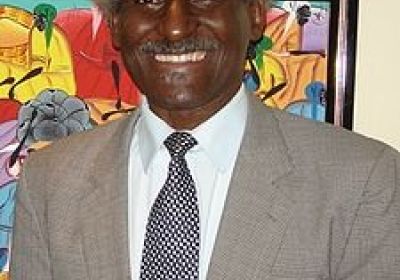 An August 10 summit between recently inaugurated Colombian President Juan Manuel Santos and Venezuelan President Hugo Chavez has lowered tensions in a region that some believe was on the brink of armed confrontation. The situation reached boiling point after Colombia’s July 22 claims in the US-dominated Organisation of American States that Venezuela was “harbouring terrorists”.
 -
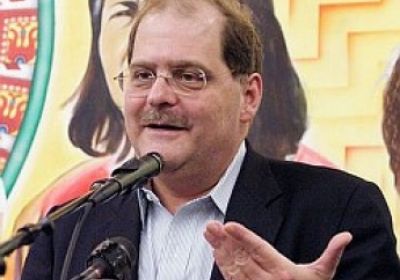 The following open letter was written by Bernardo Alvarez Herrera, Ambassador of the Bolivarian Republic of Venezuela to the US, to the Washington Post editorial board. He wrote in response to a July 30 editorial that accused Venezuela of harbouring Colombian “terrorists”. Alvarez said: “This letter has been made public given that The Washington Post rarely publishes our responses.” * * *
 -
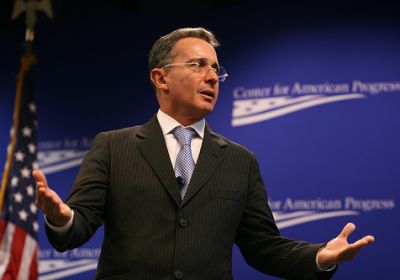 At the beginning of August the Israeli government announced it would cooperate with one out of two international United Nations-sponsored investigation commissions into the May 31 Gaza Freedom Flotilla massacre. UN General Secretary Ban Ki-moon claimed the move was “unprecedented”. The commission is composed of four people, one chosen by Turkey, one chosen by Israel and two chosen from a list provided by Israel. The latter two are former prime minister of New Zealand Geoffrey Palmer, who will be the chair, and outgoing Colombian President Alvaro Uribe, who will serve as vice-chair.
 -
The judge entrusted by Colombia’s Constitutional Court to investigate the legality of an agreement to hand over seven military bases to the US military has deemed the pact unconstitutional because it was not approved by Congress. The report was handed down by Judge Jorge Ivan Palacio on July 23, a day after Colombia unleashed its slanderous attacks that Venezuela was “harbouring narco-terrorists”. Palacio’s report on the agreement will be reviewed by the nine-judge panel of the Constitutional Court, which has to deliver a ruling by August 17.