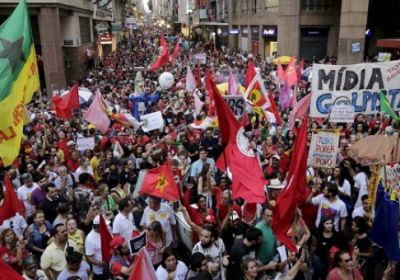
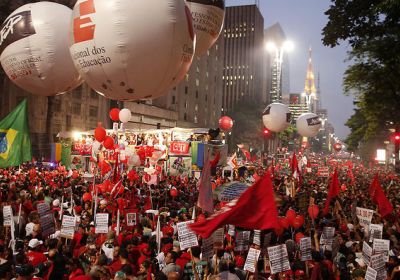
Brazilian workers were planning May Day rallies ahead of May 1 to defend democracy against what is being cast as an attempted parliamentary coup against President Dilma Rousseff. The move came as representatives from both sides of Brazil’s political divide made their case for or against impeachment on April 28.
A special Senate committee has been charged with reviewing the request to see the president removed from office. It will hear presentations from experts invited by both sides of the impeachment debate.

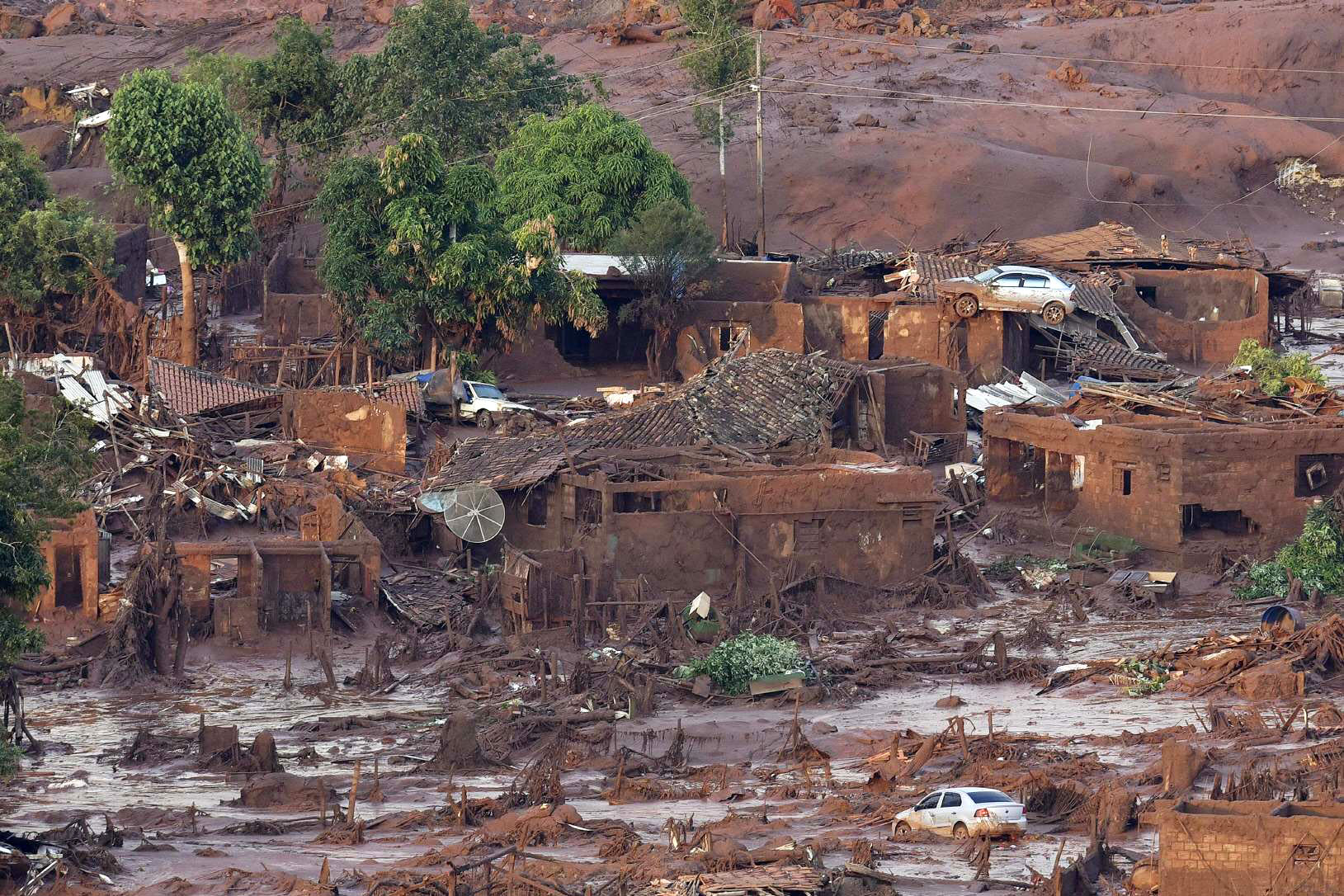 The dam took just half-an-hour to entomb half the village of Bento Rodrigues in 18 metres of iron-ore tailings, reddish mud and water slurry.
A “mountain tsunami” is how firefighters in Mariana, in Minas Gerais in south-eastern Brazil, described the bursting of mining company Samarco Santarem’s iron-ore tailings dam on November 5.
Marcos de Eufrasio, a 38-year-old stonemason who was cutting rock on that sunny afternoon, said that, from nowhere, he heard a “mighty roar”.
The dam took just half-an-hour to entomb half the village of Bento Rodrigues in 18 metres of iron-ore tailings, reddish mud and water slurry.
A “mountain tsunami” is how firefighters in Mariana, in Minas Gerais in south-eastern Brazil, described the bursting of mining company Samarco Santarem’s iron-ore tailings dam on November 5.
Marcos de Eufrasio, a 38-year-old stonemason who was cutting rock on that sunny afternoon, said that, from nowhere, he heard a “mighty roar”.
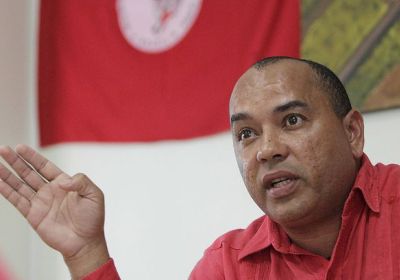
 Photo: CUT.
About 1 million people across Brazil protested on August 20 against right-wing attempts to impeach President Dilma Rousseff.
The marches were joined by Brazil's big social movements, including the Movement of Landless Workers (MST) and the United Workers' Central (CUT), the largest trade union federation in Latin America.
Photo: CUT.
About 1 million people across Brazil protested on August 20 against right-wing attempts to impeach President Dilma Rousseff.
The marches were joined by Brazil's big social movements, including the Movement of Landless Workers (MST) and the United Workers' Central (CUT), the largest trade union federation in Latin America.
 President Nicolas Maduro of Venezuela began his visit to Panama City for the Summit of the Americas with a visit to the impoverished neighbourhood of El Chorrillo to lay a wreath at the monument to those killed by the US bombing of the community during the 1989 US invasion of Panama.
The seventh Summit of the Americas, held in Panama City on April 10 and 11, was widely hailed as a victory for left-leaning and progressive forces in the region, particularly Venezuela and Cuba.
President Nicolas Maduro of Venezuela began his visit to Panama City for the Summit of the Americas with a visit to the impoverished neighbourhood of El Chorrillo to lay a wreath at the monument to those killed by the US bombing of the community during the 1989 US invasion of Panama.
The seventh Summit of the Americas, held in Panama City on April 10 and 11, was widely hailed as a victory for left-leaning and progressive forces in the region, particularly Venezuela and Cuba.