Argentina

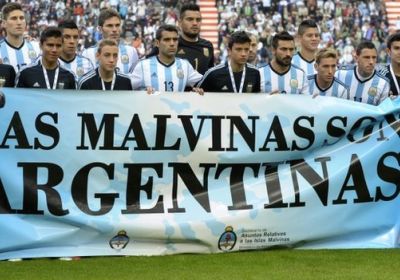
“FIFA has opened disciplinary proceedings against the Argentinian Football Association,” The Guardian said on June 14, after Argentinian players displayed a banner before a June 8 friendly against Slovenia insisting the Malvinas (known as the Falkland Islands in Britain) belonged to Argentina.
Argentinian President Cristina Fernandez de Kirchner refused point blank to go along with a US judge’s ruling requiring a US$1.5 billion repayment of defaulted bonds on June 16. Earlier that day, the US supreme court had backed vulture capitalist hedge fund NML Capital in its quest to extort full-value repayment for junk bonds for which it paid only fractions of their face value. But in a national address, Fernandez said she would not submit to “extortion” and was working on ways to keep Argentina’s commitments to other creditors.
There is little doubt that the Catholic Church is in crisis as a result of deep internal problems. Alongside revelations that child abuse has been widespread within the Church, and that high ranking Church figures were involved in covering up these crimes, it has also been revealed that the Institute for Religious Work (IOR), better known as the “Vatican Bank”, was used for money laundering.
Recent mid-term elections in Argentina revealed three key tendencies: a continued decline in support for President Cristina Fernandez de Kirchner and her Peronist-allied Front for Victory (FPV), the reemergence of new forces to its right, and what many have dubbed a “historic” vote for the Trotskyist left. At stake in the October 27 national elections were half of the seats in the Chamber of Deputies and one third of the Senate, along with several elections for state parliaments and local councils.
On March 24, 1976, after a sustained period of economic instability and rising violence, a military coup led by General Rafael Videla overthrew the democratically elected government. Over the next seven years, thousands of Argentineans were kidnapped, tortured and assassinated by the country’s military and security forces. The Argentine Armed Forces set up clandestine concentration camps where people suspected of being opposed to the so called National Process of Reorganization were held without a charge, tortured and murdered by their captors.
Argentine President Cristina Kirchner announced the nationalisation of Federal Petroleum Deposits (YPF), the country's largest oil extractor and refiner, on April 16. Altogether, 51% of Spanish oil multinational Repsol's 57% stake in YPF has been claimed by the Argentine government. The move shook the markets, with YPF shares falling 30% on the New York stock exchange. The nationalisation has drawn condemnation from Spain, the European Union and the United States ― as well as US regional allies Chile, Colombia and Mexico. In contrast, it was applauded by Venezuela and Bolivia.
The article below has been translated by Federico Fuentes. It first appeared in the Latin America-wide magazine America XXI * * * “We support the right of self-determination of the habitants of the Falkland Islands [Malvinas]; what the Argentines having been saying recently is, in my opinion, much more similar to colonialism, because these people want to continue being British and the Argentines what them to do something different.”
Despite the crushing victory of incumbent Cristina Fernandez de Kirchner in the October 23 Argentine presidential elections, the campaign and results also demonstrated that an important social and political left alternative continues to exist. The unpredictable consequences of the global economic crisis and the reaction by Cristina’s mixed social base to future policy decisions may prove important challenges to her new government.
On September 30, 2001, in the midst of one of the worst economic crises in Argentine history, the owners of the Zanon ceramic factory announced plans to switch off the furnaces. In response, union delegates occupied the plant in the southern province of Neuquen. The next day, workers arrived to join the occupation ― frustrating plans to sell off the machinery.
A cable from the US embassy in Buenos Aires, released by WikiLeaks, reveals pressure from the US government to halt a serious criminal investigation in Argentina. The US pressured an Argentine prosecutor to halt investigations into former Argentine president Carlos Menem and a number of other officials suspected of being involved in a cover-up over the bombing of a Jewish community centre in Buenos Aires in 1994, Argentine daily Pagina/12 reported on February 27.

Pages

Subscribe to Argentina