Environment groups have criticised federal environment minister Tony Burke for ignoring a recommendation to make Tasmania’s Tarkine rainforest a protected heritage area.
The Tarkine National Coalition has accused Burke of suppressing a report by the Australian Heritage Council, which said the government should create a Tarkine National Heritage Area. The report has since been leaked.
-
-
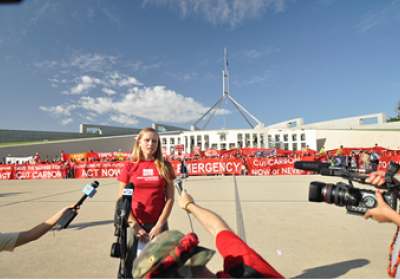
For every dollar the Australian government spends on cutting carbon pollution, it spends $11 encouraging it, new research from the Australian Conservation Foundation (ACF) has revealed. ACF said on March 1 that its analysis showed: “The Australian government spends $11 billion more on subsidies that encourage greenhouse pollution than it does on programs to tackle climate change.”
-
As it stands, the carbon tax proposed by the federal Labor government and the Greens is perfect material for a right-wing scare campaign. But it offers very little real action to cut emissions.
-
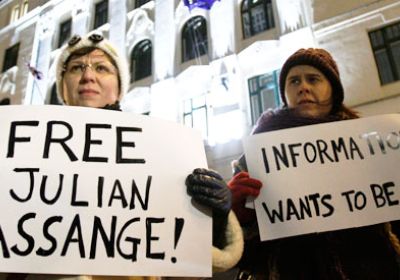
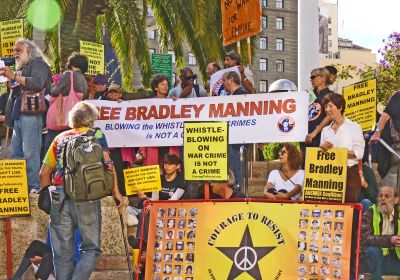
About 150 people rallied in Sydney on March 6 to call for an end to the persecution of WikiLeaks. The protest was organised by the Support WikiLeaks Coalition. The rally also called for the release from jail of US private Bradley Manning. For nine months, Manning has been held in isolation in US military prisons for allegedly leaking more than 250,000 US diplomatic cables to WikiLeaks. On March 2, the US army laid new charges against Manning, including the capital offence of “aiding the enemy”. If convicted, Manning could face the death penalty. -
Tasmanian Greens leader and state corrections minister Nick McKim has come under fire from unions after he stood down 56 guards at Risdon prison without pay on February 21. McKim brought in police officers as scabs to replace the guards. The prison has been in partial lock-down due to the lack of staff. McKim said he stood down the guards because they were preparing to take industrial action.
-
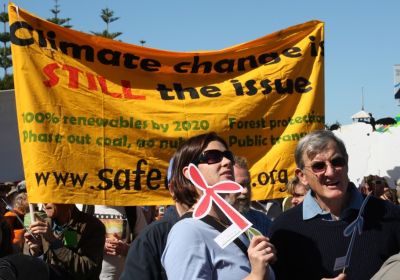
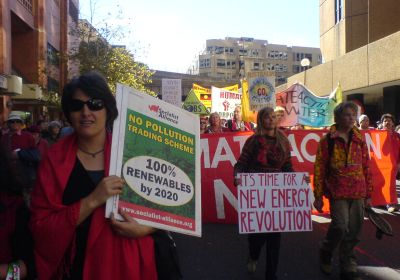
Don’t believe the hype. The carbon price deal announced by Labor and the Greens on February 24 is not a breakthrough and does not set Australia on a path to a zero-carbon future. Rather, it entrenches a framework that puts market forces at the heart of Australia’s response to the climate emergency. It’s a step in the wrong direction. The full details of the deal — including the price and compensation measures — are yet to be finalised. But the agreement made clear the scheme will begin by mid-2012 and become a fully-fledged emissions trading scheme three-to-five years later. -
Climate action groups from across Australia will assemble in Melbourne over April 9 to 11 for the third Climate Action Summit. Organised by the Community Climate Network, which involves more than 100 grassroots climate action groups, the summit will provide an opportunity for activists to share information and discuss ways to build a stronger movement for real action on climate change. The 2011 summit will build on the successes of the previous two events, both of which took place in Canberra and involved between 300 and 500 climate activists. -
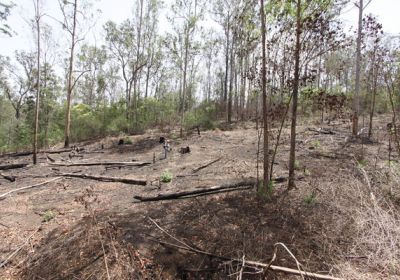
A new report by the North East Forest Alliance (NEFA) has slammed government-owned Forests NSW for what it calls “illegal and blatantly unsustainable logging” in public lands near Coffs Harbour. Forests NSW’s timber has been accredited as ecological and sustainable by the government-appointed accreditation body Joint Accreditation System of Australia and New Zealand (JAS-ANZ) and the certification company NCS International. -
The Sydney Peace Foundation awarded its “gold medal for peace with justice” to WikiLeaks editor-in-chief Julian Assange on February 2 in recognition of his “exceptional courage and initiative in pursuit of human rights”. This award is different from the foundation’s annual Sydney Peace Prize. The foundation has awarded the gold medal on only three previous occasions: the Dalai Lama in 1998; Nelson Mandela in 2000 and Japanese lay Buddhist leader Daisaku Ikeda in 2009. -
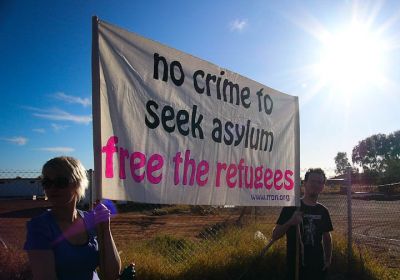
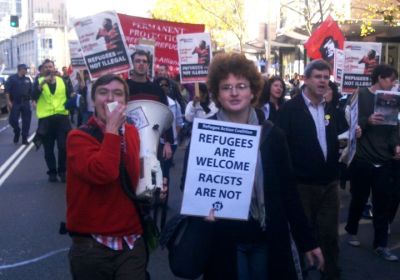
Up to 300 asylum seekers held in Western Australia’s remote Curtin detention centre ended a four-day hunger strike on January 21. The protesting asylum seekers demanded the immigration department end the long delays in the processing of asylum claims. They agreed to end the hunger strike after the department agreed to speed up the claims process. Many of the hunger strikers had fled from Afghanistan and fear they will be sent back to danger. -
One government — that of Bolivia — stood alone against the world at December’s UN climate conference in Cancun, Mexico. It dared to reject an agreement endorsed by 191 other nations. And Bolivia was right to do so. Cancun was a step backwards for action on climate change. Pablo Solon, Bolivia’s ambassador to the United Nations, explained his country’s stance in the December 21 Guardian: “The text replaces binding mechanisms for reducing greenhouse gas emissions with voluntary pledges that are wholly insufficient. -
Seventy asylum seekers held at the Darwin detention centre have donated the small amount of cash they had to the Queensland flood appeal, said SBS on January 14. Asylum seekers held at Sydney’s Villawood Immigration Detention Centre also showed their support for the victims of the Queensland floods in a symbolic action on January 17. The detainees in Villawood painted a large banner that read: “Dear Queenslanders: we asylum seekers are with you in this difficult times with flooding.”