
Representatives from the Latin American and Caribbean governments that make up the Bolivarian Alliance of the Peoples of Our Americas (ALBA) met in Bolivia on November 17-18 to coordinate their battle plan ahead of the international climate change summit in Durban later this month.
ALBA unites eight countries, including the radical governments of Venezuela, Bolivia, Cuba, Ecuador and Nicaragua. It helped lead the fight at the 2009 Copenhagen summit against attempts by rich nations to impose their anti-environmental plans.
-
-
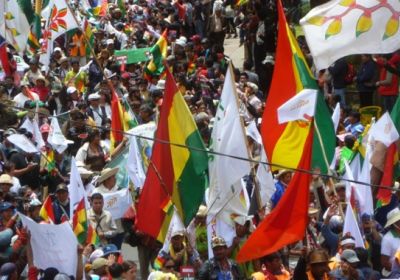
Despite the government reaching an agreement with indigenous protesters on all 16 demands raised on their 10-week march onto the capital, La Paz, the underlying differences are far from resolved.
-
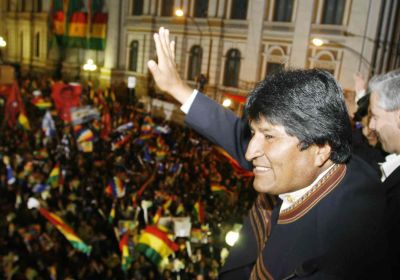
The recent march in Bolivia by some indigenous organisations against the government’s proposed highway through the Isiboro Secure National Park and Indigenous Territory (TIPNIS) has raised much debate among international solidarity activists.
-
September 25 will go down as one of the darkest days in Bolivia since Evo Morales was elected as the country’s first indigenous president almost six years ago.
-
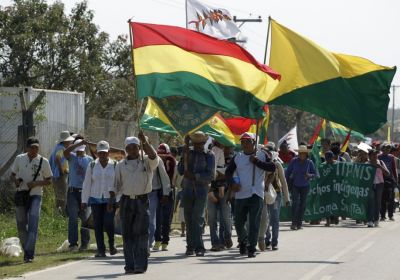
Statements, articles, letters and petitions have been circulating on the internet for the past month calling for an end to the "destruction of the Amazon".
-
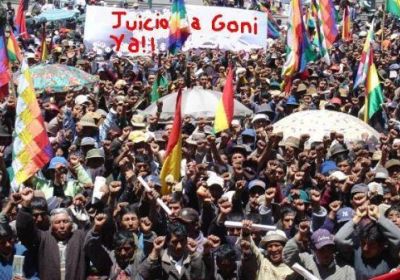 Neoliberal policies “which have fed the growing political disaffection of Bolivia's majority poor, have helped fuel the country's rolling 'social revolution.'" This was how a May 6, 2006, US embassy cable from La Paz recently released by WikiLeaks viewed the powerful wave of struggle that led to the election of Bolivia's first indigenous president, Evo Morales, in 2005. This secret assessment came despite Washington publicly trumpeting neoliberal policies as the way to solve the problems of Latin America's poor.
 -
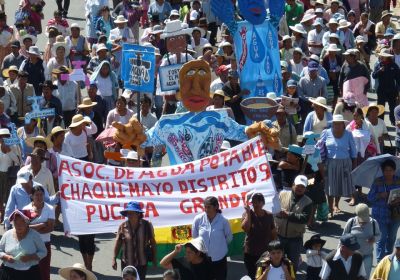 WikiLeaks' release of cables from the United States embassy in La Paz has shed light on its attempts to create divisions in the social and indigenous movements that make up the support base of the country’s first indigenous-led government. The cables prove the embassy sought to use the US government aid agency, USAID, to promote US interests. A March 6, 2006, cable titled “Dissent in Evo’s ranks” reports on a meeting only months after Morales' inauguration as president in December 2005 with “a social sectors leader” from the altiplano (highlands) region in the west.
 -

The decision by leaders of the Sub Central of the Indigenous Territory and National Isiboro Secure Park (TIPNIS), to initiate a 500-kilometre protest march on Bolivia's capital of La Paz capital has ignited much debate about the nature of Bolivia’s first indigenous led-government.
-
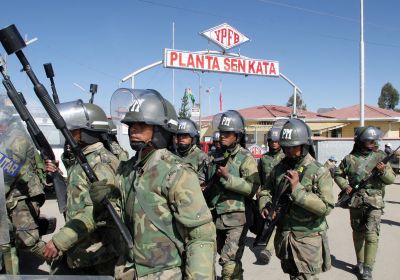 Speaking to CNN en Espanol on July 27, Bolivian President Evo Morales said “When presidents do not submit to the United States government, to its policies, there are coups.” His comments are backed by attempts by the US and Bolivia’s right wing to bring down his government. Recently released WikiLeaks cables prove the US embassy was in close contact with dissident military officers only months before a coup attempt was carried out in September 2008. But the close relationship between the US and Bolivia’s military has a long history. War on drugs
 -
 Recently released United States embassy cables from Bolivia have provided additional insight to the events leading up to the September 2008 coup attempt against the Andean country’s first indigenous president. On September 9, 2008, President Evo Morales expelled then-US ambassador Philip Goldberg as evidence emerged that Goldberg and embassy officials had been meeting with several key civilian and military figures involved in an unfolding coup plot.
 -
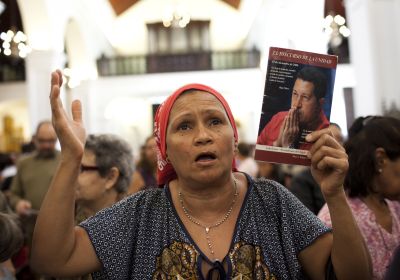 No sooner had information come out that Venezuelan President Hugo Chavez was undergoing surgery in Cuba than the international media was full of speculation and rumours regarding his imminent demise. Projecting their hopes that an illness could succeed in removing Chavez where military coups and assassination attempts had failed, the right-wing Venezuelan opposition went into overdrive. They demanded the president step down and hand over power to the vice president.
 -
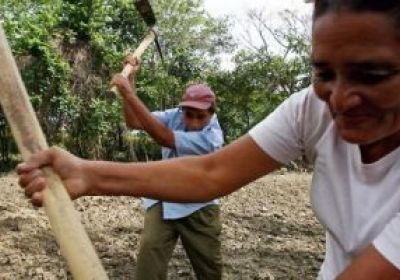
When I asked Alfredo, a dairy farmer and president of the Prolesa milk processing co-operative in Tachira state, what food sovereignty meant to him, he said: “Food sovereignty is not only about being able to produce enough food to feed ourselves, it also means getting to a point where we can export food to other countries.