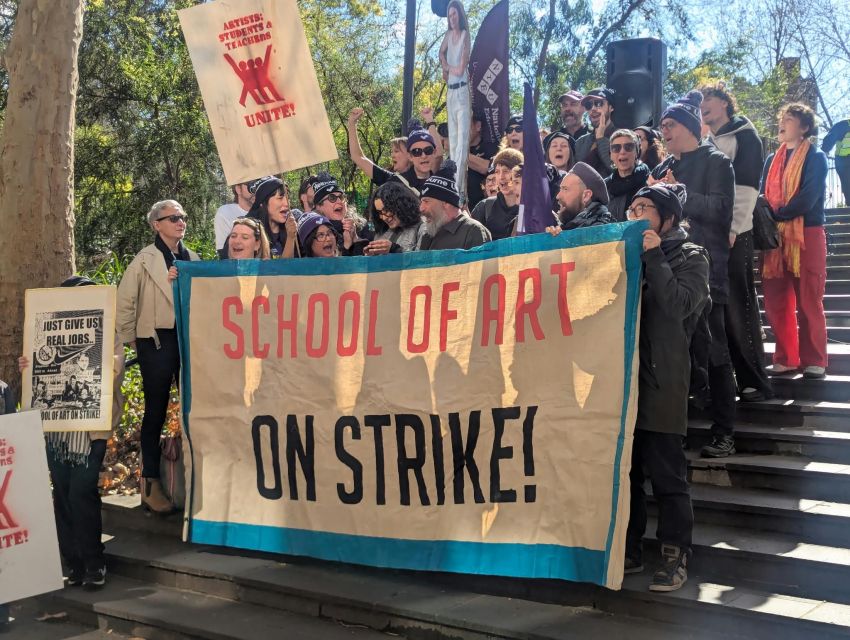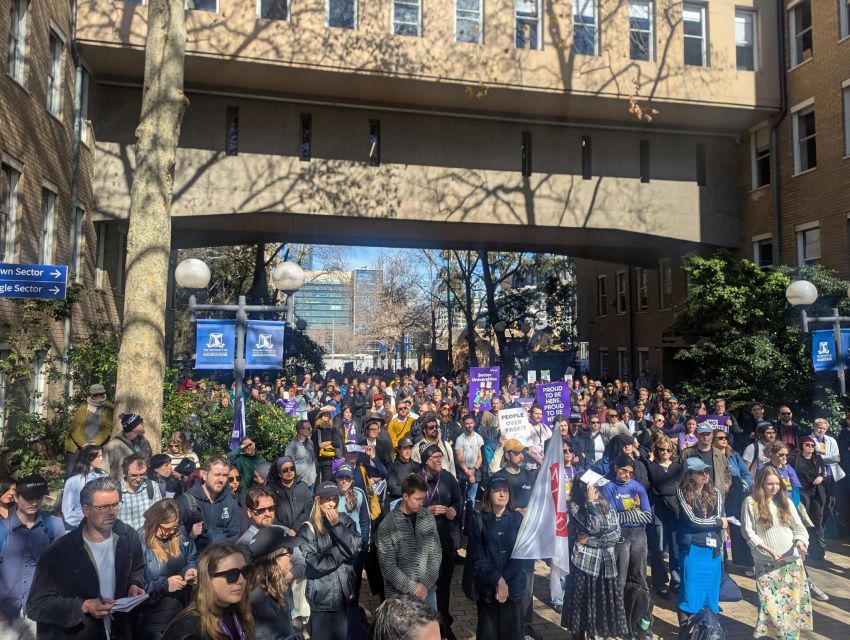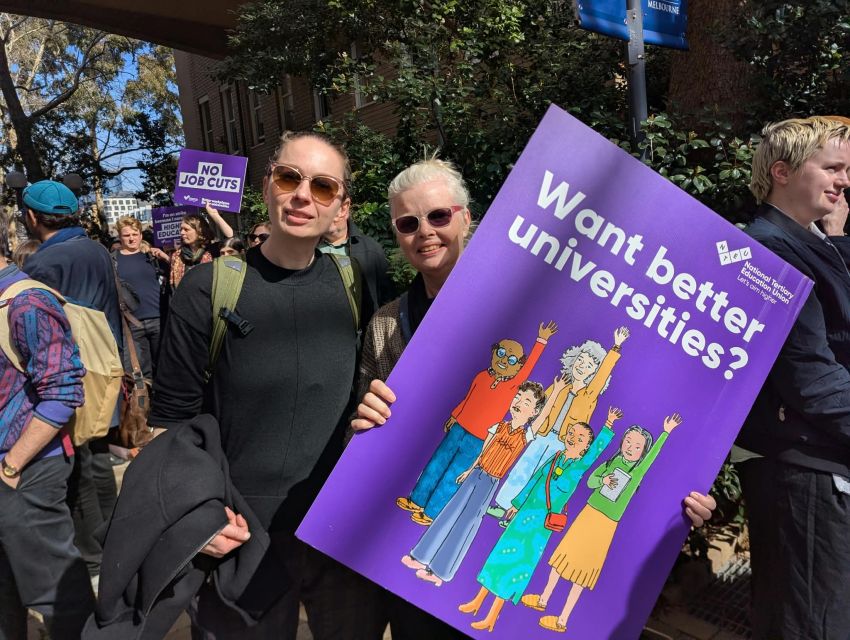
Hundreds of National Tertiary Education Union (NTEU) members at the University of Melbourne (UniMelb) went on strike on August 27 in response to management’s refusal to agree to key demands in negotiations for the next enterprise agreement, including paid sick leave for casuals and safer workloads for academic staff.
The NTEU is calling for a 20% wage increase for all staff, improved protections for Aboriginal and Torres Strait Islander staff, academic control of workloads, a four-day work week with no loss of pay and limiting insecure work. It also wants for provision for gender-affirming and reproductive health leave.
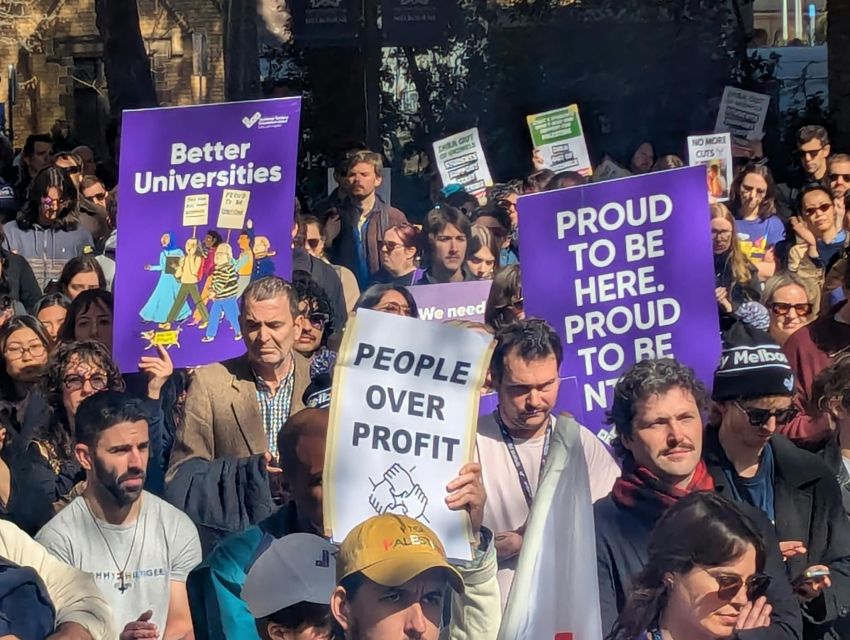
The five-hour strike was strongly supported by students, who joined staff at a rally on campus that featured speakers from the NTEU and the president of University of Melbourne Student Union (UMSU).
Kim Alley, an Aboriginal staff member and senior lecturer in political science, highlighted the importance of the union’s demand for improved protections for First Nations staff and affirmed the importance of trade unions’ support for Aboriginal and Torres Strait Islander struggles.
UMSU President Lushomo Chinganya said students have a stake in supporting staff’s fight for better pay and working conditions because of how it impacts learning conditions for students.
NTEU bargaining lead Dr Carla Winston said academic workloads are “unsustainable”, with staff expected to work on weekends and into the evening. She said management “has no clue" about the amount of work they have to do on a daily basis.
Clare, an NTEU member and casual worker, condemned management’s refusal to instate sick leave for casuals. She said casuals are forced to choose between working while sick or losing pay.
After the rally, the NTEU held a mass meeting in which it voted unanimously to adopt a new bargaining claim, which would require all major changes involving permanent relocation of staff be put to a ballot of affected staff and win majority approval before it can go ahead.