
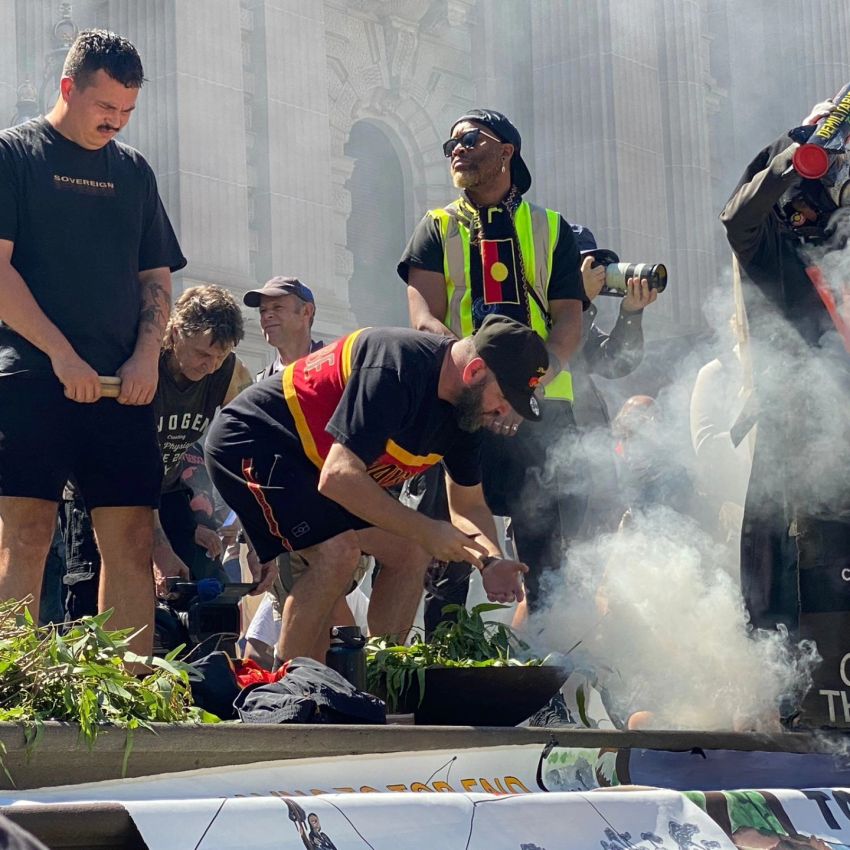
Gunditjmara, Yorta Yorta, Bindal and Meriam person Tarneen Onus Browne, Benny Zable and David Hack partially won their case against Victorian Labor’s bid to give police extraordinary powers in designated areas.
Last November, the entire Melbourne CBD became a designated area for six months. The Federal Court found on January 23 that the six-month declaration was unlawful and invalid.
The Human Rights Law Centre (HRLC) represented the three activists. It said the ruling means that it will be “much more difficult for Victoria Police to declare designated areas and exercise extraordinary warrantless powers under the Control of Weapons Act”. The judge found that police can only do so “where the designation is necessary to address the risk of weapons-related offences in the area”.
Judge Victoria Bennett found that the Victoria Police assistant commissioner, who made this decision, did not properly consider the legislative criteria for designated areas and did not properly consider human rights under the Victorian Charter of Human Rights and Responsibilities, in particular, the right to privacy.
“This decision places a huge question mark over the legality of other designated areas declared under this provision, and a question mark over thousands of police searches exercised under these designations,” HRLC said.
Onus Browne told 3CR Radio on January 23 that the challenge was also about the extraordinary stop-and-search powers given to police, and their power to direct people to leave certain areas if they refuse to remove a face covering.
The judgement caused the six-month declaration to end early, but protest organisers are still concerned about the impact that ever-expanding police powers will have on protest rights.
Onus Browne said the activists were concerned to make sure these special powers were not in place for Invasion Day, “where First Nations people get to talk about the truth of this country. It is important that we get to stand up and show our strength.”
They said the decision is a “significant win, although we didn’t get everything we wanted”. It is a win for everyone “to be treated with dignity and respect and not subject to intrusive police powers”.
“I’ve been organising the Invasion Day rallies for the last 10 years and see this as our National Day of Protest, marking the stealing of our land and our ongoing resistance and survival.
“This case puts Victoria Police on notice — you cannot trample on the rights of First Nations people so easily.”
HRLC legal director Sarah Schwartz said the case showed up the “significant and systemic failures” in the police’s decision-making process.
“For too long, Victoria Police have had unchecked powers to infringe people’s fundamental human rights in designated areas, with significant impact on people who are exercising their rights to protest and move freely in our streets, without unwarranted police harassment. This case means they can no longer do so.
“Since this declaration, Victoria Police have made 19 other declarations of designated areas, and seven other declarations using the same power challenged in this case.
“The question must now be asked whether these declarations are also unlawful and whether the thousands of searches and police powers exercised are unlawful.”