
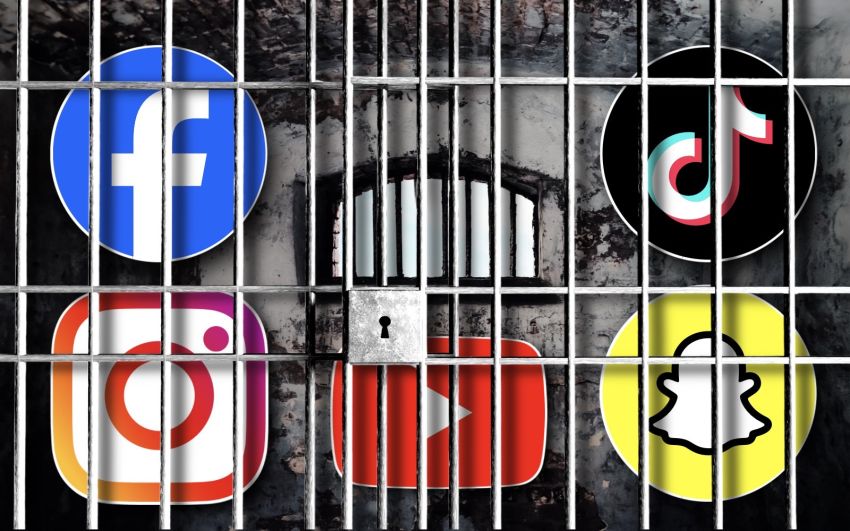
Tom Sulston, from Digital Rights Watch, told Green Left that Labor’s social media ban for young people, starting on December 10, would lead to “likely harms”.
“Social media platforms will no longer be allowed to have under-16s on their platforms. They will have to take action to ensure that their users are of an appropriate age,” Sulston said.
The proposed safety codes are a blunt instrument that will affect people’s rights online and digital privacy.
Sulston said he believed the tech giants would not be deleting young people’s social media accounts, rather “holding onto them until the person is of age and then they will be allowed to log in again”.
“It means that those young people who have been using those social networks for good reason will no longer have access to those friendships and relationships, or access to news that they previously had.”
He also said it was problematic that young people had not been offered “a ready replacement”.
While a lot of young people will be fine, Sulston said, for some it will be a problem, “especially those who are in a minority group”, such as someone living in remote Australia, or who is LGBTIQ or part of an ethnic minority. They need to go onto the internet to find their people and “social media platforms are one of the ways in which we do that”.
“I’m very worried that it will lead to hard times for especially vulnerable youth, who won’t have access to support networks that they used to have.”
Nine platforms regulated
Nine platforms are being regulated, and there will probably be more over time. “It’s not unreasonable to suppose that young people will migrate from wherever they were — let’s say Instagram — to somewhere else that is not covered by the social media ban, such as chat apps, Messenger, message boards, like 4chan, which is an incredibly unpleasant place.”
Sulston said teenagers will be able to use 4chan, which is “problematic”, because of its “very unregulated free speech absolutist sort of message board where pretty much anything goes.
“We will have very little ability to support children and young people using it. They’ll see some pretty awful things and we have less visibility, fewer tools for them to get help if they are approached by an adult inappropriately, or if they see things that are troubling.”
Sulston also worries about the way the platforms will be able to undertake age verification. They will be allowed to ask for identification, such as a driver’s license or a digital ID. They will take a photograph of the user and make a guess as to their age, which means some young people who should be included in the ban are not and others who should be able to access their accounts will be locked out.
“There will be a whole lot of trouble with age verification. And mashed in with that is the fact that that’s actually quite a big privacy invasion.”
In addition, if someone is really keen to get around the ban it will probably not be that hard, Sulston said. “VPNs exist. Tor exists. People use those to appear like they are coming from a different location to access different parts of the internet.
“People use VPN so that they can access different international streaming services that are unavailable in Australia. We’re quite used to how they work. If young person really wants to get onto a platform that they’ve been banned from, I’m pretty confident they will find a way.
“That’s problematic because it means they’ll be on the platforms while the platforms claim that as they don’t have young people, they don’t need to provide as many safety features. They don’t need to have as much regulation. They don’t need to have as much moderation.”
Sulston thinks there is a good chance the platforms will become “even more feral than they are now”.
Need to consult teens
He said very few people are asking whether teenagers were asked if this is what they wanted to keep them safe online.
“There definitely are problems on social media. We definitely need to regulate them. We definitely need to have a conversation about making them less terrible. But this kind of blanket ban is also going to bring in a lot of unwanted harms.”
Asked if the social media ban is a way of forcing us all to use digital IDs so we can be tracked, Sulston said while it is problematic to have to show ID, the bigger problem will come with the internet search age assurance code.
“Everyone will need to demonstrate their age to use search engines. Even to use Google, you’ll need to demonstrate your age. That might be using MyID — an option available to the platforms — but they also have to offer alternatives so you are not forced to use your digital ID but can use other forms of ID.
“The problem with that kind of broader use of IDs to navigate the internet is that it is disproportionate. If someone asks you for your ID if you’re buying alcohol, you’d probably say that’s fair. But if someone were to ask you for your ID when you walk into a cafe, you’d be a bit suspicious. You’d say that a disproportionate invasion of my privacy. So the problem is connected to the increase in the use of IDs everywhere.”
Sulston said becoming used to being asked for an ID makes it easy for the “proliferation of our private data”. With internet security flaws, they could be leaked onto the internet and data might be passed between companies to build more effective marketing strategies.
The other problem is it “inures us to the sense of always entering our ID and it will increase the likelihood of bad actors getting involved”.
He said it is easy to make a website that sends people emails urging them to check, say, a fictitious family photo album and, after adding their ID, they then face identity theft and possibly fraud.
Asked about alternatives to the under-16 social media ban, Sulston said it would be better to stop social media giants from being able to push algorithms with hateful content and disinformation.
“That is what is monetising our data. We could regulate that. We can put some rules around what is not allowed, as there are limits on television advertising to children.
“Commercial television is only allowed to show a certain amount of advertising for a certain amount of content. We could talk about less programmed content and more that people actually want to see. We could talk about algorithmic resets.”
Sulston said while the eSafety Commission has done a good job educating about how social media platforms work, he feels teenagers have not been asked what they need.
Asked to explain his concerns around proposed new laws on search engine safety codes, Sulston said the current safety codes are very targeted around age, which is a privacy issue.
“It’s pretty blunt; you’re either below the age or over the age … A teenager has different interests on the internet to say a five or six year old. It’s not very effective either because we know that age gating is easily worked around by people who want to do that.”
“It’s a longstanding internet truism that if you try to censor one part of the internet, with an age gate or with censorship, people will find a way around.”
How does Sulston think we can limit the internet’s enshittification?
“We can regulate. Australia has a privacy act with some privacy principles, which companies over a certain size have to do when handling Australians’ data. They are pretty good, but not good enough.” He recommends more changes to the Privacy Act to ensure that “users are more in control”.
Companies need to be made to say what they are doing with data, he said. They need to let individuals make corrections or deletions if necessary. Standards need to be enforced over data sharing.
[To watch the full Green Left Show #76: Why the social media ban will harm young people, click here.]