-
One hundred pensioners rallied outside Victorian Parliament House on May 27 to demand a raise in the aged pension. The rally was organised by the Fair Go for Pensioners Coalition (FGPC), which had previously organised nationwide protests in November 2008. Frank Cherry, national coordinator of the coalition, told the crowd: “We’re rallying today to highlight the plight of pensioners, both to the state and federal government, and to begin the second stage of our campaign to increase the pension.” -
As Britain’s political class pretends that its arranged marriage of Tweedledee to Tweedledum is democracy, the inspiration for the rest of us is Greece. It is hardly surprising that Greece is presented not as a beacon but as a “junk country” getting its comeuppance for its “bloated public sector” and “culture of cutting corners” (as the British Observer said). The heresy of Greece is that the uprising of its ordinary people provides an authentic hope unlike that lavished upon the warlord in the White House. -
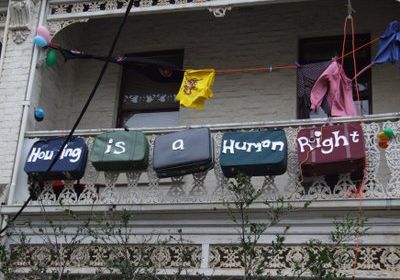
Kalgoorlie MP John Bowler said public housing is “not a right” but a “privilege”, after the federal government passed legislation that will shift community housing from a federal to a state responsibility in Western Australia. The state Liberal government will get about $500 million to fund new, and upgrade existing houses. The takeover has been defended by Bowler, who says the change will encourage better treatment of the housing by tenants.
-
Jess Moore, well-known community activist and part-time worker, will contest the seat of Cunningham on New South Wales’ south coast in the coming federal elections. Moore, a member of Socialist Alliance, is a leading climate and renewable energy campaigner in Wollongong. She is active in the struggle for marriage equality and helped found the Illawarra Aboriginal Rights Group, set up in response to the racist Northern Territory intervention. -
Indigenous affairs minister Jenny Macklin has dismissed the findings of a Menzies School of Health Research report that found “income management” has failed to improve the health and wellbeing of the people it targets. Income management was implemented by the then Coalition government in August 2007 on 73 targeted remote Aboriginal communities as part of the Northern Territory intervention. Under the scheme, 50% of welfare recipients’ income is replaced with a Basics Card, which can be used to only buy food, clothing and medical supplies, and only in certain stores.
-
On May 6, women gathered in Melbourne dressed in pyjamas and hair curlers, ready for the Mothers’ Day breakfast in bed that they never get because of poverty and the stress of being a single parent. The action was to call for an end to poverty for single mothers. Council of Single Mothers and their Children (CSMC) project worker Kerry Davies told the protesters that “single mothers and their children are Australia’s poorest families and are now the single highest group of homeless people in this country”. -
Much of the public discussion on Prime Minister Kevin Rudd’s proposed tax reforms — made in response to the Henry tax review — has centred on the projected 40% tax on “super-profits” in the mining industry. Most people probably agree that the big mining multinationals could afford to contribute a lot more to the public purse.
-
Clients at the Fairfield Migrant Resource Centre heard on April 29 that people in disadvantaged areas, such as Fairfield, could have their welfare benefits "quarantined" as early as next year. The public meeting at the centre featured Peter Davidson from the Australian Council of Social Services and Richard Downs, spokesperson for the Alyawarr people’s walk-off in the Northern Territory. The walk-off began in July 2009, protesting against the effects of welfare quarantining, and other NT intervention measures, in the community of Ampilatwatja.
-
-
-
-
- Boorloo/Perth & Walyalup/Fremantle