-
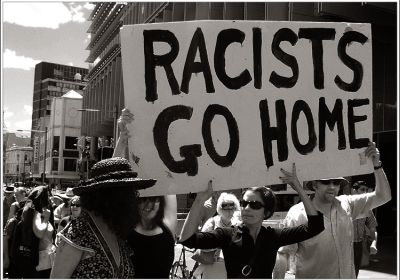
More than 350 people participated at the human ring in Sydney on May 8 and urged Australian government to be a lifesaver and protect refugees. They called the politicians not to score political points by punishing the most desperate of people. Amnesty International Australia organized the human ring at Bondi Beach to show the politicians on all sides that they’ve got it wrong — Australians do care about saving lives and they won't accept punishment of people to win votes. There were also speeches by human rights activists at the event. -
I wasn’t really sure what to expect from the Villawood detention centre. Most of what I knew came from mainstream media, which usually ignores a particular perspective: that of the refugees themselves. “Queue-jumpers”, “expensive”, “unwelcome”, “should be sent back” are common themes. This rhetoric reduces asylum seekers and their experiences to nothing more than blood-sucking parasites looking for a warm place to nestle. “Boat people” make up only 3% of all refugees coming to Australia. The rest arrive in planes. Where’s all the hype about “plane people”?
-
It had to happen eventually. Kevin Rudd's popularity has gone into decline, and the Labor party now trail the Liberals in the latest polls. According to a May 3 Essential Research poll, Rudd's approval rating has fallen to 46%, down from 71% a year ago. The Liberals lead Labor by 51% to 49% on a “two party preferred” basis according to polling by Newspoll published in the May 4 Australian. -
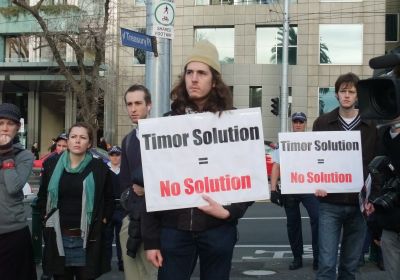
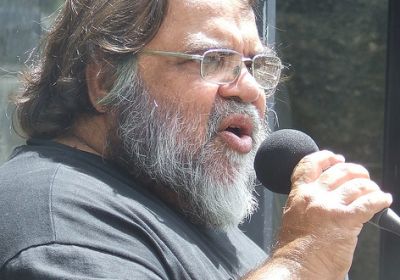
“Stop trampling rights to win votes”; “Stop breaking laws to win votes”; “Stop racist policy risking lives” and “Stop the freeze on asylum seekers' rights” were key slogans at a rally organised by Amnesty International and other human rights organisations on May 8, as part of a national day of action. The 300 protesters heard from Chaman Shah Nasiri, a Hazara refugee from Afghanistan who had suffered in the now-closed Nauru detention camp under previous Coalition prime minister John Howard's Pacific Solution policy.
-
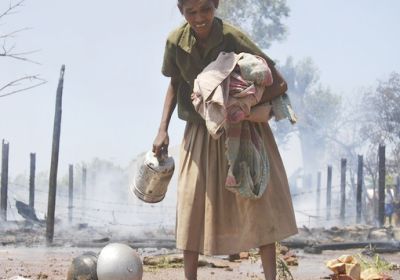
The conspicuous presence of barbed wire in Australian immigration detention centres, such as Rudd’s newly re-opened Curtin detention centre, is a reminder of the inhuman pedigree of these grim despair factories. It is no accident that barbed wire — or the “devil’s rope” as the First Nations people of North America called it — has accompanied and facilitated many of the worst crimes against humanity of the modern era. -
In the United States, Google-owned video-sharing site YouTube has banned the video for hip hop star M.I.A.’s new single “Born Free”, citing the graphic nature of its content. More than nine minutes long, the clip, directed by Romain Gavras, begins with heavily armed soldiers with US flags on their uniforms raiding someone’s home. The location is not known, but the setting is reminiscent of Baghdad or the Palestinian West Bank. -
Over April 19-20, Indonesian police and naval officers forced almost 150 Tamils onto buses at Port Merak and took them to the Tanjung Pinang detention centre. For seven months, more than 250 Tamils had withstood appalling conditions aboard a squalid boat at the West Java port. Their hope was for refugee status in Australia. Their fear was of being locked up in Indonesian detention centres or deported back to Sri Lanka. -
Forty refugee rights supporters protested outside Labor foreign minister Stephen Smith's office on April 23, demanding an end to the government's "freeze" on asylum-seeker applications from Afghanistan and Sri Lanka. Speakers included Refugee Rights Action Network members Phil Chilton and Victoria Martin-Iverson, Socialist Alliance candidate for Perth Alex Bainbridge and Greens Senator Scott Ludlam. The next action planned by the Refugee Rights Action Network is an overnight vigil outside the Perth Immigration Detention Centre on May 7. -
Two hundred and seventy people gathered for the Resistance 2010: The World Can't Wait! conference in Thirroul, near Wollongong, over April 24-26. The national conference brought together young activists from all over Australia to discuss a broad range of political issues and to get organised in the face of an uncertain future. -
Since the end of July, 24-year-old Palestinian asylum seeker Aladdin Sisalem has been the only prisoner in the Australian government's Lombrum detention centre on Manus Island, in Papua New Guinea. He has very little human contact,
-
The Australian-funded detention centre on Papua New Guinea's Manus Island first opened on October 21, 2001. The first group of Iraqi asylum seekers to arrive there were dismayed to find they had been tricked into thinking they were being taken to Australia.
-