-
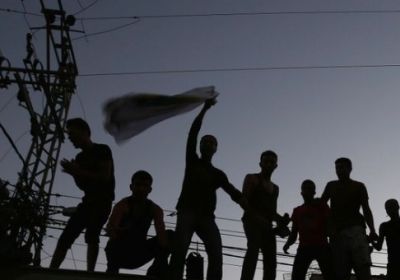
Less than two weeks after concluding its largest military assault on the occupied West Bank in more than a decade, Israel has relentlessly pounded the besieged Gaza Strip since July 7. The ongoing bombing campaign is the most severe violence inflicted by Israel on Gaza since its eight-day assault in November 2012, during which more than 150 Palestinians were killed, 33 of them children. More than 1400 Palestinians were killed in Gaza, including 350 children, during Israel’s three consecutive weeks of attacks from air, land and sea during winter 2008-09. -
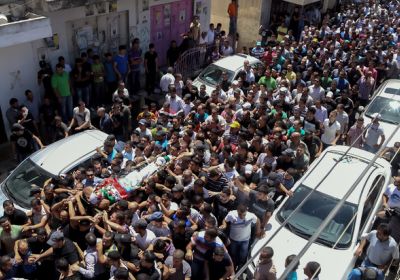
Palestinian President Mahmoud Abbas challenged Israeli Prime Minister Benjamin Netanyahu on July 2 to condemn the abduction and murder of teenager Mohammed Abu Khdeir in east Jerusalem. Abbas accused extremist Jewish settlers of “killing and burning a little boy” and demanded Israel “hold the killers accountable”. Just hours after Israel buried three teenagers recently murdered in the West Bank, relatives of Khdeir said the 17-year-old had been forced into a car in east Jerusalem before it sped off. His burned body was found shortly afterward in a Jerusalem woodland beauty spot.
-
Players in Algeria's national football team have announced that they plan to put prize money earned in the World Cup to good use, BleacherReport.com said on July 2. Striker Islam Slimani said the entire squad would donate the earnings to the people of embattled Gaza, saying “They need it more than us”. -
Venezuela: Social programs expanded in poorest communities The Venezuelan government has initiated its policy of expanding social programs in the country’s most deprived areas in a bid to eradicate extreme poverty, Venezuelanalysis.com said on June 30. The initiative, called “Red Sundays”, involves teams of social program workers visiting poorer communities every Sunday to diagnose which households are deprived of certain basic needs and which social programs are required to attend to these needs.
-
Sri Lanka has confirmed plans for asylum seekers from its persecuted Tamil ethnic minority to be directly handed over by Australia at sea. Although the Australian government has refused to confirm or deny such plans, Prime Minister Tony Abbott said on July 3 that Sri Lanka was “a society at peace” that had made “much progress” on human rights. That day, the Tamil Refugee Council released a statement explaining the true situation in Sri Lanka that included the ive points below. * * *
-
Dr Paikiasothy Saravanamuttu, executive director of the Centre for Policy Alternatives in Sri Lanka, gave a talk on “The challenge of moving from post-war to post-conflict in Sri Lanka” at a June 21 meeting held in the Darebin Intercultural Centre in Melbourne. The following is a summary of his talk compiled by Michael Cooke. *** The end of the war [between the Sri Lankan state and the Liberation Tigers of Tamil Eelam in 2009] does not mean the end of conflict. The guns are silent, but the sources of conflict remain, and are being reproduced.
-
In the early hours of July 1, Israel Defense Forces (IDF) bombed dozens of sites across Gaza, hours after three missing teenage Israeli settlers were found dead. The Israeli government, led by Prime Minister Benjamin Netanyahu, predictably seized on the boys' disappearance and death as the pretext to raid Palestinian territory, attack Hamas and expand illegal settlements. -
Since the bodies of three missing Israeli youths were discovered in the occupied West Bank on Monday, Israeli politicians have whipped the public up with demands for “revenge.”
-
Official statistics from the Palestinian Authority's Ministry of Information have revealed that 1518 Palestinian children were killed by Israel's occupation forces from the outbreak of the second intifada ("uprising") in September 2000 up to April last year. That's the equivalent of one Palestinian child killed by Israel every three days for almost 13 years. -
When Gerry Conlon died on June 21, it reminded the world once more of the cases of the Guilford Four and the Birmingham Six, Irish people framed for bombings in England they had noting to do with.
-
Dozens of Palestinians held without charge or trial by Israel ended their 63-day hunger strike protest on June 25. It was the longest hunger strike in the history of the Palestinian prisoners movement. Palestinian and Israeli human rights groups said on June 26 that about 80 of the hunger strikers were still hospitalised and shackled to their beds. Meanwhile, the Israeli government is set to push through laws to permit the force-feeding of hunger strikers. Israeli Prime Minister Benjamin Netanyahu weilded this threat in a bid to break the two-month strike.
-
“The rising sea levels caused by global warming threaten the very existence of some of our neighbours,” Fijian Prime Minister Frank Bainimarama told the Pacific Island Development Forum (PIDF). “Kiribati, Tuvalu and the Marshall Islands ― and are already swamping the coastal areas of many Pacific nations, including Fiji.”