-
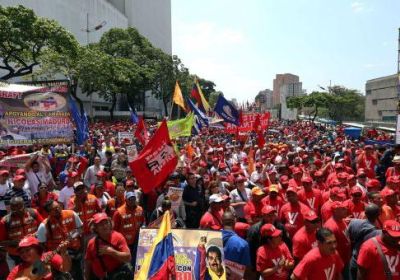
US hemispheric policy reached a new low on March 9 when President Barack Obama invoked emergency powers to declare “a national emergency with respect to the unusual and extraordinary threat to the national security and foreign policy of the United States posed by the situation in Venezuela.” Thanks to Obama’s action, the US has now blatantly rehabilitated its traditional imperial posture towards the South and challenged the continent-wide Bolivarian cause of Latin American and Caribbean independence and sovereignty. -
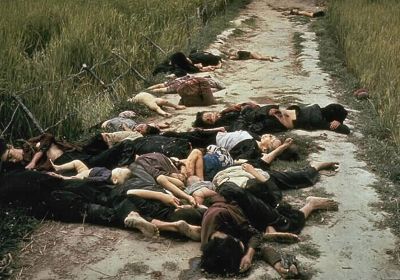
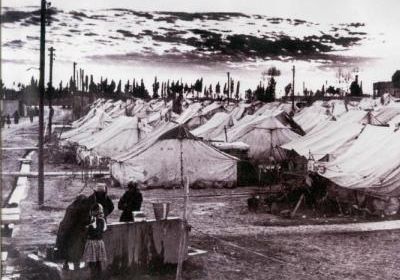
A largely unknown region to the rest of the world became one of the most talked about globally in recent months. Kobane is a town that suffered a too-harsh fate. Innocent civilians never think that one day they would face massacres — except that being a Kurd in a town like Kobane (in a largely Kurdish area in the north-west of the Syrian state), means you face such things. -
The recent 70th anniversary of the liberation of Auschwitz was a reminder of the great crime of fascism, whose Nazi iconography is embedded in our consciousness. Fascism is preserved as history, as flickering footage of goose-stepping blackshirts, their criminality terrible and clear. Yet in the same liberal societies, whose war-making elites urge us never to forget, the accelerating danger of a modern kind of fascism is suppressed; for it is their fascism. -
In response to US President Barack Obama’s use of an executive order to sanction Venezuelan authorities, Venezuelan President Nicolas Maduro requested decree powers to pass an “anti-imperialist law to prepare for all scenarios”. On March 11, a majority of Venezuela's National Assembly voted in favour. The bill, which must be approved by 60% of the Assembly according to Venezuela’s constitution, will now move on to a second reading to obtain final approval.
-
Union of South American Nations (UNASUR) secretary-general Ernesto Samper, said on March 9 that the regional bloc offered total support to the government of Venezuelan President Nicolas Maduro after the US government’s declaration of Venezuela as a national security threat. US President Barack Obama has issued a decree listing Venezuela as a “national security emergency” for the US, citing alleged human rights abuses and corruption. The US has also imposed extra sanctions on several Venezuelan officials. -
US President Barack Obama issued an Executive Order regarding Venezuela on March 9 that escalated US attacks on Venezuela's left-wing government. The order amounts to an act of aggression against Venezuela's sovereignty by declaring a “national emergency” based on claims the oil-rich South American nation threatens US national security due to alleged human rights violations and corruption. -
The Bolivian government said the Andean nation’s gross domestic product grew US$34 billion last year, establishing it as one of the fastest growing economies in the region. Vice-President Alvaro Garcia Linera said that the country’s Social Community Productive Economic Model allowed for the economy to grow, despite a fall in prices for raw materials. “In 1996 the Bolivian economy accounted for $5.3 billion and by 2005, $9.5 billion dollars,” Garcia said.
-
The Bolivarian Alliance of the Peoples of Our America (ALBA) is an anti-imperialist trading bloc first formed by the left-wing governments of Venezuela and Cuba to promote trade on the basis of solidarity rather than competition. It has since expanded to include 11 nations, with Venezuela and Cuba joined by Bolivia, Ecuador, Nicaragua, Dominica, Antigua and Barbuda, St Vincent and the Grenadines, Saint Lucia, Grenada and Saint Kitts and Nevis. Honduras was an ALBA member, but was forced to withdraw when a 2009 US-backed coup installed a right-wing dictatorship. -
Hugo Chavez was Venezuela's president from 1998 until his death from cancer on March 5, 2013. He led a mass process known as the Bolivarian revolution to redistribute wealth, promote popular power and challenge US domination and exploitation of Latin America. The goal of the Bolivarian revolution is to create a “socialism for the 21st century”. -
When Prime Minister Tony Abbott used a March 3 press conference at Parliament House to announce the deployment of 300 more soldiers to Iraq, it was impossible to ignore the political theatre to serve a partisan domestic agenda. If you missed it in the content of his talk, you couldn't miss the no-less-than eight flags propped up behind him as he spoke. A combination of relentless attacks on the living standards of ordinary people and Abbott's incompetence has made his government one of the most unpopular in Australian history. -
About 30 people gathered in the Latin American Plaza, near Sydney’s Central Station on March 5 for a vigil to mark the second anniversary of the death of Venezuelan revolutionary leader Hugo Chavez.
-
Sinn Fein Member of European Parliament for Ireland South Liadh Ni Riada began a stailc teanga (“language strike”) in the European Parliament. The representative of the Irish republican party is taking the action against the second-class status afforded the Irish language by the European Union (EU) and to highlight the Irish government’s lack of action on the issue. In protest, Ni Riada is only speaking Irish for the duration of the Seachtain na Gaeilge (“Irish Language Week”), which runs from March 1 to 17.