Palestinian boycott hitting Israel's economy
In the last two months, Palestinians across the West Bank have begun heeding calls to boycott Israeli goods in increasing numbers as popular campaigns have taken to the street to promote the campaign, Ma’an News Agency said on August 28.
Economic analysts say the campaign could potentially have a major negative effect on the Israeli economy. It could also buoy the Palestinian economy.
-
-
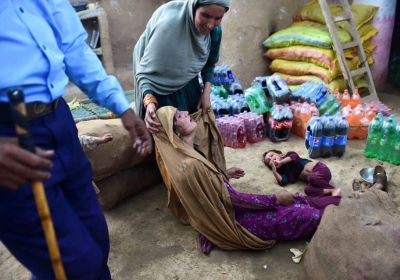
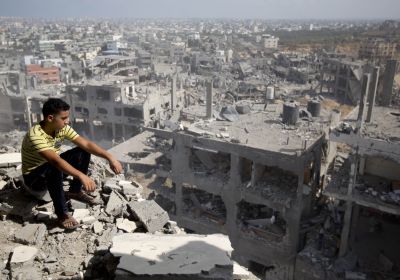
One week after an August 26 ceasefire halting an Israeli military offensive against the Gaza Strip, tens of thousands of Palestinians remained displaced, sheltered in United Nations schools and other facilities. On September 1, 58,071 people still lived in 36 UN schools across the coastal enclave, according to Chris Gunness, spokesperson for UNRWA, the UN agency for Palestine refugees. Israel’s 51-day onslaught damaged 15,670 houses, including 2276 completely destroyed, and up to 500,000 Palestinians were displaced. -
As civilian casualties climb from its brutal assault on Gaza, Israel has met growing condemnation for the carnage from human rights groups and many governments. In Latin America, the response has been especially strong. Since Israel began its assault a month ago, El Savador, Chile, Peru, Brazil and Ecuador have withdrawn their ambassadors in protest. -
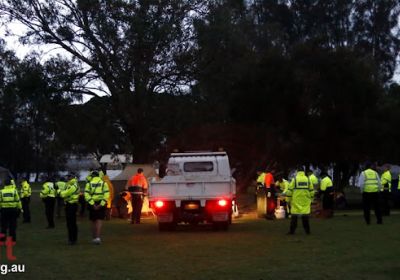
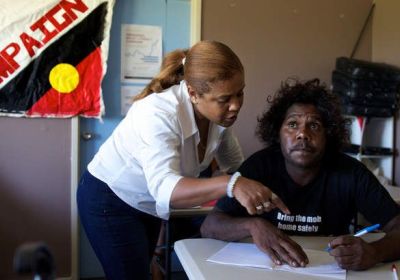
Two young people who died in their car on July 25 after using a gas heater to keep warm had been homeless for some time. Dr Bruce Redman from the Salvation Army told the Ballarat Courier after the discovery of their bodies: “The Salvos are finding more and more people who are resorting to live in their cars because of a lack of affordable accommodation options. “When it's summer, people tend to sleep on the beach or in their cars and no one really notices. But when it's cold, most people expect to have a roof over their heads, somewhere where they can stay warm.”
-
With Israel’s assault on Gaza claiming more than 1400 lives as of August 1, mostly civilians, Israeli leaders claim the offensive is self defence against Hamas, the party governing Gaza, in response to rockets fired at Israel. However, it is hard to ignore the many genocidal incitements coming out of the mouths of Israeli politicians and other commentators. The most recent infamous case was an August 1 op-ed published at widley-read website The Times of Israel by Yochanan Gordon entitled "When Genodice is Permissible". -
Joko Widodo, or “Jokowi” as he is popularly known, was confirmed by Indonesia’s electoral commission on July 22 as the winner of the presidential elections. Jokowi defeated, sacked Suharto-era general Prabowo Subianto, by 57% to 43% of the nearly 130 million direct votes cast on July 9. Prabowo has sought to challenge the result. However, supporters of Jokowi, whose campaign aroused enthusiasm among ordinary people hoping for change from elite-dominated politics, are intent on defending what they see as a chance for significantly more democratic reform. -
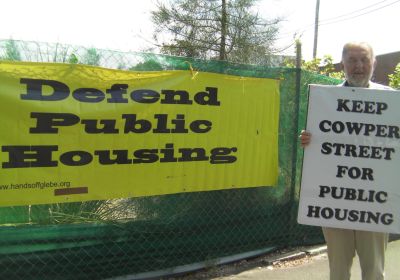
The campaign to save the homes of public housing tenants at the historic inner city suburb of Millers Point is growing. The NSW Coalition government is pressing ahead with its plan to sell nearly 300 public housing residences, in the face of determined opposition from the community and supporters. The government has successfully pressured some residents to relocate to other public housing areas, but many of the Millers Point tenants are holding firm and refusing to move. -
If anyone can get the different forces of the Catalan left to unite in support of a common cause, it is Ada Colau. The spokesperson of the anti-eviction Mortgage Victims Platform (PAH) until early May, Colau is almost certainly the most popular and respected social activist in the Spanish state. On June 26, Colau launched Let’s Win Barcelona platform for next year's May municipal elections in the Catalan capital. -
LIFE FOR MOST AUSTRALIANS IS GETTING HARDER, WHILE POLITICIANS SERVE THE WEALTHY. BUT PUBLIC BACKLASH IS BREWING INTO A MOVEMENT TO CHALLENGE THIS SYSTEM, WRITES SUSAN PRICE. In handing down its first budget, the Coalition government echoed its National Commission of Audit, warning that a “business as usual” scenario for public spending on welfare, pensions, public services, health and education is “unsustainable”, even “irresponsible” in Australia today. -
Before returning to the favela (local neighbourhood) Vila Autodromo for the first time since 2012, I had already been told that the community would not look the same. As a friend said to me, “It will resemble a perfect smile with several teeth knocked out.” Vila Autodromo is just yards away from the site of the 2016 Rio Olympic village. Olympic planners, as well as building interests, have long targeted this close-knit community for demolition. -
Barney Gardner, spokesperson for the Save Millers Point residents action group, told a Sydney forum of more than 100 people on June 14: “The Baird Coalition government is continuing with the policies of [former premier] Barry O'Farrell and [former housing minister] Pru Goward.” The New South Wales government is pushing ahead with its plan to sell off 393 public houses in the historic Millers Point neighbourhood of inner-city Sydney and force public housing tenants to move. -
Dave Zirin speaks to DemocracyNow! on the World Cup You Won't See on TV: Protests, Tear Gas, Displaced Favela Residents.