On November 12, largely in reaction to the rise of the right-wing Vox, Socialist Workers' Party leader Pedro Sánchez and Unidas Podemos' Pablo Iglesias stitched up a pre-agreement for government in less than 48 hours, writes Dick Nichols.
Following the European Union’s agreement to grant Boris Johnson’s government until next January to exit the EU, the House of Commons voted to hold a snap election on December 12. At the time of writing the election bill has yet to pass the House of Lords, but looks a certainty.
Politics in Britain is in turmoil. An early election will most likely happen as soon as December, or at the latest within a few months — the second early election since 2017.
This election will pit the Jeremy Corbyn-led Labour Party against various parties representing the interests of the 1%, including the governing Conservative party (Tories), the Liberal Democrats and the recently-formed, far right, Brexit Party.
Spain’s acting Prime Minister Pedro Sánchez, leader of the Spanish Socialist Workers’ Party (PSOE) and winner of the April 28 general election, informed King Philip on September 17 that he lacked the support to form a government. As a result, another general election will be held on November 10.
Following weeks of negotiations, Italy’s 5 Star Movement (M5S) and the Democratic Party (PD) have agreed to form a new coalition government, which will put Matteo Salvini’s far-right Lega (League) into a corner — at least for now, writes Daniele Fulvi.
The news that a solid gold toilet has been stolen from Winston Churchill's former home of Blenheim Palace seems symptomatic of the present British condition. The British ruling class are not merely having their bathroom fittings taken but they seem assailed by chaos on every side, writes Derek Wall.
Hundreds of thousands of people took to the streets of London on August 31 to oppose British Prime Minister Boris Johnson’s plan to prorogue parliament and force through his Brexit agenda. More national mobilisations have been planned for September 7–8.
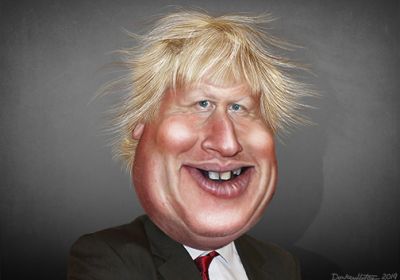
Though Boris Johnson was swept to power with apparent ease in the leadership election, deep divisions in parliament and the British public at large mean that delivering his three promises “deliver Brexit, unite the country and defeat Jeremy Corbyn“ will be a great challenge, writes John Lawrence.
Following Conservative Party leader Boris Johnson’s appointment as British Prime Minister, commentators are predicting a general election, possibly as early as October.
While a victory for Labour is far from certain, as it drops in the polls, Jonathan Cook writes that powerful forces are at work to ensure that Jeremy Corbyn — still the most popular Labour politician — never gets the chance to govern.
The far-left Workers’ Party of Belgium (PTB/PVDA) won big across regional, federal and European elections in May and has firmly established itself as the left alternative to both the socialist and green parties across the country.
Speaking to Denis Rogatyuk for Novara Media, newly elected MEP Marc Botenga explained some of the key factors behind the success of the Workers’ party campaign and its vision for working within the EU.