
The results of the September 28 Portuguese local government elections would seem obvious: the big winner was the opposition Socialist Party (SP), and the big loser the governing alliance of the Social Democratic Party (PSD) and the Democratic and Social Centre—People’s Party (CDS-PP).
The pattern was the same at all three layers of local government for which the Portuguese vote — municipal assemblies (councils in Australia), municipal chambers (the councils’ full-time executives, headed by the mayor), and parish or ward committees.
-
-
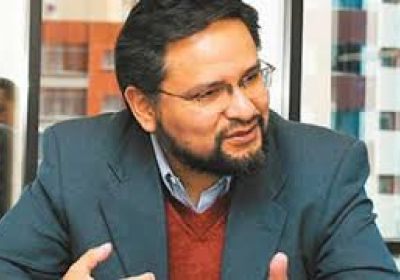 Five months ago, I was in Tarija in southern Bolivia taking part in a forum debating the political process in this country, a process we call the “democratic and cultural revolution”. A participant asked me whether it was possible to deepen this revolution, to make it an economic and social revolution, without the participation of the working class. My immediate response was no.
 -
Demonstrators clashed with police on October 19 as tens of thousands marched through Rome to protest against the government's intensifying austerity program. They chanted slogans against unemployment and government cuts to benefits and social housing programs. Many camped throughout the night in front of the Infrastructure Ministry.
-
 Australian Unions has initiated a petition against NSW Premier Barry O'Farrell's cuts to the NSW fire service. Text is below, sign it here. * * *
 -
In an interview with independent progressive media outlet Democracy Now! last month, Ecuador's foreign minister, Ricardo Patino, discussed why President Rafael Correa did not attend the United Nations General Assembly then taking place.
-
When I first stepped into kampong (“village”) Hakka a year ago, I was amazed that to find a new Chinese village complete with temple, community hall and school existed. I was further shocked to learn that all the people living there had been declared illegals just because a rich company had bought their land.
-
 Venezuelan president Nicolas Maduro has launched the second phase of his Street Government initiative, with the aim of inaugurating new projects and strengthening community organisation. The Street Government is a governance mechanism implemented by Maduro this year which involves the national executive visiting Venezuela’s regions and holding meetings with different neighbourhoods and social groups. These meetings allow the government to orientate its regional development strategies and launch new projects with the support and involvement of communities.
 -
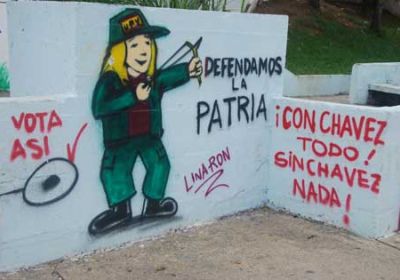 Jasmine Acosta and Hector Zabala are social activists from the Caracas neighbourhood of 23 de Enero (January 23). They come from a working-class neighbourhood with a strong tradition of community activism. This barrio of about 250,000 inhabitants has been part of all the major revolutionary moments in Venezuelan history.
 -
Fourteen Caribbean nations are suing the governments of Britain, France and the Netherlands for reparations over what the plaintiffs say is the lingering legacy of the Atlantic slave trade, AlJazeera.com said on September 27. In a September 27 speech at the United Nations General Assembly, Prime Minister of Saint Vincent and the Grenadines Ralph Gonsalves said the European nations must pay for their deeds.
-
In April, Calgary-based pipeline company TransCanada ― the same company behind the proposed Keystone XL tar sands pipeline ― formally proposed and launched an open season for a monumental new project: the Energy East tar sands pipeline, a C$12 billion, 4400 kilometer long pipeline connecting Hardisty, Alberta to dedicated export terminals at ports in Quebec City and Saint John, New Brunswick. The project could carry up to 1.1 million barrels per day of crude oil including a substantial amount of diluted bitumen tar sands crude.
-
First Nations people have blockaded motorways on October 17 in Rexton, New Brunswick in Canada's west in protest against the violation of their traditional homelands by colonist mining companies seeking to commence fracking for shale gas. Protsters from the Elsipogtog First Nation were joined by other local residents to stop shale gas exploration over fears it would lead to environmentally damaging fracking processes.
-
International students and supporters rallied on October 17 to oppose international students being exploited, bullied and pushed into poverty in Melbourne’s office cleaning industry. The rally was called by cleaners’ union United Voice as part of anti-poverty week. United Voice Victoria secretary Jess Walsh said: "International students are a very important part of our community. A quarter of the international students we surveyed received less than $10 an hour at work, and 60% received less than the minimum wage and many reported experiencing racism and sexual harassment.