
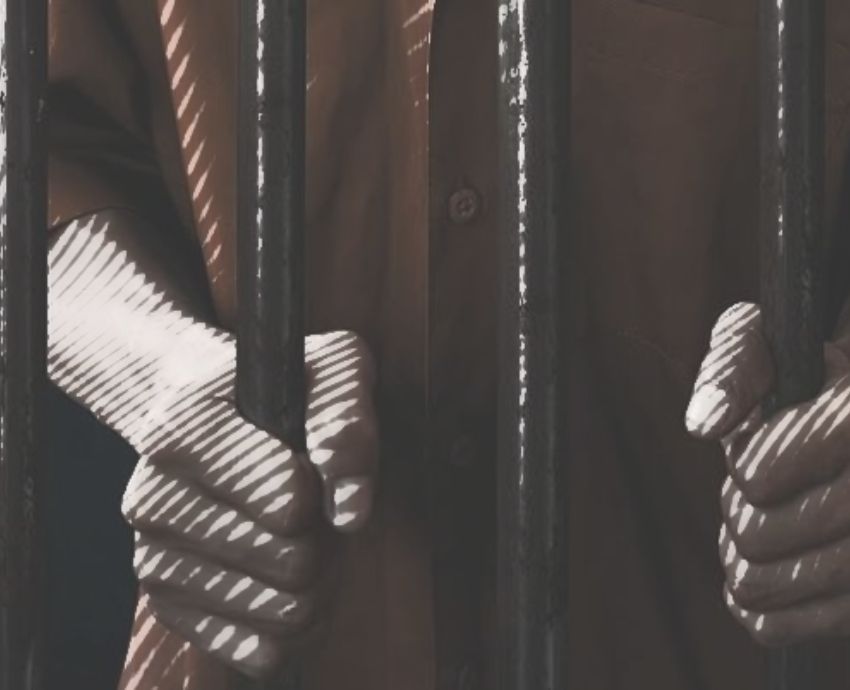
Back in March 2003, Labor opposition MP Anthony Albanese made a strong speech against then Prime Minister John Howard’s proposal to give the Australian Intelligence Security Organisation (ASIO) temporary powers to secretly detain and interrogate people (including children as young as 14).
Howard wanted new powers for security agencies in the wake of the September 11, 2001 al-Qaeda terrorist attacks in the United States.
“Terrorism is a scourge. The murder of innocent people for political ends — whether by individual terrorist groups or by the state, whether in New York, in the Middle East or on the Indian subcontinent — is an unspeakable horror. But it is intellectually dishonest to exploit public fears and anxieties about terrorism to introduce laws for which no justification has been or could be made,” Albanese said back then. He continued, saying the Coalition’s plan “should come as little surprise to anyone, for this has been the basis of the government’s electoral strategy since coming to office.
“They are the masters of immoral wedge politics,” Albanese said.
“The government modus operandi is clear and unavoidable, whether it be generating fear amongst country people that Aboriginals were coming to take their farms; attacking multiculturalism and anything that smacked of political correctness in order to generate fear amongst Anglo-Australians that their way of life was under threat from an inner-city intelligentsia; fabricating the Tampa crisis in order to create the perception that we were being swamped by illegal refugees with subversive intentions; or the extraordinary children overboard affair.
“This is a government that has only maintained power by dividing our society, by cultivating an environment of fear and insecurity, and by denouncing as unpatriotic those who question its intentions …”
Albanese condemned the push to provide ASIO with the power to arrest, detain and coerce people, even those not suspected of any offence, for up to 48 hours without legal representation and without access or information provided to family members as a “draconian measure”.
Warrants for detentions without charge or trial for coercive interrogations are authorised by the federal attorney general, not by a judge or magistrate as with normal arrest warrants.
ASIO was given these “temporary” interrogation powers in 2003, but parliament has extended the sunset clause six times and ASIO has used these powers 20 times.
Late last year, the Albanese government introduced the ASIO Amendment Bill (No. 2), which sought to make these powers permanent and extend their reach to include the “promotion of communal violence” and “attacks on Australia’s defence system”.
The Councils for Civil Liberties (which comprises New South Wales Council for Civil Liberties, Liberty Victoria and Queensland Council for Civil Liberties) opposed Labor’s ASIO bill, saying that “administrative detention of an individual upon executive action (ie, without judicial oversight) constitutes an erosion of the separation of powers and is an intolerable incursion upon fundamental rights”.
Further, the CCL said, “in a free and democratic society, no individual should be deprived of his or her liberty other than by a court of law, after evidence based determination, and after the individual has been afforded due process.”
The ASIO power for detainment, without court involvement, is “potentially unconstitutional” and a “breach of Australia’s international human rights obligations”. They are also unprecedented in comparable democracies. “Neither MI6, nor CSIS in Canada, nor the various American intelligence agencies, have the power to detain and coercively question the citizens of their respective nations.”
“These are the powers of a police state,” the CCL said, adding that they must not be “made permanent”.
On August 20, Labor forced its ASIO bill through parliament with Coalition support. However, at the last minute, it withdrew its proposal to make the powers permanent; they will continue to have a three-year, renewable, sunset clause.
The Greens opposed the bill in the strict one-hour “debate” in the Senate that day. “This is the largest expansion of secret interrogation and detention powers this country has seen in over two decades, and the major parties are hoping nobody notices until it’s law,” said NSW Greens Senator David Shoebridge.
There was no debate because not a single Labor or Coalition MP said a word to justify the bill. “They were forced to reinsert a sunset date for these powers, after community pressure, but we know they want them forever,” said Shoebridge.
“Under these laws you can be locked up and interrogated in this country without ever being charged or even suspected of a crime. That should terrify every Australian, not just the ones in the room.
“A fourteen-year-old can be detained and questioned by ASIO with no lawyer and no court oversight and then when released they can’t tell anyone.
“If, while you’re being questioned, you stay silent or refuse to answer any questions you can go to prison for five years. Tell someone it happened and you go to prison…
“When they write ‘politically motivated violence’ into this bill, they are writing a blank cheque to target anyone who criticises this government including the Palestine solidarity movement.”
The political context for Labor’s decision to join the Coalition as “masters of immoral wedge politics” is the bi-partisan support for deepening the war alliance with the United States, bi-partisan support for Israel’s genocidal war against the Palestinian people and a bi-partisan commitment to make Australian one of the world’s top 10 arms exporters.
The Royal Commission on Antisemitism and Social Cohesion has been a platform for Zionist and Gaza genocide-supporting groups to falsely equate criticism of Israel with “antisemitism” in the public mind, while the growing arms industry in Australia continues to export F-35 components and other military supplies to Israel.
Giving ASIO such draconian powers over anyone it believes might have information that “promotes communal violence” and “attack Australia’s defence system” will make it easier for the secret police to target activists in the Palestine solidarity movement.
[Peter Boyle is a member of the Socialist Alliance National Executive. ASIO opened its first file on him in 1975 after he wrote an article for a student newspaper defending the Palestinian people’s right to self-determination.]