-
Exorbitant gas and electricity bills are threatening Victorian living standards. The Essential Services Commission (ESC) of Victoria reported that more than 34,000 households were disconnected from essential utilities in 2013/14. The residential electricity disconnection rate increased this year to 1.47 disconnections per 100 customers, a 36% increase on the 1.07 disconnections in 2012/13. The ESC also reported an increase in the gas disconnection rate to 1.33 disconnections per 100 customers, a 42% increase on the rate in 2012/13. -
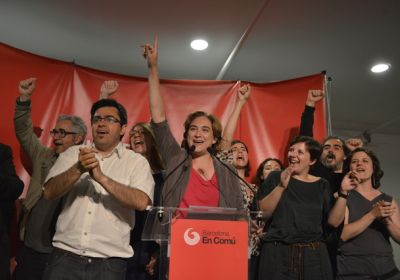
It was clear early on that something special was happening in the May 24 local government and regional elections across the Spanish state. In Spanish elections, the voter participation rate gets announced at 1pm and 6pm — while voting is still taking place. Well before the polling stations closed, the news was that participation was up about 5% in Catalonia and about 8% in the working-class districts of Barcelona.
-
Independent journalist and author Antony Loewenstein has made a name for himself writing about war crimes, human rights abuses and corporate profiteering. For the first time, he is seeking to speak truth to power through the medium of film — with his first documentary Disaster Capitalism now in production. You can see a teaser at Loewenstein's website. You can visit http://antonyloewenstein.com for more details on his articles and books. -
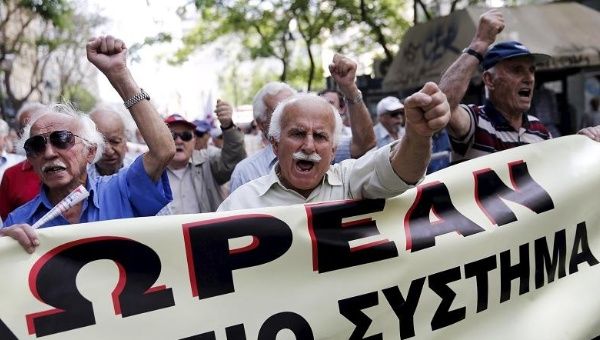
Greek pensioners joined the march for a better healthcare in Athens.
-
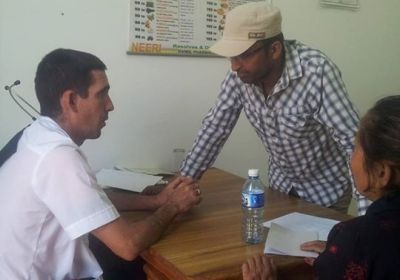
As Nepal struggles to revive from the catastrophe caused by the April 25 earthquake that registered 7.8 on the Moment Magnitude Scale and its aftershocks, Latin America's socialist governments are busy soothing the wounds of the Nepalese people. The orange-coloured team of Venezuelan aid workers and white-coloured medical team from Cuba have brought to the people of Nepal the spirit of Argentine-born Cuban revolutionary Che Guevara and Venezuela's late revolutionary president Hugo Chavez. -
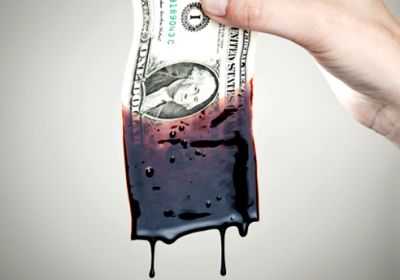
The fossil fuel industry receives US$5.3 trillion a year in government subsidies, despite its disastrous toll on the environment, human health, and other global inequality issues, a new report by the International Monetary Fund (IMF) has found. That means that governments worldwide are spending $10 million every minute to fund energy companies — more than the estimated public health spending for the entire globe. -
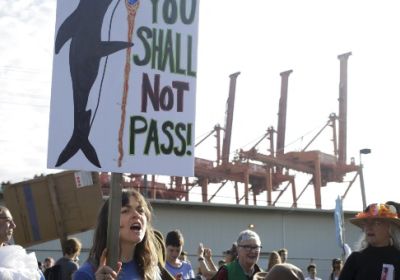
More than 200 environmental activists blocked a terminal in Seattle’s port to protest against Royal Dutch Shell’s imminent plans to begin drilling for oil in the Arctic. A huge vessel, named Polar Pioneer, is temporarily stationed at the port before heading out to the Arctic to explore for oil. If successful, it will be the first time the multinational has exploited oil in the Arctic. -
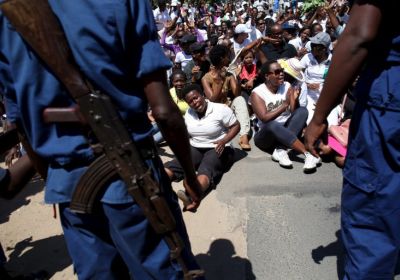
Burundi's embattled President Pierre Nkurunziza agreed on May 20 to postpone parliamentary elections, but refused to change the date of the presidential vote. Parliamentary and local elections were moved back from May 26 to June 6. However, the contentious presidential vote remains scheduled for June 26.
-
Britain's May 7 general elections, in which the Conservative Party won an outright majority, produced a couple of silver linings on a very large black cloud. One was the success of the Green Party of England and Wales. While the party did not sweep into Westminster, it made progress politically and in terms of votes.
-
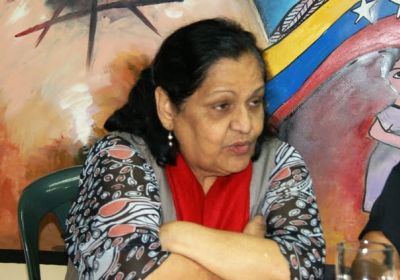
Condolences and tributes to legendary revolutionary and champion of women’s rights Nora Castaneda have been pouring in from across Venezuela after news of the activist’s death on May 16. An economist, university lecturer and much-loved revolutionary, Castaneda is renowned for having founded and presided over Venezuela’s internationally celebrated Women’s Development Bank, “Banmujer” since 2001. She was also one of the chief protagonists of Venezuela's working-class women’s movement that emerged in the 1980s. -
Traces of chemicals commonly used for fracking were found in the drinking water supply of three homes in Bradford County in the US state of Pennsylvania, a study revealed on May 18. The investigation, which appeared in scientific journal Proceedings of the National Academy of Sciences</i>, proved the long-held worry of damaging underground drinking water sources from the method of extracting gases known as hydraulic fracturing. The report explicitly links the practice with the affected water systems.
-
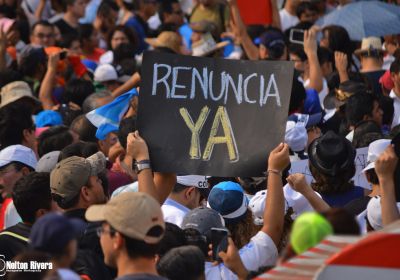
"Resign Now" is the rallying cry of the popular movement bringing together diverse social sectors calling for President Perez Molina's resignation. Photo: Prensa Comunitaria. Despite growing social movement pressure and emerging corruption scandals, Guatemalan President Perez Molina says he will not resign.