-
No one with an ounce of intelligence would have expected Thailand's junta, and its herd of “academics for hire”, to come up with a democratic constitution - or anything other than a host of counter-reforms to set the authoritarian political agenda for years to come. Overall, the current draft differs little in its tone from the previous draft, although there is a shocking additional article towards the end. The general tone is patronising and banal, with constant references to the monarchy. -
India witnessed a powerful general strike on September 2, across most sectors of the economy and civil administration. The strike was called jointly by central trade unions and supported actively by various sections of the Indian left.
-
Supporters of the Labour party's new leader Jeremy Corbyn celebrated across Britain on September 12, as the socialist and outspoken activist vowed to put the country on a new course.
-
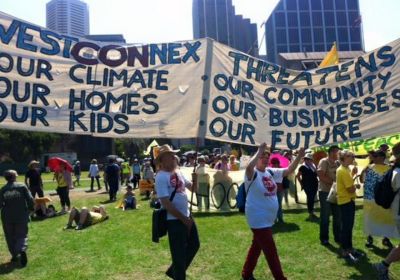
Community groups from across Sydney have condemned the NSW government's announcement that the community consultation period for the Environmental Impact Statement (EIS) for the M4 East section of the huge WestConnex tollway will be limited to 45 days. NSW Planning Minister Rob Stokes released the Environmental Impact Statement on September 9. NSW Greens spokesperson for WestConnex and MP for Newtown Jenny Leong said: “This is the largest, most complex road building project in Australia’s history. -
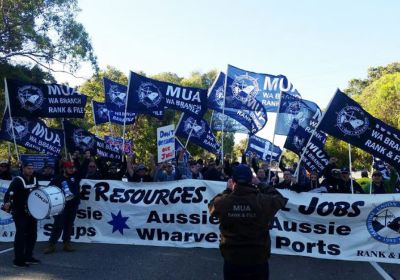
About 100 people rallied outside Australia Post in the CBD on September 9 to protest against job cuts at Australia Post. Australia Post CEO Ahmed Fahour’s plans to “halve the service and double the price for letters” is before the parliament now. This could see the price of stamps increased to $1. Fahour announced that he had put aside $190 million for redundancies — an indication of how many jobs will go. Australia Post’s revenue has increased by more than $1.5 billion since 2010. -
Venezuela and Colombia recalled their ambassadors for consultations on August 26. The move came after a meeting between the two nations’ foreign ministers failed to calm diplomatic tensions over Venezuelan border closures and Colombian smuggling activities.
-
Hundreds of people crammed into the Marriott Hotel in Glasgow on August 29 for the launch of RISE – Scotland’s Left Alliance. The new coalition of the left will stand candidates in all eight regional seats in the 2016 Scottish elections.
-
Thousands of people gathered in Dublin, August 29.
Tens of thousands of people took part in a huge anti-water charge rally in Dublin on August 29 under the banner: “We’re not going away, you know!”
This is the fifth demonstration Right2Water has organised in opposition to deeply unpopular water charges. About 500,000 people have attended Right2Water protests to date.
-
About 150 million workers across India went on strike on September 2 to protest the "pro-business" policies of the Narendra Modi-led BJP government.
Trade unions are opposing government plans to sell off stakes in state-run companies and change labour laws, which will put jobs at risk and worsen working conditions.
-
Indigenous anti-Correa protesters.
Ecuador’s President Rafael Correa is facing the most important challenge yet to his self-styled “Citizens' Revolution”.
A range of indigenous groups, trade unions and leftist parties mobilised across the country on August 13. Their long list of demands included calls for land reform, opposition to mining, support for bilingual education and the shelving of the government’s proposed water and labour laws.
-
Queensland’s environment department has given conditional approval for the controversial expansion of the Acland coalmine. But questions about the link between political donations to the former LNP government and their support for the project remain unanswered. In December last year the Queensland coordinator-general approved Stage 3 of New Hope Coal’s Acland coalmine, despite the project requiring the “clearing of eight endangered and of-concern regional ecosystems” including koala habitat, issues regarded as “matters of state environmental significance”. -
From 1954 to 1972, Australia’s official unemployment rate was under 2% as the economy grew at the most rapid rate in the country’s history. There was one exception, the credit squeeze year of 1961, in which unemployment rose to 2.4%.