
Legendary soul singer, feminist and civil rights icon Aretha Franklin, who died aged 76 on August 16, was often called the "Queen of Soul" as well as the “Voice of Black America”, noted Common Dreams.
Legendary soul singer, feminist and civil rights icon Aretha Franklin, who died aged 76 on August 16, was often called the "Queen of Soul" as well as the “Voice of Black America”, noted Common Dreams.
No Friend but the Mountains, written by Kurdish journalist and human right activist Behrouz Boochani who has been jailed on Manus Island since 2013, stands out among the genre of prison literature.


Stephen Langford reviews Lindy Nolan's new book, which deals with the divisive role played by the Business Council of Australia (BCA) in Aboriginal communities as it seeks to advance corporate interests.
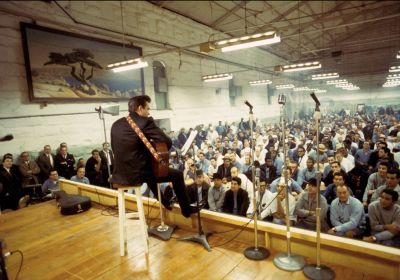
On the 50th anniversary of Johnny Cash’s concerts behind prison walls, later released as At Folsom Prison, Nicole Colson looks at how the US country music legend gave voice to the voiceless.

Many Australians have probably never heard some of these Australian languages before Yothu Yindi, Gurrumul, Shellie Morris and others brought them to broader ears. But they are the languages of this continent: they grew up with this land, evolved with it, and have much to tell us about its histories, ecologies and peoples.


Since it was first mooted in 2010, the Adani Carmichael Coal and Rail project in Queensland’s Galilee Basin has proven controversial. It has faced a series of legal challenges by environment groups and Traditional Owners, as well as campaigns by activists calling on financial institutions to divest from the fossil fuel industry. The starting date has been rescheduled several times as the viability of the project has been called into question and potential finance proves elusive.
It is timely then, at this impasse, that two new books are released documenting the story so far and canvassing possible outcomes.

Climate and Capitalism editor Ian Angus takes a look at a series of new books of interest for ecosocialists.