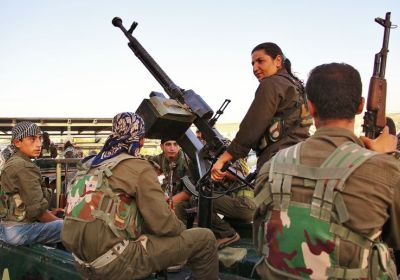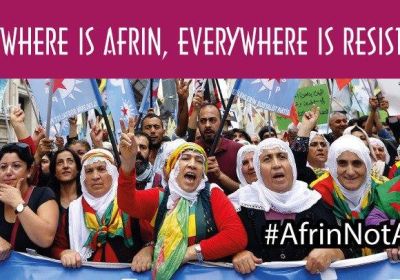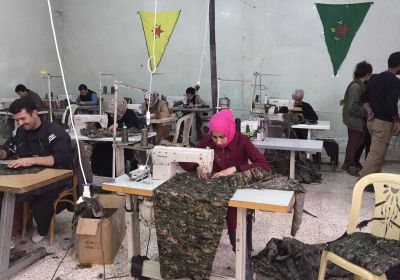
The struggles of Kurdish women in Rojava Kurdistan (Northern Syria) became known to many people in the world during the brutal attacks of ISIS against the city of Kobanê in September 2014.
The struggles of Kurdish women in Rojava Kurdistan (Northern Syria) became known to many people in the world during the brutal attacks of ISIS against the city of Kobanê in September 2014.
 On March 17, after a two-day meeting held in the town of Girkê Legê (Al-Muabbada) in Rojava (Syrian Kurdistan), a Constituent Assembly established a “Rojava-Northern Syria Democratic Federal System”.
The Constituent Assembly was attended by 31 parties and 200 delegates representing Rojava's Kobanê, Efrîn and Cizîrê cantons and the Kurdish, Arab, Assyrian, Syriac, Armenian, Turkmen and Chechen peoples of Girê Spî (Tal Abyad), Shaddadi, Aleppo and Shehba regions.
On March 17, after a two-day meeting held in the town of Girkê Legê (Al-Muabbada) in Rojava (Syrian Kurdistan), a Constituent Assembly established a “Rojava-Northern Syria Democratic Federal System”.
The Constituent Assembly was attended by 31 parties and 200 delegates representing Rojava's Kobanê, Efrîn and Cizîrê cantons and the Kurdish, Arab, Assyrian, Syriac, Armenian, Turkmen and Chechen peoples of Girê Spî (Tal Abyad), Shaddadi, Aleppo and Shehba regions.
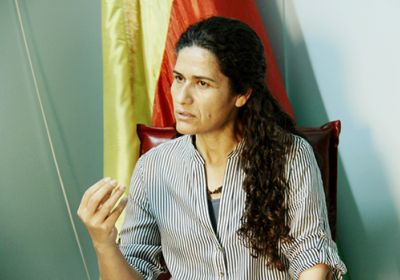
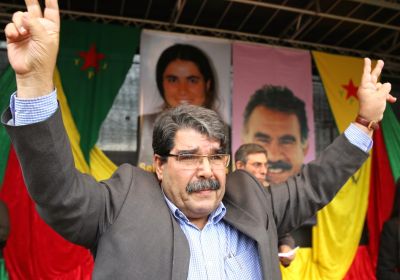
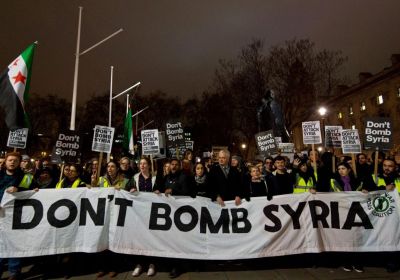
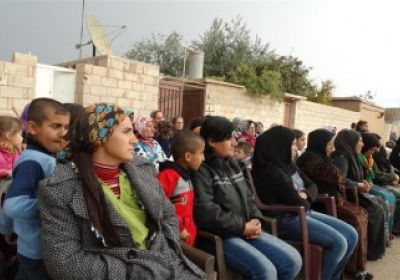
Syria can seem an endless black hole of misery. But in the northern, largely Kurdish region of Rojava, it is also the scene of a profoundly democratic and humanist revolution, which places the rights of ethnic minorities and women's liberation at its centre.
 On October 12, Amnesty International released a report alleging “civilians living in areas of northern Syria under the de facto control of the Autonomous Administration led by the Partiya Yekîtiya Demokrat (Democratic Union Party, PYD) are being subjected to serious abuses that include forced displacement and home demolitions.”
The report said some of these alleged abuses were war crimes.
On October 12, Amnesty International released a report alleging “civilians living in areas of northern Syria under the de facto control of the Autonomous Administration led by the Partiya Yekîtiya Demokrat (Democratic Union Party, PYD) are being subjected to serious abuses that include forced displacement and home demolitions.”
The report said some of these alleged abuses were war crimes.