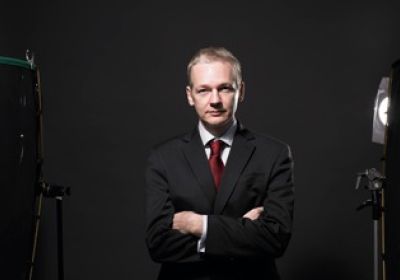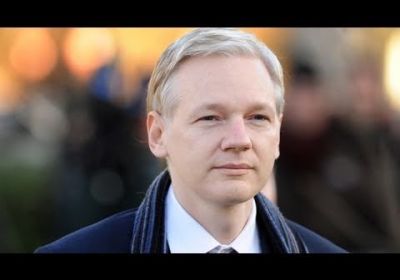
Following revelations that The New York Times liaised with the White House before publishing information supplied to it by WikiLeaks, the website’s editor-in-chief, Julian Assange, has revealed the British Guardian edited out “all sorts” of information before publishing US diplomatic cables.
-
-
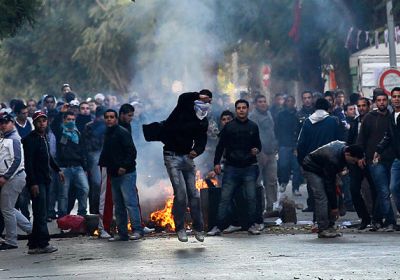
Disgraced Tunisian foreign minister Ahmed Ounaies resigned on February 13 from the interim government set up after dictator Zine El Abidine Ben Ali resigned on January 14 in the face of huge protests. The government has introduced fresh reforms as protests for democracy and economic justice continue in the north African country. Ounaies, a former diplomat whose appointment to the interim government was announced on January 27, described French foreign minister Michelle Alliot-Marie as “above all a friend of Tunisia”. -
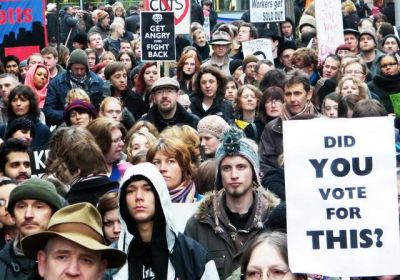
A rebellion is developing across Britain in the face of huge spending cuts by the Conservative Party-Liberal Democrat coalition government. The scale of the cuts is huge. The government is seeking to privatise huge swathes of the economy and hundreds of thousands of public sector jobs are under threat. They have also cut corporation tax, but sharply increased the goods and services VAT tax from 17.5% to 20%, which hits those on lower incomes hardest. By changing the inflation measure used to determine benefits and pensions, the government is plunging more people into poverty. -
Venezuelan foreign ministry official statement The president and commander-in-chief of the Bolivarian Republic of Venezuela, Hugo Chavez, in the name of the Venezuelan people, applauds the genuine lesson of political and democratic maturity that the courageous Egyptian people have brought before the eyes of the world.
-
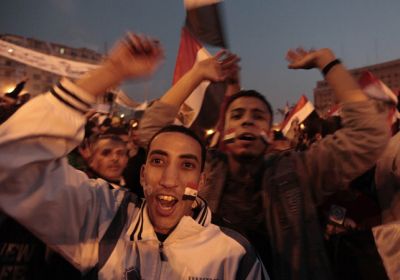
A joyous night in Cairo on February 11. What bliss to be alive, to be an Egyptian and an Arab. In Tahrir Square, they chanted: “Egypt is free” and “We won!”
-
US investigators have admitted their efforts to find grounds on which to prosecute WikiLeaks editor-in-chief Julian Assange over the whistleblowing website’s release of hundreds of thousands of classified US documents were in trouble.
-
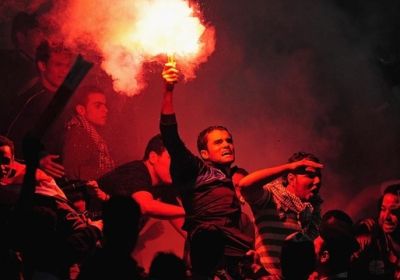
Over the decades that have marked the tenure of Egypt's "President for Life" Hosni Mubarak, there has been one consistent nexus for anger, organisation and practical experience in the ancient art of street fighting: the country's soccer clubs.
-
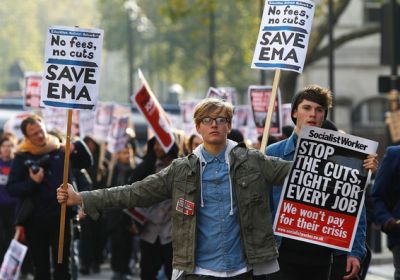
When the British Conservative-Liberal Democrat coalition government announced it would raise the maximum yearly tuition fee universities could charge students to £9000, thousands of students took to the streets of London in a series of protests. Highlights included occupying the Conservative Party headquarters in London and frightening Prince Charles. The tuition rise came after the release on October 12 of the Browne Review, a report into education funding chaired by former BP chief executive John Browne. The report recommended abolishing the cap on tuition fees. -
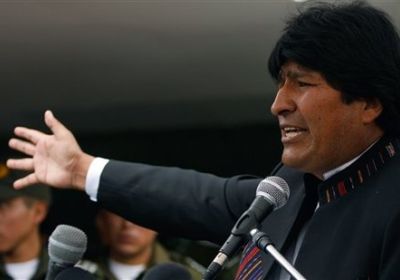
Bolivian President Evo Morales praised “the popular uprisings in Tunisia and in Egypt” in his speech to the opening ceremony of the World Social Forum in the west African nation of Senegal on February 6. Morales said the uprisings were part of the “rebellion by the peoples of the Arab countries against US imperialism”. “This struggle by the people is going to be unstoppable,” Morales said, “even though the US government provides millions and millions of dollars of financing to try and finish these social movements. “But this is not going to stop.”
-
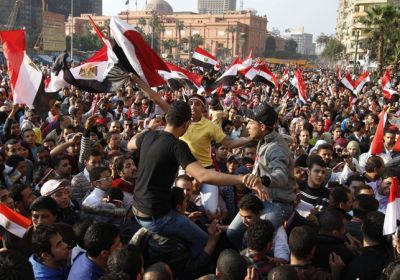
In a world-shaking event, after 18 days of constant street protests, the Egyptian people’s revolution won a huge victory when dictator Hosni Mubarak finally resigned on February 11.
-
Venezuelan President Hugo Chavez expressed his support for workers in a dispute at a Venezuelan Coca-Cola plant conflict in a televised address on February 4. “If Coca-Cola doesn’t want to comply with the constitution and the law, well, we can live without Coca-Cola,” he said to cheers from the crowd. Chavez was speaking in Valencia, the capital of Carabobo state, where 1230 workers are striking in a bottling and distribution plant of Coca-Cola Femsa.
-
United States Secretary of State Hillary Clinton, speaking at the Munich Security Conference Plenary Session on February 5, said the US had always stood for the principle “free people govern themselves best”.