
Cuban Vice-President Jose Ramon Machado Ventura praised Ecuadorian President Rafael Correa and Venezuelan President Nicolas Maduro on July 31 for their fight against US imperialism.
Machado said greater Latin American integration was aiding development across the region during the closing session of the 12th summit of the Bolivarian Alliance for the Peoples of Our America (ALBA) in Ecuador. But he stressed that social movements should lead the charge.
-
-
Nicolas Maduro completed his first 100 days since being sworn in as president on July 29 — a period marked by his new street government initiative, Latin American solidarity, and debate over spiked inflation and moderate economic growth. Maduro’s presidency began amid protest and claims of electoral fraud from Venezuela’s right-wing opposition. They continue to reject the results of the April 14 presidential election in which Maduro won 50.6% of the vote, a 1.6% margin over Henrique Capriles. Since then, polls have pegged his approval rating around 56%.
-
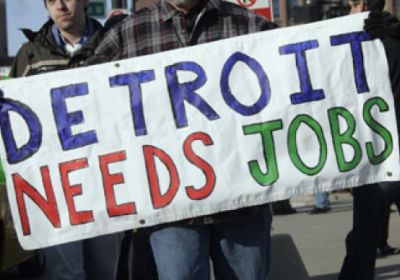 Detroit hit the Trifecta on July 18 — the third in a series of body blows that politicians have landed on the city’s working people. The Michigan legislature passed “right-to-work” in December and gave the governor the right to impose “emergency managers” on cities two days later. When Detroit’s emergency manager Kevyn Orr announced Chapter 9 bankruptcy on July 18, he was following a predicted trajectory that will lead to further impoverishment and privatisation.
 -
NSA whistleblower Edward Snowden finally left Moscow's airport, where he had been stuck for weeks evading capture by the United States government, on August 1 after being granted political asylum for one year in Russia. Snowden had sought to apply for asylum in places such as Ecuador and Venezuela.
-
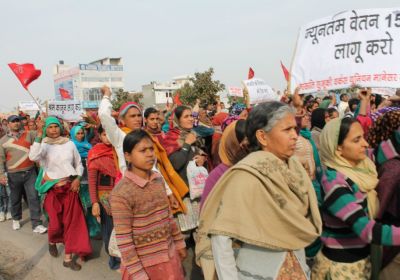 If Bangladesh represents the worst of exploitation in clothing factories, India is home to the most rapacious conditions for auto workers. Auto workers and union supporters in Manesar, India, launched an indefinite dharna (sit-in and hunger strike) on July 18. They demanded the release of jailed co-workers. A staggering 147 workers have spent a year in jail on trumped-up criminal charges after a company-provoked altercation led to the death of a human resources manager who supported the union. Hundreds have pledged to take part in the dharna.
 -
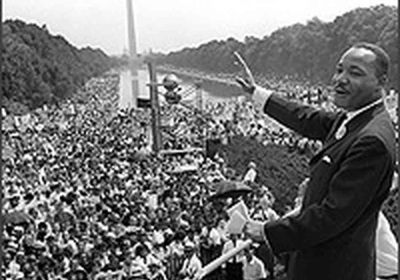 The 50th anniversary of the historic civil rights march on Washington led by Martin Luther King Jr will take place on August 24. In 1963, a quarter of a million people marched for jobs and freedom. They gathered in front of the Lincoln Memorial where King got up to deliver his “I have a dream” speech. A year later, in 1964, the US Congress passed the Civil Rights Act. It outlawed racial segregation in public places, introduced equal employment opportunities, and guaranteed the right to vote regardless of colour.
 -
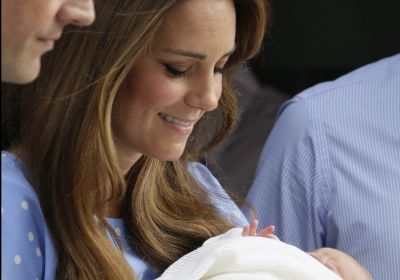 What a week! Oh such boundless joy that transports us to the very heavens! It began with BBC royal correspondent Nicholas Witchell gasping statements such as: “I am informed the royal cervix has currently widened to 9cm, and the Queen is said to be ‘thrilled’ at this level of dilation.” “The world waits” were the words the BBC put up, and indeed the whole world was thinking of nothing else. Somali fishermen abandoned their nets, saying: “Today I cannot concentrate on mackerel to feed my village, as we pray that Nicholas Witchell soon brings us news of the royal head emerging.”
 -
Outsourced truck drivers contracted to perform work for the Australian multinational company Boral have been on an indefinite strike since June 25 in Dangjin in South Korea’s South Chungcheong province. Boral specialises in the supply of building materials. Its headquarters are in Sydney and it employs more than 15,000 people in Australia, the United States and across Asia.
-
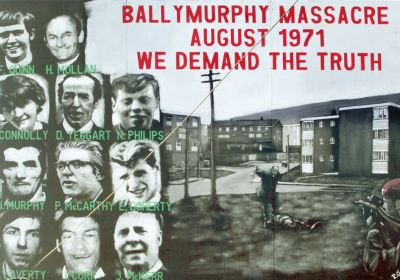 August 9, 1971 is a date firmly etched in the minds of many people in six counties in Ireland's north occupied by Britain. It was the date of the start of the occupying British Army's Operation Demetrius — more commonly known as the start of internment. Internment was the military response to a popular uprising against a politically bankrupt Stormont regime. As part of Operation Demetrius, thousands of British soldiers descended on nationalist areas, smashed into homes and dragged hundreds of men away to be incarcerated in prison camps without charge or trial.
 -
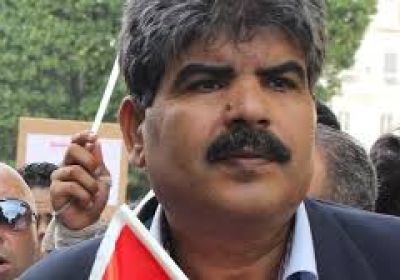 For the second time in six months, Tunisia's government has been thrown into chaos after the killing of a left-wing leader. Mohamed Brahmi, a leader of Tunisia's Popular Front, was assassinated on July 25. Brahmi was attacked by two men on motorbike outside his home in Ariana, a suburb of Tunis, and was shot 11 times. He was taken to Mahmoud Matri Hospital, where he was pronounced dead on arrival. His widow M'barka told radio station Mosaique FM: “He died as a martyr to his opinion and position”, Tunisia Live said. She added that “he was killed by a terrorist gang”.
 -
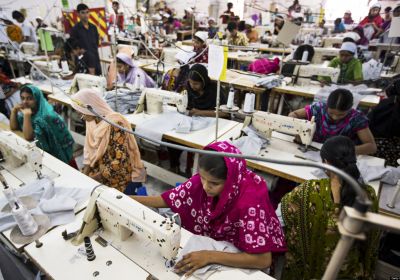 In the aftermath of the April 24 Rana Plaza collapse, the plight of Bangladeshi garment workers occupied global media attention in a way it never had before. The inconvenient thing about Rana Plaza, as far as the fashion brands that rely on outsourced sweatshop labour were concerned, was that so many workers — more than 1100 — died in one spectacular incident.
 -
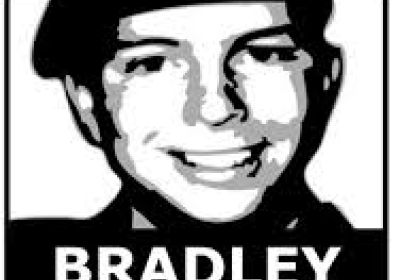 The mainstream press has focused on the decision of the judge in the military courts-martial of Bradley Manning to find him not guilty of “aiding the enemy”. However, judge Denise Lind's conviction of of the whistleblower who exposed war crimes for 20 other charges amounts to a full-scale assault on democratic rights. The courts-martial now enters the sentencing phase. Manning faces a maximum of 136 years behind bars. Whatever the final sentence is, it is widely believed it will be decades in the military stockade.