-
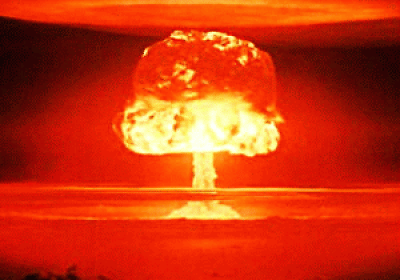
The 70th anniversary of the United States' atomic bombing of Hiroshima and Nagasaki is a reminder that when the United States' enemies commit crimes, they are crimes. But when the United States commits crimes, they did not happen. In 1928, Arthur Ponsonby, a British politician, said: “When war is declared, the first casualty is the truth”. But he never specified what the distorted “truth” might be. If one were to examine all wars the US has engaged in, however, one might conclude the casualty to be civilian death counts. -
For the first time in its history, the US colony of Puerto Rico has gone into default, Moody's Investors Service said on August 3. The news comes after years of economic turmoil in the island, produced mainly by the 2007-2010 recession and housing crisis that have affected the US. The default came soon after the island's Government Development Bank announced that it was only able to make a partial payment on its US$72 billion debt. This debt crisis directly hurts the Caribbean island's residents, since the debt is mostly owned by residents through credit unions.
-
South Kordofan residents at a makeshift UN camp near Kadugli.
Amnesty International released a report on August 3 detailing horrific war crimes committed against the people of South Kordofan by the Sudanese Armed Forces (SAF) and its militias.
-
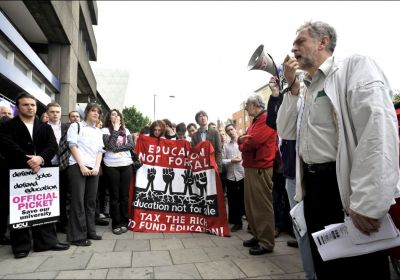
The extent of anger at austerity in Britain — and desire for an alternative to the pro-corporate politics of Britain's major parties — is being exposed by the scale of enthusiasm and support for the campaign of veteran socialist Jeremy Corbyn for leadership of the Labour Party. -
CONALCAM brings Bolivia’s main indigenous and popular organisations together with state representatives to coordinate and debate economic policies.
The small Andean nation of Bolivia has received praise from many quarters due to the economic transformation it has undergone over the past decade.
-
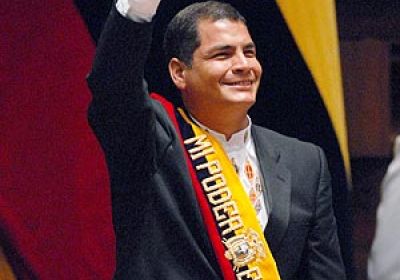
Ecuador: Correa says Latin American left faces 'new Cold War' Ecuadorian President Rafael Correa said on August 5 that left-wing governments in Latin America are facing “a new Cold War” that seeks to “annihilate them” through strategies of political destabilisation. The statements of the socialist leader come as opposition groups, including many from the far right, are planning a new series of protests against his government. -
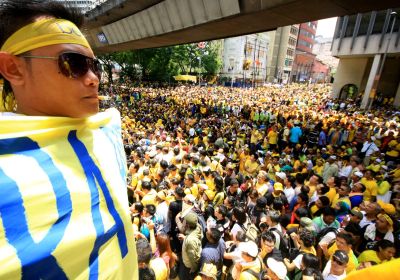
The Malaysian democracy movement, Bersih, has called its fourth major mobilisation — named Bersih 4.0 — for August 29-30 amid increasingly desperate and repressive attempts by the Barisan Nasional (BN) government of Prime Minister Najib Razak to suppress investigations of his alleged involvement in a multi-billion dollar corruption scandal involving the debt-ridden state investment fund 1Malaysia Development Bhd (1MDB).
-
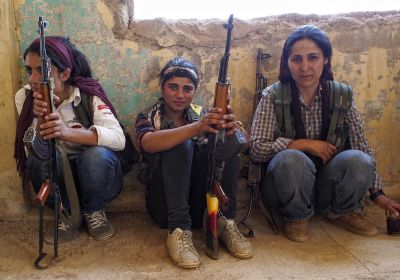
The July 23 deal between the US and Turkey — which gives the US access to Turkey's Incirlik airbase and officially brings Turkey into the US-led “war on ISIS” — makes one thing clear. For Turkish President Recep Tayyip Erdogan and his ruling Justice and Development Party (AKP), the real enemy is not the terrorist group calling itself the Islamic State — more commonly known as the Islamic State of Iraq and Syria (ISIS). It is the Kurdish freedom movement and the Turkish left. -
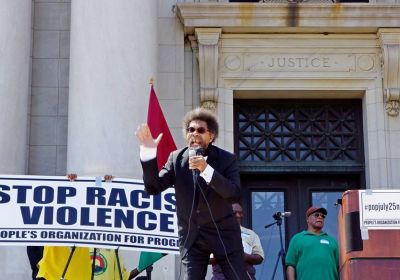
Thousands braved heat and no shade to rally and march in Newark, New Jersey, on July 25 and police brutality, racial injustice and economic inequality.
-
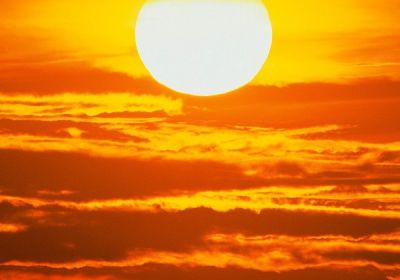
Temperatures across the Middle East this week have soared in an unprecedented heat wave, forcing residents to stay indoors. In the Iranian city of Basrah, located in the epicentre of the heat wave, temperatures exceeded 48°C for the seventh day in a row on August 1. On the same day, the Iraq capital of Baghdad sweltered through its fourth consecutive day of temperatures higher than 48 degrees. Governments from both countries have been forced to declare public holidays to protect people from the sweltering temperatures. -
Anti-water charge protests in Letterkenny, County Donegal on November 1.
The Irish government’s unpopular public utility, Irish Water, has been dealt a body blow. It failed two key tests within the space of a fortnight — gifting a huge victory to opposition parties and the huge anti-water charges movement.
-
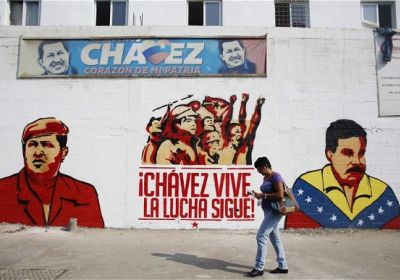
Had Hugo Chavez not passed away in 2013, the former Venezuelan president and revolutionary socialist would have turned 61 on July 28. However, though Chavez is gone, his indelible imprint on Venezuela’s political landscape endures.