-
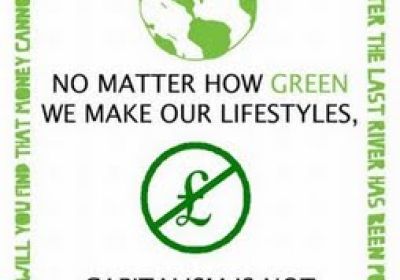
Climate change is often called the greatest environment threat facing humanity. The threat is very real. Unless we cut carbon pollution fast, runaway climate change will worsen existing environmental and social problems, and create new ones of its own. But it’s no longer enough to simply refer to the climate crisis. Climate change is one part of a broader ecological disaster, brought about by an economic system that relies on constant growth, endless accumulation and ever-deepening human alienation. -
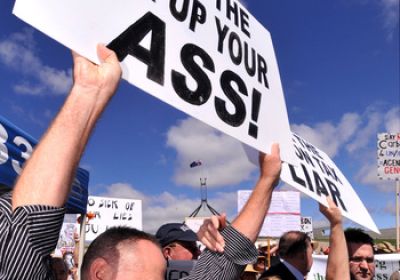
Two days before a March 23 rally against the government’s proposed carbon price took place in Canberra, Liberal MP Dennis Jensen told reporters gathered outside parliament house why he opposed the policy. He held up a piece of charcoal and dropped it to the ground. “Does anyone know what that is? Charcoal, also known as carbon,” he said. “If you notice when I let it go, it doesn't float into the air.” -
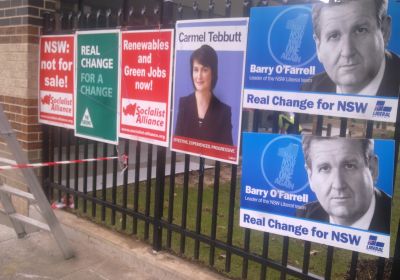
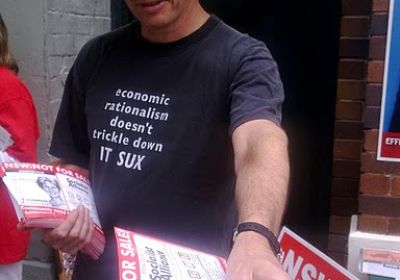
If the last federal election promised the beginnings of a break from the two-parties-for-capitalism electoral system that has plagued Australian politics for the last century, the March 26 NSW election seems to be a lurch in the other direction. The Liberal-National Coalition won dominance of the Legislative Assembly and (with small right-wing parties) control of the Legislative Council because a large number of working-class voters punished the Labor party with a 13.5% swing in primary votes. -
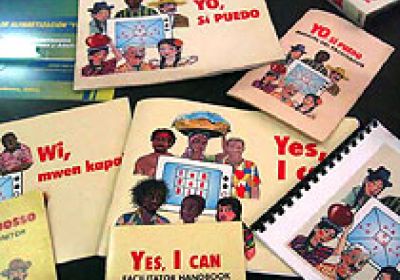
Five revolutions in postwar Latin America have seen illiteracy as a neocolonial battleground. Salvador Allende’s Chile — birthplace of How to Read Donald Duck, an iconic attack on cultural imperialism — reduced illiteracy from 15.2% to 6.3% in under two years (1971-73), triple the rate of any regime before or since. In Nicaragua, the Sandinistas slashed the Somoza dictatorship legacy of 50% illiteracy to just 13% before the end of its first full year in power (1980), catapulting women to cultural and political prominence in the process. -
If the last federal election promised the beginnings of a break from the two-parties-for-capitalism electoral system that has plagued Australian politics for the past century, the March 29, 2011 NSW election seems to be a lurch in the other direction. The Liberal-National Coalition won dominance of the Legislative Assembly and (with small right-wing parties) control of the Legislative Council because a large number of working class voters punished the Labor party with a -13.5% swing. -
Greetings from prison in Zimbabwe On behalf of the Medical Professional and Allied Workers Union of Zimbabwe, a trade Union that organizes workers in the private Medical sector in Zimbabwe, I wish to express our heartfelt appreciation of the camaraderie you extended to Zimbabwean Comrades who were coldheartedly incarcerated and charged with treason by the ZANU PF regime for merely watching heroic actions by our brothers and sisters in the North part of Africa that dealt with tyrants. We are humbled by your determination to see Zimbabwean working class free. -
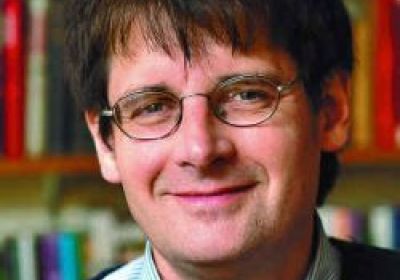
Prominent British columnist George Monbiot announced in the British Guardian on March 21 that he now supports nuclear power. That isn't a huge surprise — having previously opposed nuclear power, he announced himself “nuclear-neutral” in 2009.
-
It can sometimes feel like we’re losing a race against time to avoid environmental catastrophe and social collapse. Climate change is already extinguishing species, destroying essential food production and forcing thousands of people to flee their island homes. People are directly affected by more wars than ever before in history. While the underlying causes of the recent global financial crisis remain, governments are imposing vicious austerity policies on the majority of people in the Global North and South to pay for the capitalists’ greed. -
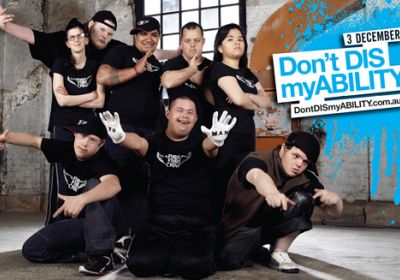
Australia is one step closer towards embracing disability as part of human diversity. On February 28 the Australian Government Productivity Commission released a draft report on Disability Care and Support. If the general recommendations of the report were to be implemented, people with disability, their families and carers would achieve a much-needed improvement to their lives, albeit starting in 2014-15. The report recommends a doubling of funding to the disability support system based on 2009-2010 spending, financed from general revenue. -
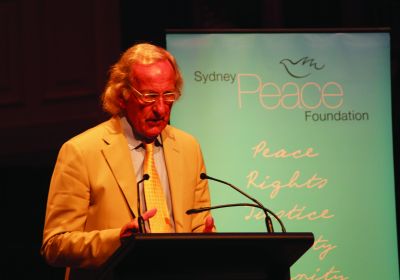
The public forum “Breaking Australia's silence: WikiLeaks and freedom” took place on March 16 at Sydney Town Hall. More than 2000 people attended. The event was staged by the Sydney Peace Foundation, Amnesty, the Sydney Stop the War Coalition, and supported by the City of Sydney.
-
What's the best mix of electricity supply sources for Australia in the context of growing scientific and public concern about climate change? Energy efficiency and conservation provide the first part of the answer — they can provide large, quick, cheap greenhouse emissions reductions.
-
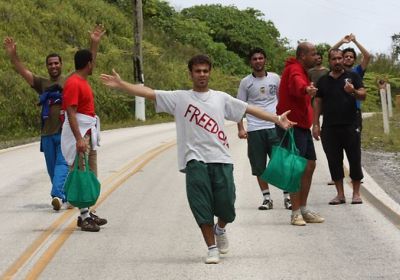
The situation inside every one of Australia’s refugee detention centres has grown dangerously volatile. Just days after the Christmas Island breakout and subsequent protests, nine refugees climbed on the roof of a detention centre in Darwin after watching the assault of another refugee on March 15. Two days later, a 20-year-old Afghan man hanged himself with a bedsheet at the Scherger detention centre after his refugee application was rejected.