SOUTH AUSTRALIA’S ABORIGINAL COMMUNITIES TO REMAIN OPEN
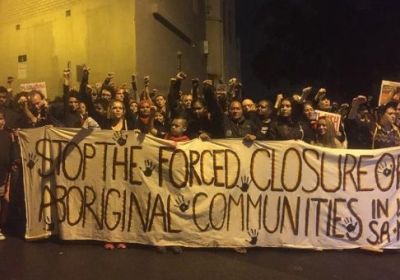
Remote Aboriginal communities in South Australia will remain open despite federal funding cuts.
Last year, the federal government announced it would leave it up to the states to fund remote communities. About 150 Aboriginal communities in Western Australia are under threat of closure after the Western Australian government refused to step in and fund them.
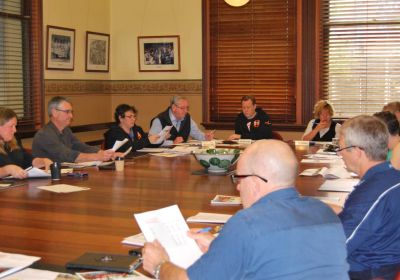
 Community Solidarity Action was launched in Darwin to respond to funding cuts under the federal government's Indigenous Advancement Strategy and to protest against the closure of communities in Western Australia.
The group was launched by community organisations, unions and individuals concerned about or affected by the recent funding announcements and community closures.
Community Solidarity Action was launched in Darwin to respond to funding cuts under the federal government's Indigenous Advancement Strategy and to protest against the closure of communities in Western Australia.
The group was launched by community organisations, unions and individuals concerned about or affected by the recent funding announcements and community closures.
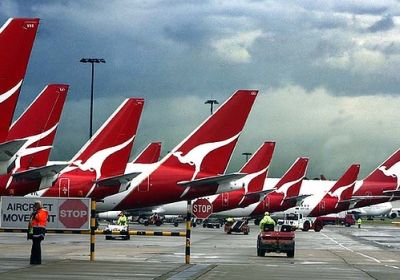

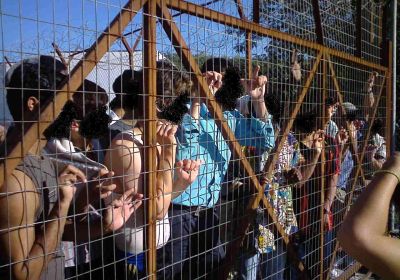
 Clashes erupted on April 15 at the Wickham Point detention centre in Darwin when refugees resisted attempts to send them back to the Australian-run concentration camp in Nauru where they have suffered serious human rights abuses.
 More than 100 people joined a rally at Sydney Town Hall on April 11 to demand "US hands off Venezuela!"
The rally demands were: "No more coups; End foreign intervention; Respect Venezuela's revolution; and Peace in Latin America!"
More than 100 people joined a rally at Sydney Town Hall on April 11 to demand "US hands off Venezuela!"
The rally demands were: "No more coups; End foreign intervention; Respect Venezuela's revolution; and Peace in Latin America!"
 Zakia Baig from the Australian Hazara Women’s Friendship Network speaking at the rally.
One hundred and fifty people rallied in Melbourne on April 11 against the kidnapping of 31 Hazara people in Afghanistan. This action was part of Australia-wide rallies.
Zakia Baig from the Australian Hazara Women’s Friendship Network speaking at the rally.
One hundred and fifty people rallied in Melbourne on April 11 against the kidnapping of 31 Hazara people in Afghanistan. This action was part of Australia-wide rallies.


 Four Jobs for Women leaders in front of the steelworks in the early 1980s. Photo: Jobs for Women Facebook
In Wollongong in the early 1980s, jobs for women were scarce. They either had to wake at dawn to travel to Sydney on the diesel train or they sewed in backyard sweatshops for minimal wages.
Four Jobs for Women leaders in front of the steelworks in the early 1980s. Photo: Jobs for Women Facebook
In Wollongong in the early 1980s, jobs for women were scarce. They either had to wake at dawn to travel to Sydney on the diesel train or they sewed in backyard sweatshops for minimal wages.







 President Nicolas Maduro of Venezuela began his visit to Panama City for the Summit of the Americas with a visit to the impoverished neighbourhood of El Chorrillo to lay a wreath at the monument to those killed by the US bombing of the community during the 1989 US invasion of Panama.
The seventh Summit of the Americas, held in Panama City on April 10 and 11, was widely hailed as a victory for left-leaning and progressive forces in the region, particularly Venezuela and Cuba.
President Nicolas Maduro of Venezuela began his visit to Panama City for the Summit of the Americas with a visit to the impoverished neighbourhood of El Chorrillo to lay a wreath at the monument to those killed by the US bombing of the community during the 1989 US invasion of Panama.
The seventh Summit of the Americas, held in Panama City on April 10 and 11, was widely hailed as a victory for left-leaning and progressive forces in the region, particularly Venezuela and Cuba.