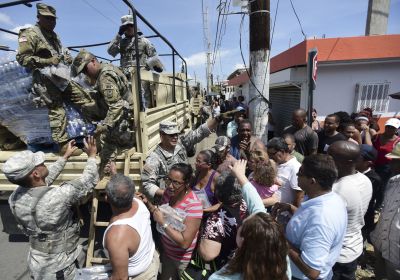
Puerto Rico is facing a huge humanitarian crisis after being hit by two super-strong hurricanes. It suffered a glancing blow by Irma and then a direct hit by Maria, both storms greatly strengthened by warmer ocean water caused by climate change.
The crisis is still unfolding weeks after Maria hit. The full picture and extent of the damage will not be known for some time.
 The Congressional, executive and judicial wings of the United State government recently clarified for all — despite Washington's claims to the contrary — that Puerto Rico is a US colony.
A law known as PROMESA was passed by Congress with bipartisan support and signed by President Barack Obama on June 30. It creates an unelected seven-person control board that has sweeping powers to take over Puerto Rico's economy.
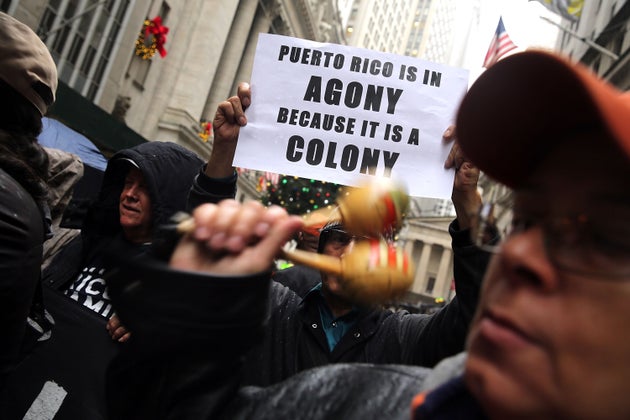
The Congressional, executive and judicial wings of the United State government recently clarified for all — despite Washington's claims to the contrary — that Puerto Rico is a US colony.
A law known as PROMESA was passed by Congress with bipartisan support and signed by President Barack Obama on June 30. It creates an unelected seven-person control board that has sweeping powers to take over Puerto Rico's economy.