“The conduct of a number of EU governments over the past number of weeks has been alarming,” president of Irish republican party Sinn Fein and member of the Irish Dail (parliament) Gerry Adams said on the outcome of the European Union summit, which ended Greece submitting to a harsh deal.
“They have effectively closed down the Greek banking system and held the Greek Government and people to ransom.

 CR gas was used to quell rioting in Long Kesh jail in October, 1974.
Papers from 1976 obtained by the Observer under freedom of information laws show that the use of ‘CR’ or Dibenzoxazepine — a skin irritant 10 times more powerful than other tear gases — was permitted from 1973 to be used on Irish republican prisoners.
CR gas was used to quell rioting in Long Kesh jail in October, 1974.
Papers from 1976 obtained by the Observer under freedom of information laws show that the use of ‘CR’ or Dibenzoxazepine — a skin irritant 10 times more powerful than other tear gases — was permitted from 1973 to be used on Irish republican prisoners.

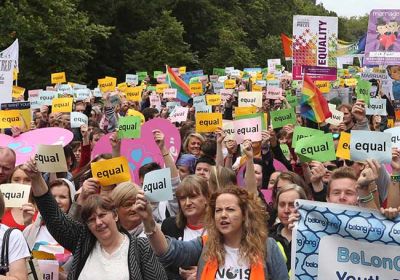
 Celebrating referendum victory in Dublin. Photo: An Phoblacht.
As most of Ireland celebrates marriage equality – passed overwhelmingly in a May 22 referendum - the six counties in its north carved off and still claimed by Britain remain excluded.
Celebrating referendum victory in Dublin. Photo: An Phoblacht.
As most of Ireland celebrates marriage equality – passed overwhelmingly in a May 22 referendum - the six counties in its north carved off and still claimed by Britain remain excluded.
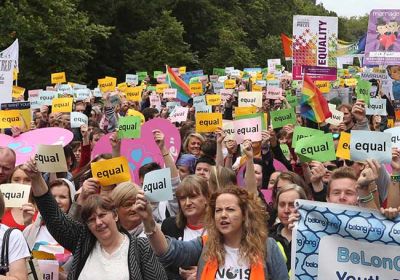

 With what appears a landslide win amid a high turnout, all indications are Ireland has voted "yes" to marriage equality in a referendum on legalising same-sex marriages. This is the first time marriage equality has been put to a popular vote anywhere in the world, and makes Ireland the 21st nation to legalise same-sex marriages.