-
-
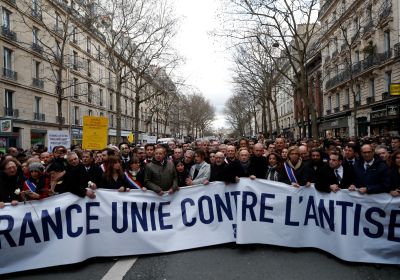
Mireille Knoll was brutally murdered in her Paris apartment on March 23. She was 85 years old with a disability and a Holocaust survivor. Police suspect anti-Semitism may have motivated the attack upon her; all prompting an emotional outpouring.
-
-
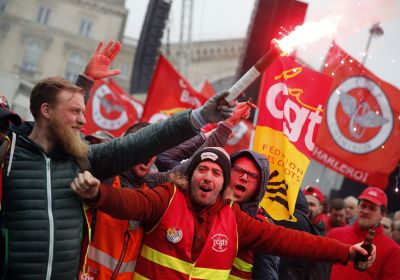
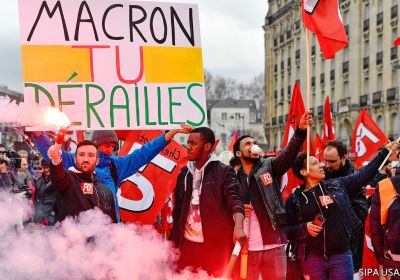
France is once again on the brink of an all-out industrial war — and its outcome could transform the country’s political landscape.
-

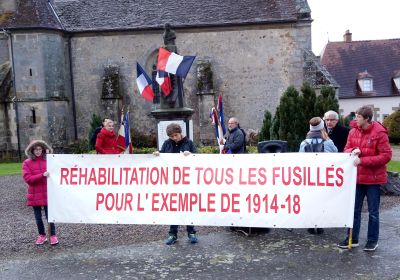
This is a gender-bending true story of how a French man fled World War I trenches and — at the urging of his wife — survived in hiding by passing as a woman.
-
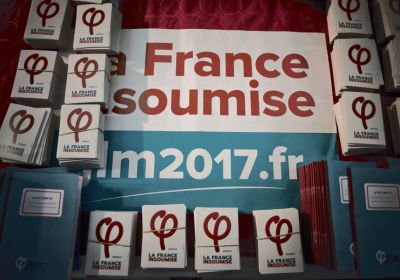
More than 1600 delegates gathered for the third annual conference of La France Insoumise, the radical left political project that has stormed onto the stage of French politics, over November 25-26 in the city of Clermont-Ferrand.
The group’s name defies a neat translation, often rendered as France Unbowed, Unsubmissive or Untamed. Only launched in February last year, the group is widely seen as the only real and effective opposition to President Emmanuel Macron. Founding spokesperson and former presidential candidate Jean-Luc Melenchon is recognised in opinion polls as the effective leader of the opposition.
-
-
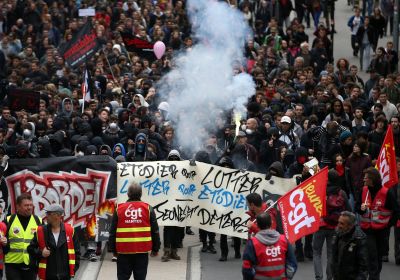
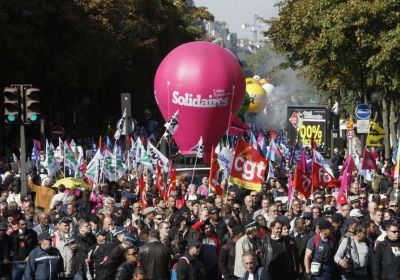
One of France's largest union confederations, the General Confederation of Workers (CGT), held a strike on October 19 as part of the campaign against the anti-worker and anti-union ordinances adopted by the Emmanuel Macron government.
The mobilisations were far smaller than the previous three days of protests and have further fuelled discussion within the movement over how to overcome divisions and weaknesses and mobilise the widespread latent public opposition to the government's attacks.
-
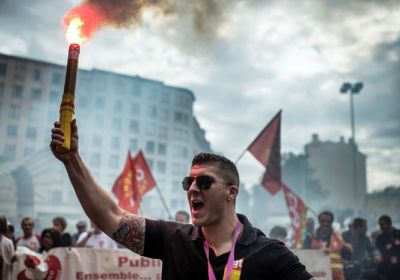
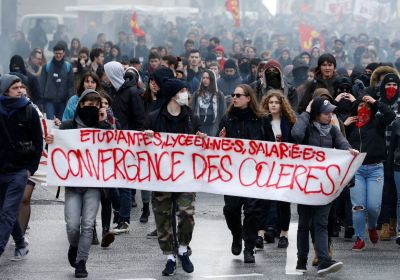
Hundreds of thousands of workers, retirees and students joined a third day of strikes and protests across France on October 10. The protests are part of ongoing efforts by unions, left parties and progressive organisations to defeat attacks on workers and the public service by President Emmanuel Macron.
Protests were held in 140 cities and towns and drew 400,000 people into the streets.
At the centre of the day was a strike called by the nine union confederations active in France's public sector.
-
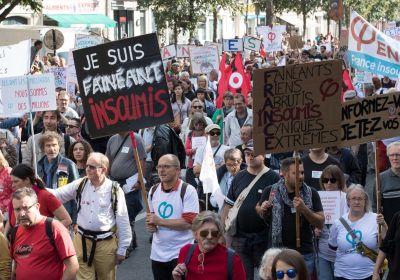
France’s Council of Ministers approved five ordinances on September 22 that undermine union power and employment rights within France’s Labour Code, which came into effect the next day.
The government imposed these changes by using undemocratic measures in France’s constitution, which allows it to push new measures into law without passing legislation through parliament.
In the face of this, the movement against the changes continues to build.
-
-
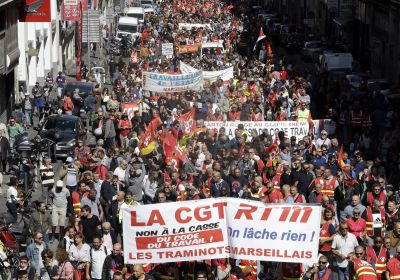
France’s militant unions held the first major day of protest on September 12 against the ordinances introduced by the government to undermine the country’s labour laws.
Their protests were seen as the start of the campaign to defend workers’ rights. It served as a major test for the capacity of the movement to mobilise working people while France’s unions are divided as to how to respond to the attacks.
France
France