
 President Nicolas Maduro of Venezuela began his visit to Panama City for the Summit of the Americas with a visit to the impoverished neighbourhood of El Chorrillo to lay a wreath at the monument to those killed by the US bombing of the community during the 1989 US invasion of Panama.
The seventh Summit of the Americas, held in Panama City on April 10 and 11, was widely hailed as a victory for left-leaning and progressive forces in the region, particularly Venezuela and Cuba.
President Nicolas Maduro of Venezuela began his visit to Panama City for the Summit of the Americas with a visit to the impoverished neighbourhood of El Chorrillo to lay a wreath at the monument to those killed by the US bombing of the community during the 1989 US invasion of Panama.
The seventh Summit of the Americas, held in Panama City on April 10 and 11, was widely hailed as a victory for left-leaning and progressive forces in the region, particularly Venezuela and Cuba.
-
President Nicolas Maduro of Venezuela began his visit to Panama City for the Summit of the Americas with a visit to the impoverished neighbourhood of El Chorrillo to lay a wreath at the monument to those killed by the US bombing of the community during the 1989 US invasion of Panama.
The seventh Summit of the Americas, held in Panama City on April 10 and 11, was widely hailed as a victory for left-leaning and progressive forces in the region, particularly Venezuela and Cuba.
-
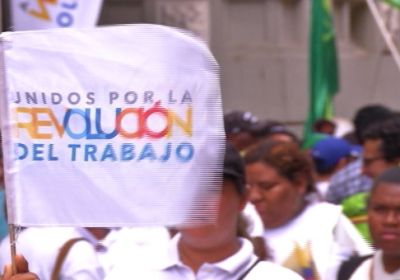 Ecuador has lifted 1.3 million people out of poverty in the past eight years, a new survey revealed on April 13, TeleSUR English said that day. The results of the first “Survey of Living Conditions in Ecuador” showed that poverty has fallen by one third. It also revealed that 900,000 individuals have been lifted out of extreme poverty, whilst the Gini coefficient, which measures wealth gaps, has dropped 4.8 points since 2006.
 -
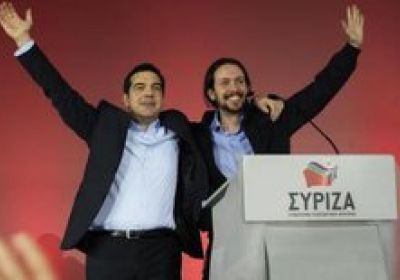 Experience proves that left-wing movements can win government, but nevertheless not hold power. Democracy, in other words the exercise of power by the people and for the people, requires much more. The problem is now being faced in Greece with with radical left party SYRIZA, which won elections in January. It will have to be faced in Spain if the new anti-austerity party Podemos wins November elections.
 -
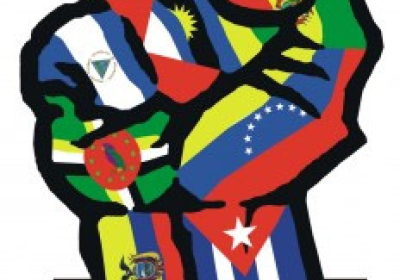 The Bolivarian Alliance of the Peoples of Our America (ALBA) is an anti-imperialist trading bloc first formed by the left-wing governments of Venezuela and Cuba to promote trade on the basis of solidarity rather than competition. It has since expanded to include 11 nations, with Venezuela and Cuba joined by Bolivia, Ecuador, Nicaragua, Dominica, Antigua and Barbuda, St Vincent and the Grenadines, Saint Lucia, Grenada and Saint Kitts and Nevis. Honduras was an ALBA member, but was forced to withdraw when a 2009 US-backed coup installed a right-wing dictatorship.
 -
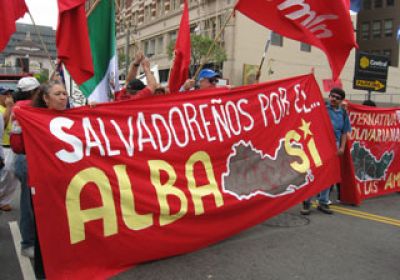 The Bolivarian Alliance of the Peoples of Our America (ALBA) is an anti-imperialist trading bloc first formed by the left-wing governments of Venezuela and Cuba to promote trade on the basis of solidarity rather than competition. It has since expanded to include Bolivia, Ecuador, Nicaragua, Dominica, Antigua and Barbuda, St Vincent and the Grenadines, Saint Lucia, Grenada and Saint Kitts and Nevis. Honduras was an ALBA member, but was forced to withdraw when a 2009 US-backed coup installed a right-wing dictatorship.
 -
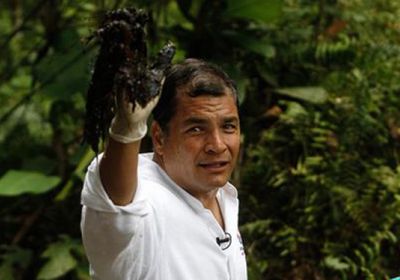 The huge multinational US oil corporation Texaco operated in Ecuador from 1964 until 1992 (Texaco merged with Chevron in 2001). The corporation poured 72 billion litres of oil waste and 45 million litres of crude oil over 2 million hectares of land in Santa Elena province — land which included the Amazon rainforest, rivers and agricultural land. Texaco just poured the oil into ground-connected pipes which just poured oil directly into the rivers and forests.
 -
Venezuela rejects new US sanctions The Venezuelan government rejected aggressive new US-imposed sanctions on February 3, TeleSUR English said that day, insisting the measures flout international law. Venezuela's foreign ministry said in a statement: “The people of Venezuela ratifies its independence and sovereignty. We do not recognise … interference of any kind by foreign powers.” It accused the US of “violating the principles of national sovereignty, equal rights and non-interference in the internal affairs inherent in international law”.
-
 The US’s role in Latin America is facing a growing challenge. The 33 member states of the Community of Latin American and Caribbean States (CELAC) vehemently rejected North American intervention in the continent, and particularly the US-led blockade of Cuba and recent sanctions against Venezuela. These positions were part of the “Belen Declaration”, approved during CELAC’s third annual presidential summit, held on January 28th and 29th in Belen, Costa Rica.
 -
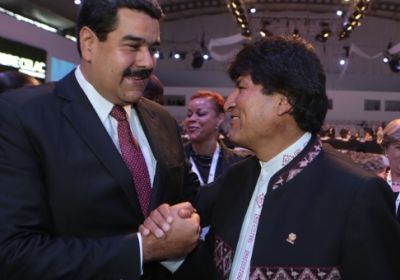 Venezuelan President Nicolas Maduro told a meeting of the Community of Latin American and Caribbean States (CELAC) in Costa Rica on January 28 that Latin America is living in a “new historic era” marked by unity and great opportunity. CELAC was first launched in 2011 in Venezuela, uniting all countries in the Americas except for the United States and Candada. It was set up as a counter-point to the Organisation of American States, which traditionally been dominated by the US.
 -
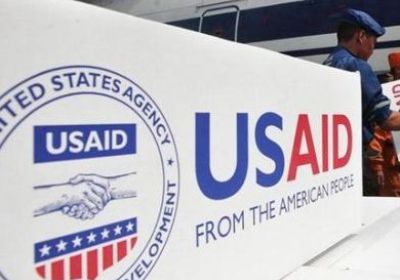
After more than 50 years in Ecuador, the US Agency for International Development (USAID) closed up shop last month. The Ecuadorian government said USAID has been asked to leave Ecuador, while a US Embassy official claimed it was USAID’s decision.
-
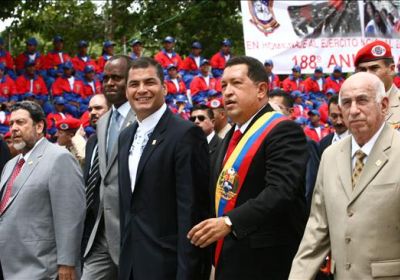 Cables sent from the US Embassy in Quito during Rafael Correa’s first three years as president document rising tensions between Ecuador and the US. Correa’s government, first elected in 2006, increasingly rejected US hegemony and asserted control over Ecuador’s economic and political development. The cables highlight the embassy’s preoccupation with Ecuador’s “difficult investment climate”, with many reports attempting to assess and predict Correa’s economic policies.
 -
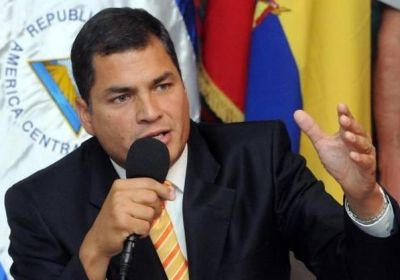 In November 2006, leftist candidate Rafael Correa won the second round of the Ecuadorian presidential election with 57% of the vote, compare with his conservative opponent, Alvaro Noboa, who won 43%. Despite the US’s failure to undermine Correa’s candidacy, as shown by diplomatic cables published by WIkiLeaks, further US cables suggest the US Embassy in Quito believed it could hold sway over the new government.