-
-

The tropical Andes of Ecuador are at the top of the world list of biodiversity hotspots in terms of vertebrate species, endemic vertebrates and endemic plants. Ecuador contains more diversity than the entire United States.
-
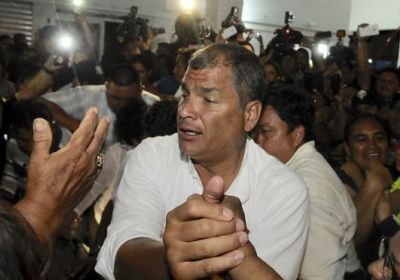
Ecuador’s February 4 “popular consultation” resulted in a victory for the government of President Lenin Moreno, with the Yes option obtaining an average vote of 67% across the seven questions included in the referendum.
-

Ecuadorians will head to the polls on February 4 to cast their vote in a referendum that could prove to be decisive for the government of President Lenin Moreno and the political direction of the country.
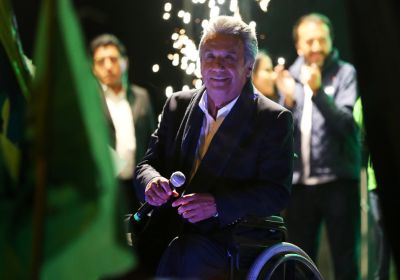
Moreno was elected president last April as the candidate of PAIS Alliance, the party of former left-wing president Rafael Correa. However, less than year on from the election, Correa – together with a majority of PAIS Alliance activists – now view Moreno as a “traitor” for failing to honour his commitment to continue the policies of the Citizens’ Revolution, which was kick-started by Correa’s election in 2007.
-
-
-

In the Andean Parliament as a member of PAIS Alliance, President Rafael Correa’s left-wing party, Rosa Mireya Cardenas, a member of Alfaro Vive Carajo, a former Marxist guerrilla group, will be working to promote gender equality, fair trade and the work of social organisations, among other initiatives.
But with Ecuador’s second round of presidential elections slated to take place on April 2, the country stands at a critical crossroads.
-
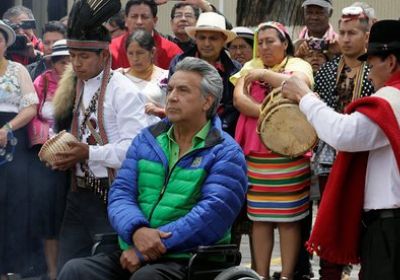
National sovereignty is an undervalued asset in today’s world, especially in the international media, where the views of Washington and its allies largely prevail. This is true with regard to economic as well as political issues, and its consequences can be quite heavy in a region like Latin America, long regarded by US officials as their “back yard.”
The election in Ecuador is being watched as well as contested by forces that have opposing views on this question.
-
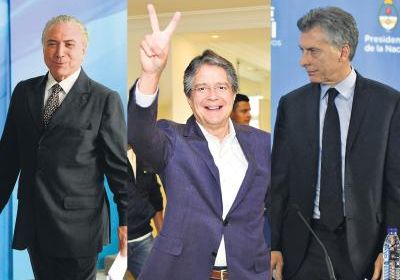
Reflecting on recent experiences of dealing with the right’s return to power in their own countries, close to 100 social movements and activists from Brazil and Argentina have signed a statement calling on the people of Ecuador to vote against right-wing neoliberal banker Gulliermo Lasso in the second round presidential run-off scheduled for April 2.
Among them are activists from Via Campesina, the Rural Landless Workers Movement (MST), the Popular Brazil Front (FBP) the United Workers Central (CUT), the Argentine Workers Central union confederation (CTA) and the Association of State Employees (ATE Capital).
-
-

Quito-based research institute, the International Centre for Advanced Studies in Communications for Latin America (CIESPAL), has decided against renewing its contract with the British security company G4S after meeting with BDS activists who informed it about G4S’s complicity with Israeli violations of Palestinian human rights.
-
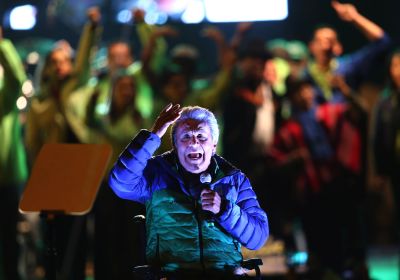
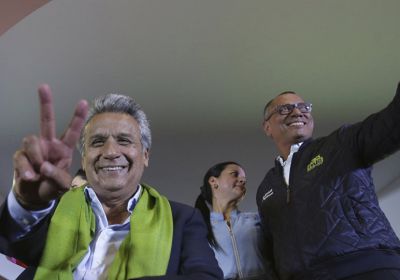
Ecuador will return to the polls on April 2 after a first round presidential vote failed to deliver a decisive victory for Lenin Moreno, the candidate seeking to continue outgoing President Rafael Correa’s pro-poor “Citizens’ Revolution”.
Moreno now faces the challenge of ensuring Ecuador does not join the list of countries in the region where the left has recently lost at the ballot box.
Ecuador
Ecuador