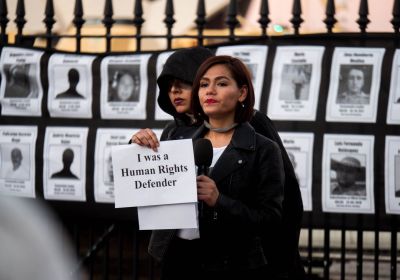
Australian-based solidarity group United for Colombia released the following appeal on August 3 in response to continuing human rights violations in Colombia.
Australian-based solidarity group United for Colombia released the following appeal on August 3 in response to continuing human rights violations in Colombia.
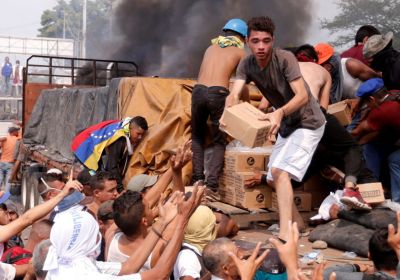
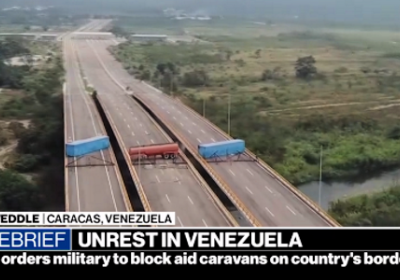
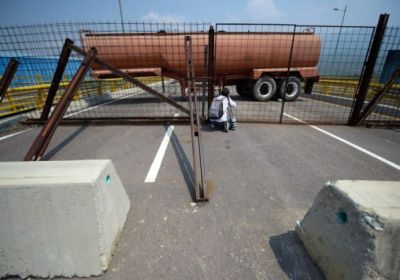
One month after declaring himself the “legitimate president of Venezuela”, Juan Guaidó attempted to provoke a crisis on February 23 by forcing United States' humanitarian aid across the Venezuela-Colombia border. Here Elisa Trunzo asked Jose Curiel for his account of what happened at the border that day.
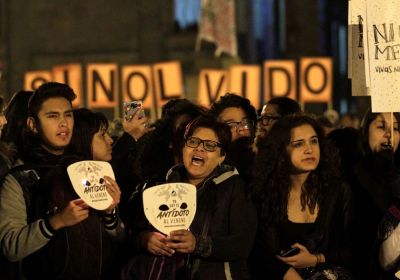
Business owners in northwest Colombia are conspiring with death squads to assassinate social leaders and prevent the restitution of land that was stolen during Colombia’s decades-long armed conflict, according to several Colombian NGOs.
Ivan Duque has not even taken office and his government is already in crisis after the president-elect’s political patron, former president Alvaro Uribe, resigned from Congress.
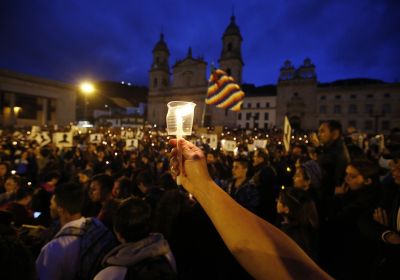
Candlelight vigils were held in Colombia and cities around world on July 6 to demand an end to the political violence that since January has cost the lives of more than 125 social leaders in the South American country.
Political violence against social activists has risen in recent years despite the signing of a peace accord between the government and the leftist guerrilla group, the Revolutionary Armed Forces of Colombia (FARC). According to Colombia’s Ombudsman, more than 311 political murders have been registered since the accords were signed in November 2016.
Colombia’s authorities seem unable or uninterested in curbing the wholesale slaughter of the country’s social leaders that has occurred since a peace process came into force, with nine leaders being murdered in the last week of June alone.
The violence is threatening Colombia’s peace process that not only sought the demobilisation of the Revolutionary Armed Forces of Colombia (FARC), but also the increased political inclusion of the left and minorities in general.
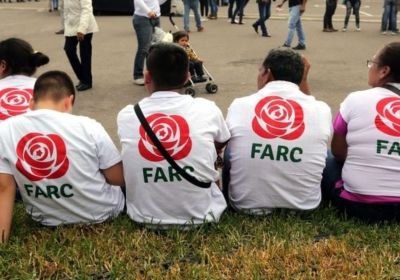
Colombia’s Revolutionary Alternative Force for the Commons (FARC) said on March 8 it was cancelling its presidential election bid.
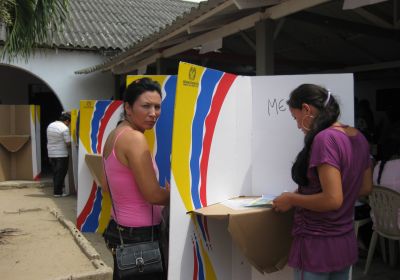
Amid several controversies in the voting process, Colombians went to the polls on March 11 to elect 166 legislators to the House of Representatives and 102 senators.