
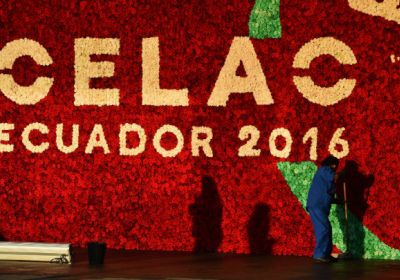
The 2016 summit of the Community of Latin American and Caribbean States (CELAC) began on January 26 with the meeting of foreign ministers and chancellors of the Latin American nations at the headquarters of the Union of South American Nations (UNASUR) in Mitad del Mundo, Quito, Ecuador.
CELAC, a regional body involving all nations in the Americas except for the United States and Canada, was officially created in Caracas in 2011 under the leadership of then-Venezuelan president Hugo Chavez.
 Evo Morales.
Bolivia is calling for investigations into cables leaked by WikiLeaks that reveal the US had plans in 2008 to topple the left-wing government of President Evo Morales, including potentially backing his assassination.
“This requires an in-depth investigation,” said Bolivia's minister of the presidency, Juan Ramon Quintana. “We need to do an investigation to subsequently take decisions with regard to the United States government.”
Evo Morales.
Bolivia is calling for investigations into cables leaked by WikiLeaks that reveal the US had plans in 2008 to topple the left-wing government of President Evo Morales, including potentially backing his assassination.
“This requires an in-depth investigation,” said Bolivia's minister of the presidency, Juan Ramon Quintana. “We need to do an investigation to subsequently take decisions with regard to the United States government.”
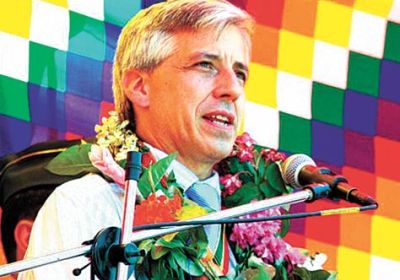
 CONALCAM brings Bolivia’s main indigenous and popular organisations together with state representatives to coordinate and debate economic policies.
The small Andean nation of Bolivia has received praise from many quarters due to the economic transformation it has undergone over the past decade.
CONALCAM brings Bolivia’s main indigenous and popular organisations together with state representatives to coordinate and debate economic policies.
The small Andean nation of Bolivia has received praise from many quarters due to the economic transformation it has undergone over the past decade.
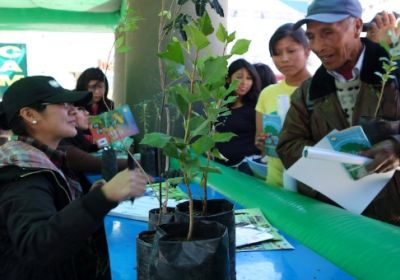
 Unveiling of monument to Juana Azurduy.
Bolivia's Morales unveils indigenous resistance statue in Argentina
Unveiling of monument to Juana Azurduy.
Bolivia's Morales unveils indigenous resistance statue in Argentina
 Supports of the 'no' vote celebrate in Athens on the night of July 5.
Leaders of Latin American left-wing governments have congratulated the Greek government and its people after Greece's historic July 5 referendum. Voters rejected debt austerity proposals by Greece's European lenders.
Venezuelan President Nicolas Maduro said: “The ‘no’ vote in Greece is a victory against the financial terrorism carried out by the International Monetary Fund (IMF).”
Supports of the 'no' vote celebrate in Athens on the night of July 5.
Leaders of Latin American left-wing governments have congratulated the Greek government and its people after Greece's historic July 5 referendum. Voters rejected debt austerity proposals by Greece's European lenders.
Venezuelan President Nicolas Maduro said: “The ‘no’ vote in Greece is a victory against the financial terrorism carried out by the International Monetary Fund (IMF).”
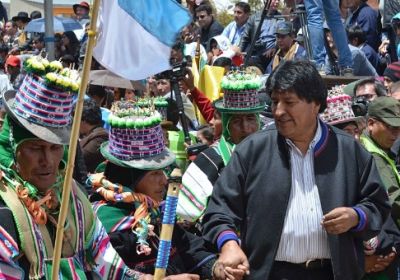
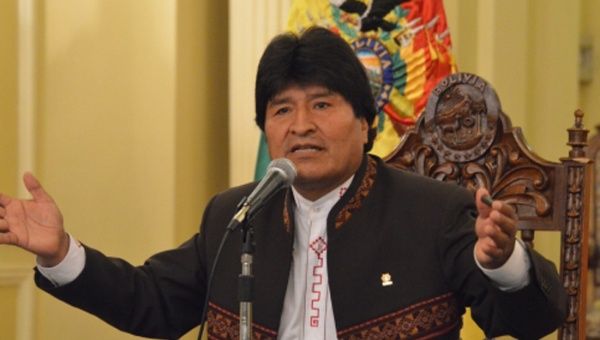 Evo Morales. Photo: ABI — Agencia Boliviana de Información.
Bolivia's left-wing president Evo Morales announced various salary rises on May 1 in honour of International Workers’ Day,
Evo Morales. Photo: ABI — Agencia Boliviana de Información.
Bolivia's left-wing president Evo Morales announced various salary rises on May 1 in honour of International Workers’ Day,