
No sooner had the International Institute for Strategic Studies (IISS) released its dossier The FARC Files: Venezuela, Ecuador and the Secret Archive of Raul Reyes on May 10, that the international media was once again claiming more proof that Venezuelan government links to terrorism had been uncovered.
-
-
 Since January, tens of thousands of United Socialist Party of Venezuela (PSUV) militants, together with activists from other left parties and social movements, have been debating the future of Venezuela’s revolution. Their sights are set on the crucial 2012 presidential elections. This years’ pro-revolution May Day march will be the platform to officially launch Venezuelan President Hugo Chavez’s re-election bid. The US-funded right-wing opposition is yet to decide its candidate, but the election will be critical to the future of a country undergoing a profound process of change.
 -
A number of left groups in Venezuela and solidarity groups internationally have expressed concern over the April 23 decision by Venezuelan authorities to arrest well-known Colombian journalist and supporter of the Venezuelan revolution, Joaquin Perez Becerra. Perez Becerra was arrested when he tried to enter the country through Caracas Airport. He was deported two days later to neighbouring Colombia to face trial for supposed “terrorism” charges in Colombia.
-
In another important step towards winning Bolivia’s national sovereignty, the country’s Plurinational Assembly has announced the expulsion from Bolivia of USAID’s Environment and Economic Development (EED) program. USAID is funded by the US government and on its website says one of its aims is “furthering America’s foreign policy interests”. The agency has come under fire for its role in funding pro-US right-wing organisations in Bolivia and the region.
-
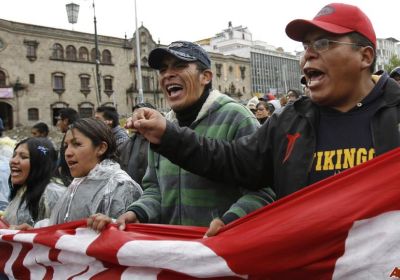 Several weeks of conflict between the government of President Evo Morales and Bolivian trade unions has again thrown into sharp relief some of the serious challenges confront Bolivia’s process of change. For two weeks in April, the Bolivian Workers Central (COB) called mobilisations across various cities to protest the government’s proposed 10% pay rise for teachers, health workers, police and soldiers, and 20% rise in the minimum wage.
 -
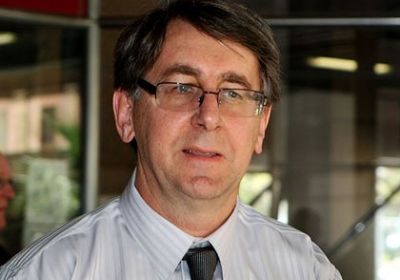 Having now come across several leaflets, statements and interviews arguing that the NSW Greens have put former NSW Construction Forestry Mining Energy secretary Andrew Ferguson’s election at risk on March 26 and urging people to therefore vote 1 ALP, I feel compelled to write the following. Many people know Andrew as a committed campaigner for just causes. However, if Andrew is not elected on March 26, the blame will lie with the current right-wing, anti-worker ALP government. Worse, it will be Labor’s fault that after 16 years the Liberals could return to government.
 -
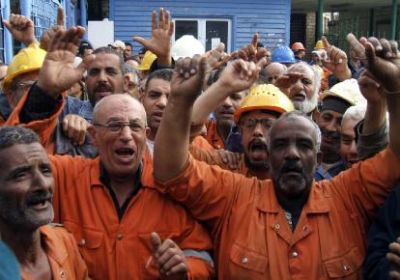
The self-immolation of Tunisian Mohamed Buazizi in December triggered off protests that brought down a 24-year-old dictatorship in that country and inspired similar protests in neighbouring countries.
-
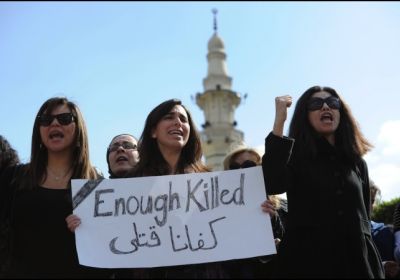 The recent rebellion in the Arab world has not just shaken the foundations of authoritarian regimes across the north of Africa to the Arabian Peninsula. It has also shattered many of the myths and prejudiced stereotypes propagated by the corporate media and right-wing politicians about Arab peoples.
 -
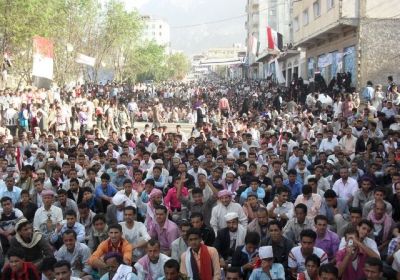
The flames of discontent continue to spread across the Middle East, in the wake of the toppling of the Tunisian and Egyptian regimes in recent weeks.
-
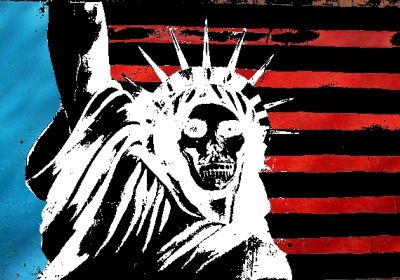
United States Secretary of State Hillary Clinton, speaking at the Munich Security Conference Plenary Session on February 5, said the US had always stood for the principle “free people govern themselves best”.
-
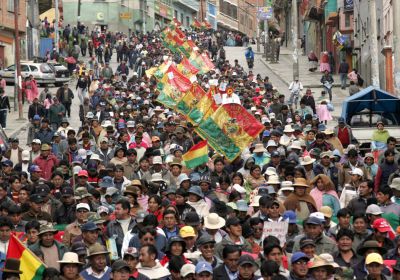 On December 31, the Bolivian government of President Evo Morales repealed a decree, passed five days earlier, to remove subsidies for fuel. The repeal came after protests and discontent at the resulting price increases from many of the government’s poor supporters. “Why is the government making us suffer during these days … I don’t understand, I don’t understand”, Carla, a housewife in El Alto told Radio Atipiri on New Years Eve.
 -
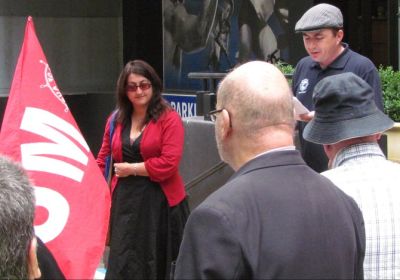 Unionists and solidarity activists rallied outside the Colombian consulate in Sydney on December 13 to denounce the fact that Colombia remains the most dangerous place in the world for trade unionists. The protest, called to coincide with International Human Rights week, was organised by the Sydney branch of the Maritime Union of Australia (MUA) and supported by Peace and Justice for Colombia (PJFC). The initiative for the protest came in the wake of the recent visit by Colombian trade unionist Parmenio Poveda.