
The Australian Institute of Criminology (AIC) released a report on December 10 showing that, over 2024–25, 33 First Nations people died in prison custody, police custody and custody-related operations and youth detention — the highest such number since 1979–80.
New South Wales had the highest number of deaths in prison custody, with nine deaths. Six First Nations prisoners died in custody in Western Australia, and three each in Queensland, South Australia and the ACT. Victoria had two First Nations deaths in prison.
This shocking report comes 34 years after the Royal Commission into Aboriginal Deaths in Custody (RCIADIC) handed down 339 recommendations to stop such deaths — most of which have not been fully implemented.
“The proportion of Indigenous deaths in prison custody in 2024–25 exceeds the average of 19% recorded since 1979–80 for the third consecutive year,” the report said.
Ironically, the AIC, which has coordinated the program since 1992, was set up as one of the RCIADIC’s recommendations.
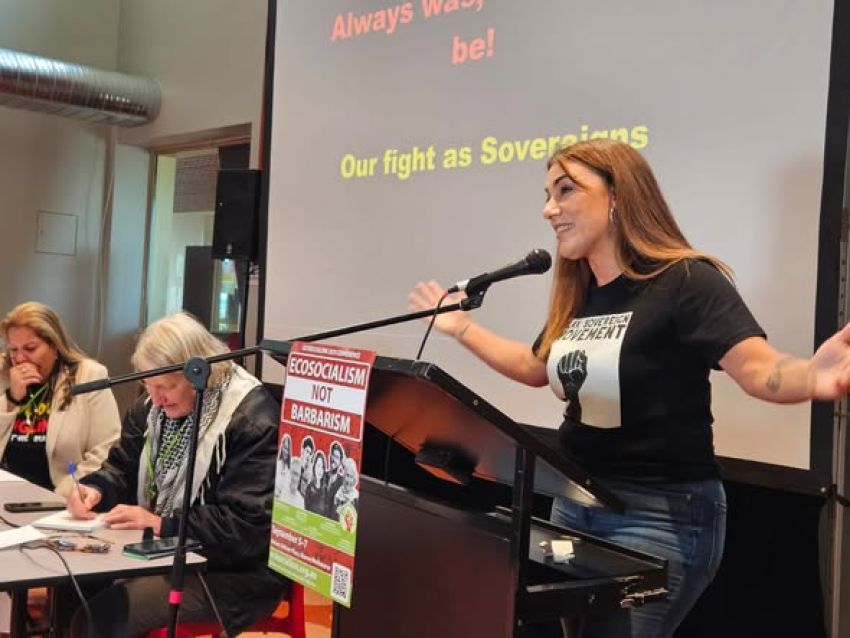
Lidia Thorpe, Gunnai, Gunditjmara and Djab Wurrung independent Victorian senator, said: “This national disgrace is happening on [Prime Minister Anthony] Albanese’s watch — the highest number of our people dying behind bars in almost half a century, in a country that claims to be Closing the Gap.
“The racist ‘tough on crime’ laws we’re seeing nationwide were always going to lead to more deaths. We warned that this would happen. When prisons are full, more of our people die.”
Thorpe said these “horrific figures” represent “violent colonialism perpetrated by hollow politicians”.
“Albanese will try to claim this is a state and territory issue, but we cannot accept this. The federal government must step in and pull the states and territories into line to stop these deaths.
“The Commonwealth has the constitutional power to legislate national minimum standards across the criminal legal system. Albanese must act now.”
She called on federal Labor to impose funding restrictions on states and territories that are increasing their incarceration rates.
“The Minister for Indigenous Australians has said she is looking at this. We know that prisons do not make communities safer — they create more crime in the long term.”
Thorpe said the crime rates of countries that are investing in the community and dismantling prisons, such as Scotland, are falling.
“This is not about safety. It is about punishment, control, politics and power. Every piece of evidence shows it would be cheaper, safer and more effective to invest in housing, bail services, income support, disability services and community-led services.”
Thorpe is calling on federal Labor to: Set up a national oversight body to monitor and drive the implementation of the RCIADIC and the Bringing Them Home report; establish a framework of penalties for states and territories that breach Closing the Gap targets; and legislate national minimum standards for prisons and youth justice, aligned with international conventions and human rights laws.
She said such standards must include removing hanging points; banning spit hoods, solitary confinement and shackling during childbirth and end-of-life care; and preventing children being jailed in police watch houses.
Further, Thorpe said Labor must urgently call a National Cabinet meeting to discuss deaths in custody and youth incarceration, bail reform including culturally safe bail accommodation, expanding First Nations-led first responders to reduce police contact; invest in First Nations-led communities, ensure there is adequate healthcare in custody and increase funding for legal assistance services to ensure First Peoples can access justice.