
 Asylum seekers from Iran whose claims for refugee status have been rejected are being intimidated into “voluntary” repatriation. The Australian government does not have an agreement with the Iranian government which will not accept the forced return of those who have fled the country.
-
Asylum seekers from Iran whose claims for refugee status have been rejected are being intimidated into “voluntary” repatriation. The Australian government does not have an agreement with the Iranian government which will not accept the forced return of those who have fled the country.
-
 On August 19, the refugee rights group People Just Like Us hosted another in its series of meetings in Parramatta Library. Speakers included Sayid Kasim, a Rohingya from Arkan and Salmore, a Rohingya from Myanmar who told their stories of fleeing for their lives. Rohingya are stateless people, victims of racism and genocide. Dhugel, from Bhutan, told of his escape via India to Nepal. Paul Power from the Refugee Council of Australia told the meeting that governments should listen to refugees when making policy. “They are not a threat to our values”, he said.
 -
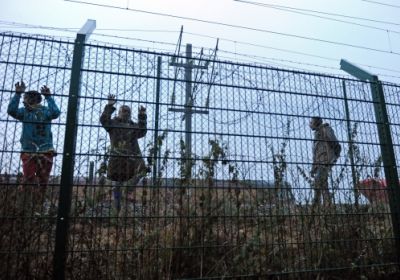 “The only cost-effective way to stop illegal immigrants trying to storm through the Channel Tunnel is to set up a machine gun and take out a few people,” Steve Uncles, the extreme right-wing English Democrats' candidate for the post Kent Police and Crime Commissioner, wrote in an August 4 Facebook rant. “[T]hat would stop it very quickly and immediately cut dead this tactic … who has got the guts to do this in our politically correct society?”
 -
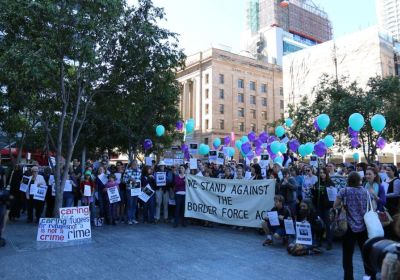 More than 100 people attended a rally in Brisbane on August 8, organised by health professionals against the Border Force Act. The Act makes it illegal for health workers working in detention centres to speak out against conditions, risking a 2-year custodial sentence.
 -
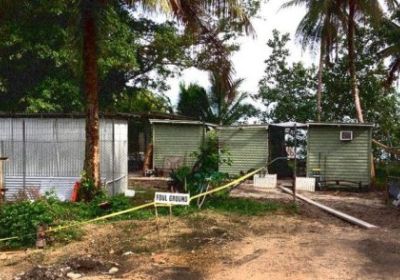 The Papua New Guinea Supreme Court has declared an inquiry into the Manus Island detention centre null and void because of perceived bias. The court unanimously decided that Justice David Cannings, who started the inquiry, could not, according to PNG law, also preside over the proceedings. He also failed to disclose that an expert witness was his friend.
 -
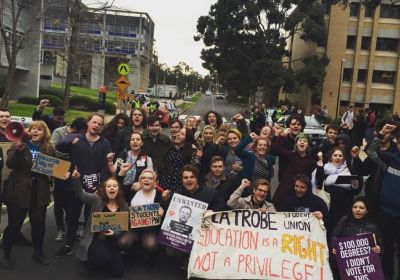 Students say ‘Resign Pyne’ About 100 people protested outside the Melbourne launch of federal education minister Christopher Pyne’s new book, A Letter to My Children, on July 31. The day before, Pyne had been chased off La Trobe University by students chanting, "Pyne the Minister. Can he fix it? No he can’t.” The protest was called to draw attention to Pyne's ongoing attempts to deregulate university fees. This would condemn future students to pay much higher fees to gain a tertiary education.
 -
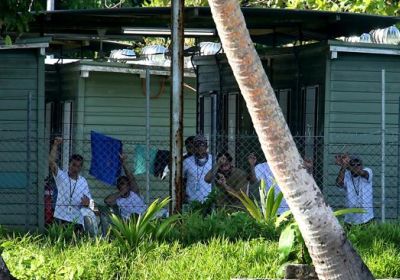 It was standing room only as more than 250 people packed an auditorium in Sydney, to hear speakers discuss conditions in the Nauru and Manus Island detention centres. As speaking about conditions in these detention centres has now been criminalised by the federal government's Border Force Act, the three speakers were whistleblowers. Two speakers, who had worked in or visited the detention centres, risk prosecution.
 -
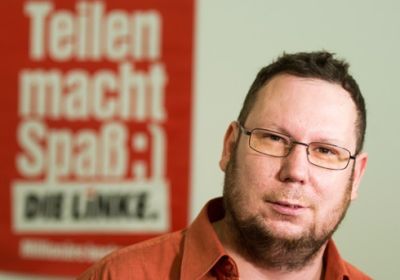 Just after midnight on July 27, a bomb exploded in the car of left-wing politician and refugee activist Michael Richter in the town of Freital on the outskirts of Dresden in eastern Germany. Richter, a 39-year old town councillor for the socialist party Die Linke (The Left) was not in the car. No one was harmed by the blast, which also damaged a nearby car. Police are yet to assign blame, but Richter is certain the attack came from right-wing groups in the area, who have threatened him repeatedly in recent months over his campaigning work for refugees.
 -
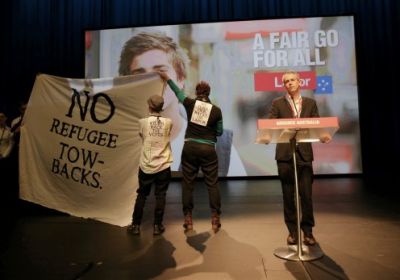 The Whistleblowers , Activists and Citizens’ Alliance released this statement on July 25. * * * Refugee supporters broke through security barriers at the ALP conference today, dropping a banner reading “No refugee tow-backs” and wearing shirts saying “turn back the votes” in opposition to Labor's boat turn-back policy.
 -
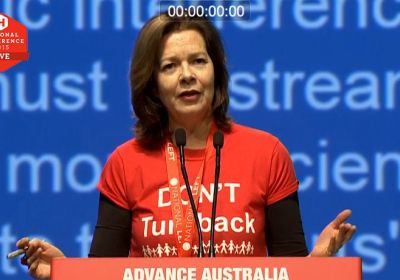 The Australian Labor Party’s 47th National Conference was held in Melbourne from July 24 to 26. It is its highest decision-making forum and the largest political gathering in the country. The conference decides the policies that Labor will take to the next federal election and potentially implement in government. A few days before the conference began, Labor leader Bill Shorten announced a policy of turning back asylum seeker boats, essentially agreeing with the Coalition government’s policy.
 -
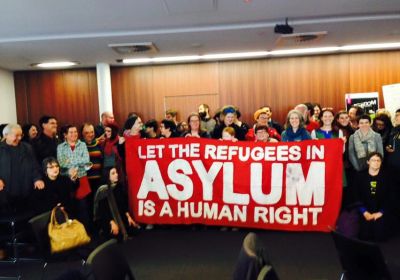 On July 26 more than 150 activists from around the country met in Melbourne for the National Refugee Rights Conference, hosted by the Refugee Action Collective (Victoria). Many of the participants had attended the protest outside the ALP national conference the day before, and inevitably discussion revolved around the decision of the majority of delegates to reject an explicit ban on refugee boat "turn backs" which paves the way for Labor to once again follow Coalition policy.
 -
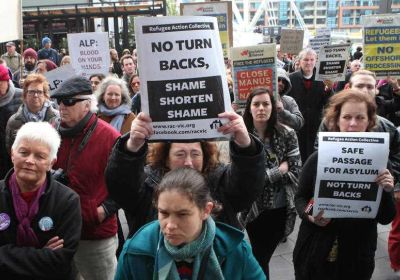 The results of the recent Australian Labor Party (ALP) conference vote on boat turnbacks shows why building a progressive alternative to the left of the ALP in Australia today is urgently needed.