-
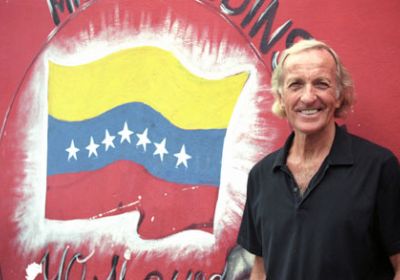
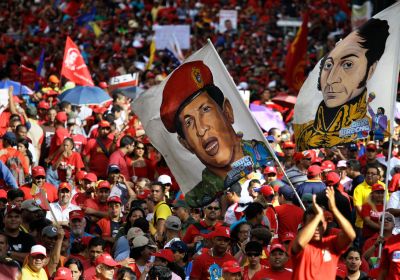
"Venezuela: The revolution continues," was the theme of a solidarity conference held at Redfern Town Hall here on October 6. About 120 people attended the conference, which was organised by the Embassy of the Bolivarian Republic of Venezuela, in conjunction with the Australia-Venezuela Solidarity Network (AVSN), the Bolivarian Circle, the Latin American Social Forum (LASF), other solidarity organisations, unions, and political groups, including Socialist Alliance. -
Robert Serra, a 27-year-old legislator of the governing United Socialist Party of Venezuela (PSUV), and the National Assembly's (AN) youngest parliamentarian, was found dead in his Caracas home yesterday. Authorities confirmed last night that Serra and his partner Maria Herrera had been murdered in their residence. According to daily newspaper Ultimas Noticias, unofficial reports say that Serra’s body showed signs of torture before he was killed. -
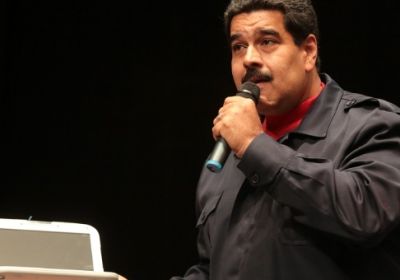
After speaking at the United Nations climate change summit on September 23, Venezuelan President Nicolas Maduro seized the chance to visit community leaders, local activists and grassroots groups in an event hosted by Hostos Community College of the South Bronx in New York City. About 1000 people attended the event, which was organised by Citgo, a subsidary of Venezuela's state-own oil company. Many arrived early to wait outside for good seats and to hold signs welcoming Maduro as “president of the people”. The Bronx community
-
The Venezuelan government initiated a takeover of the abandoned Clorox factory on September 25, with Venezuelan Vice-President Jorge Arreaza calling an assembly of the company's 475 workers to reactivate the plant's activities. Clorox Venezuela called workers and left voicemails stating that their jobs were liquidated due to the company's decision to leave the country. The US-based company claims that economic challenges influenced its decision to close the factories doors. -
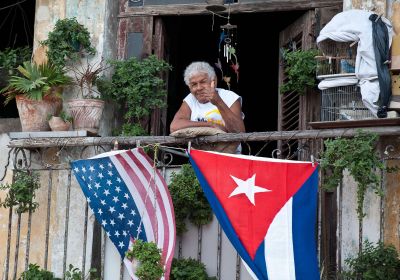
Cuba said it will send nearly 300 more doctors and nurses to West Africa to help fight the Ebola epidemic, Al Jazeera reported on September 26. The Cubans will work in Sierra Leone, Guinea and Liberia, Regla Angulo, head of the Cuban medical relief agency said in a statement that day. Al Jazeera said: “The announcement means that up to 461 Cuban medical personnel would have been sent to help address the epidemic spreading across West Africa.
-
“The excessive focus on profits neither respects Mother Earth, nor takes human needs into account,” Bolivian President Evo Morales said in his speech to Untied nationals climate summit on September 23. “The continuation of this unequal system only leads to greater inequalities.” Prensa Latina said that day that Morales called for incentives to respect Mother Earth and exhorted the developed countries to live up to their promises. -
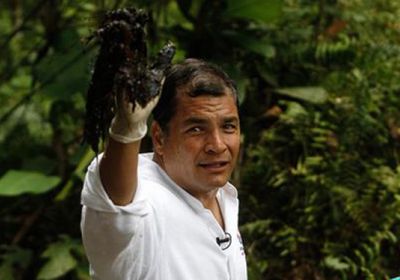
Cables from the first term of Ecuadorian President Rafael Correa show how the US sought to defend the interests of US companies in Ecuador, and protect the position of foreign investors in general. Moves against the power of transnational corporations by Correa's government, first elected in 2006, were seen as attempts to increase control over the economy, which the US government views as the domain of private interests. The US Embassy in Quito therefore tried to influence Ecuadorian economic policy in conjunction with allies from other embassies and from within the private sector.
-
Cables sent from the US Embassy in Quito during Rafael Correa’s first three years as president document rising tensions between Ecuador and the US. Correa’s government, first elected in 2006, increasingly rejected US hegemony and asserted control over Ecuador’s economic and political development. The cables highlight the embassy’s preoccupation with Ecuador’s “difficult investment climate”, with many reports attempting to assess and predict Correa’s economic policies. -
A solidarity conference called, "Venezuela: The Revolution Continues" will be held in Sydney on October 6. It is sponsored by the Venezuelan Embassy in Australia and supported by the Australia-Venezuela Solidarity Network, the Bolivarian Circle and other organisations, including the Socialist Alliance.
-
In November 2006, leftist candidate Rafael Correa won the second round of the Ecuadorian presidential election with 57% of the vote, compare with his conservative opponent, Alvaro Noboa, who won 43%. Despite the US’s failure to undermine Correa’s candidacy, as shown by diplomatic cables published by WIkiLeaks, further US cables suggest the US Embassy in Quito believed it could hold sway over the new government. -
In a speech to the nation on September 2, Venezuelan President Nicolas Maduro announced “five revolutions”, as part of a campaign to “improve our service to the people”, Venezuela Analysis said on September 3. Maduro said the revolutions would be a “a new way of functioning” for the government. The five revolutions “should be united, and should define the government policies, giving power to the people, it will be the people who push government policy”.
-
In the months leading up to Ecuador’s October 2006 presidential election, the US Embassy in Quito claimed to be impartial. Rather than supporting one particular candidate, then-US ambassador Linda Jewell said the embassy only wanted to help facilitate “a fair and transparent electoral process”.