-
-
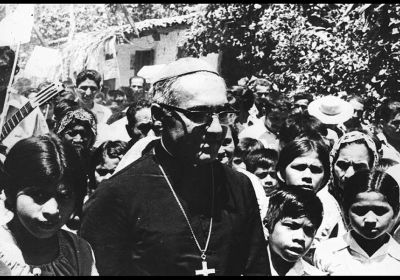
There were innumerable horrors committed by El Salvador’s right-wing death-squad government during the civil war that raged from 1980 to 1992. Alongside the peasants and workers killed or disappeared and the nuns raped, were the priests who were executed. The most sensational execution of all was the murder of Archbishop of San Salvador Oscar Romero, gunned down while celebrating mass.
-
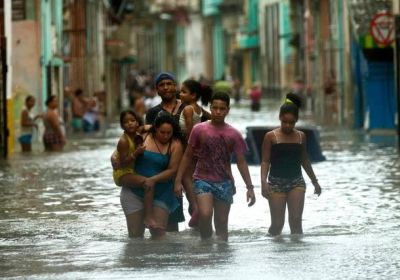
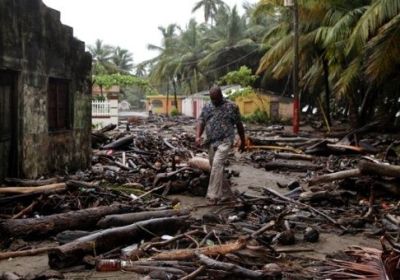
Cuban brigades and volunteers are continuing the arduous task of rebuilding after the damaging and deadly effects of Hurricane Irma, one of the most powerful storms to hit the region that left dozens dead and caused widespread damage.
Described by meteorologists as one of the most powerful hurricanes to hit the Caribbean in a century, Irma left a path of widespread destruction in Cuba and several north-eastern Caribbean Islands, especially Barbuda.
-
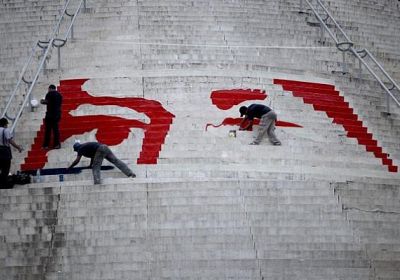
Travelling past El Calvario Park, just a few blocks from the Miraflores presidential palace in Caracas, we see a familiar image: an outline of late former president Hugo Chavez’s eyes, painted across several stairs.
This image can be seen all over Caracas. The government of President Nicholas Maduro has converted it into a recognisable trademark, much like the iconic image of Che Guevara that is splashed across T-shirts, flags and walls the world over.
-
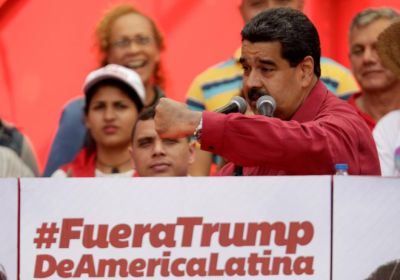
With the Venezuelan right-wing opposition in disarray after failing to overthrow President Nicolas Maduro through violent protest, and divided in the face of the upcoming October 15 regional elections, the frontline of the battle for Venezuela’s future has shifted outside its borders.
-
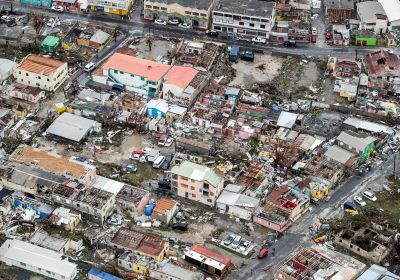
Hurricane Irma has just passed through the Caribbean, in a procession of tragedies that have destroyed lives and left material damage behind.
In response to this natural disaster, Venezuelan President Nicolas Maduro sent humanitarian aid to Cuba, Antigua and Barbuda (with 95% of buildings in Barbuda destroyed), and the French colony of Saint Martin on September 10.
-
-
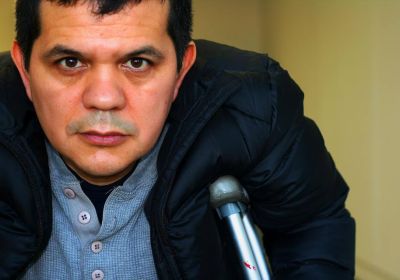
“The US is doing the same thing as it did with the economic blockade on Cuba, to try and suffocate the Venezuelan economy” explained Williams Camacaro, a long-time Venezuelan grassroots activist based in New York.
Speaking to Green Left Weekly in Caracas, Camacaro said “The sanctions will cause a lot of difficulties for Venezuela”, but “the reality is that a lot of time has passed since [the blockade was first imposed on Cuba]. Many things have changed.”
-
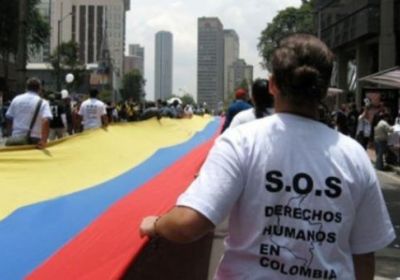
More than 100 community and social activists were assassinated in Colombia between January 1 and August 18 this year, according to a new report released by the Institute for Development and Peace Studies (Indepaz). The report showed that a further 194 activists received death threats during this same time.
The report also found that 12 members of the Revolutionary Armed Forces of Colombia (FARC) were assassinated between April 14 and August 17, as were 11 relatives of FARC members.
-
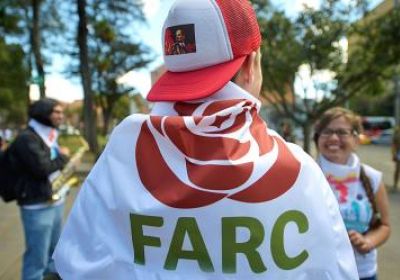
Colombia’s communist army, the Revolutionary Armed Forces of Colombia (FARC), relaunched itself as a political party on September 1 at a concert for “reconciliation and peace” in Bolivar Square, Bogota.
The guerrilla movement, which fought one of the longest civil wars in history until agreeing to a ceasefire with the government last year, confirmed its new name the day before at the end of its five-day congress.
It is now known as the Revolutionary Alternative Forces of the Commons, which will allow it to retain the FARC acronym.
-
Flying into Caracas, the plane was full of middle class Venezuelans travelling home from Miami. On board, no one spoke to the passenger next to them for fear of finding out they were on the opposite side of the political divide.
In highly polarised Venezuela, these things are best left unsaid.
-
Latin America & the Caribbean
Latin America & the Caribbean