-
When the later president Hugo Chavez was first elected president in 1998, it began a process of change that has sought to expand the democratic and social rights of the poor majority who had previously been excluded. This process is known as the Bolivarian revolution. It has included a new constitution guaranteeing previously unheard of social rights, re-nationalising the oil industry and promoting participatory democracy. -
Newly re-elected President Michelle Bachelet has reaffirmed her election promise to introduce free tertiary education in Chile — one of the demands of the country’s powerful student movement. In elections in December, the New Majority coalition of centre-left parties won a majority in both the Chilean Congress and Senate. Bachelet, the New Majority candidate, was elected president. On March 11, Bachelet began her second term as president, having served as president from 2006-2010. She replaced right-wing president Sebastian Pinera.
-
In a recent article, Amnesty International accused the Venezuelan government of a “witch hunt” when a right-wing opposition mayor Daniel Ceballos was arrested. However, Amnesty has yet to use such strong language against the five weeks of human rights violations people in Venezuela have suffered at the hands of violent opposition sectors. The “witch hunt” term demonises the people’s right to bring such criminals to justice. -
The Venezuelan opposition and much of the media use the term “peaceful protests” to distinguish gatherings of protesting students and other young people from the more violent actions by opponents of President Nicolas Maduro's government -- including vandalism and shootings carried out by those outside of the university community. “Peaceful protests”, however, is a loaded term that serves to plant doubts about the intentions of the Maduro-led Chavista government. -
Cuba & Its Neighbours: Democracy in Motion By Arnold August Fernwood Publishing January 2013 288pp, C$29.95 Surrounded by emerging participatory democracies unshackling themselves from US hegemony, Arnold August writes that Cuba is a laboratory for people-powered politics. -
What is really going on in Venuezuela since January. An important antidote to the corporate media attacks on Venezuela, its democracy and popular revolution.
-
Venezuelan students who support the Bolivarian Revolution speak out against recent oppositional violence, and urge the nation's youth to think for themselves in the midst of the media-backed polarisation.
-
The news below is mostly accumulated from recent coverage at Venezuela Analysis, asides from the first report from Prensa Latina. Venezuela Analysis is the best English-language source of news and analysis on Venezuela, its popular revolutionary process and the media war against the country and its democracy.
-
With Newmont-Buenaventura set to resume building operations at the controversial Conga mine site this year, the Peruvian government has passed a new law granting legal immunity to security personnel who injure or kill protesters. The promulgation of Law 30151, which was officially gazetted on January 14 after being signed by President Ollanta Humala, indicates the state and its transnational corporate backers are planning an expanded campaign of repression against Peruvian communities resisting their neoliberal development model.
-
The 1991 Colombian Constitution is supposed to ensure the protection of all Colombian peoples’ rights and common interests. But in March, those whose role and responsibility it is to ensure the constitution is enacted turned a blind eye to the blatant political misconduct and unethical activities of the Black Colombian Foundation (FUNECO). FUNECO won both congressional seats allocated to Colombia's Black and Afro-Colombian community with two candidates, Maria Del Socorro Bustamante and Moises Orozco Vicuna, who are not Afro-descendants, or even black-skinned.
-
Images forge reality, granting a power to television and video and even still photographs that can burrow deep into people’s consciousness without them even knowing it. I thought that I, too, was immune to the repetitious portrayals of Venezuela as a failed state in the throes of a popular rebellion. But I wasn’t prepared for what I saw in Caracas this month: how little of daily life appeared to be affected by the right-wing protests, the normality that prevailed in the vast majority of the city. I, too, had been taken in by media imagery. -
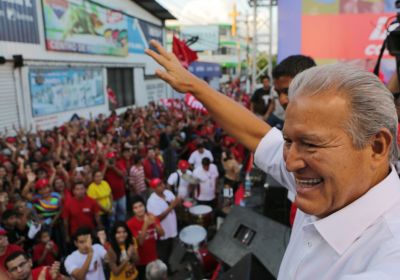
Salvador Sanchez Ceren, the presidential candidate of El Salvador’s left-wing Farabundo Marti National Liberation Front (FMLN) party, was declared the winner of the country’s run-off presidential election on March 12. Ceren won 50.11% of total votes. The Supreme Electoral Tribunal (TSE) declared the victory after voting sheets were cross-referenced with preliminary results from election day.